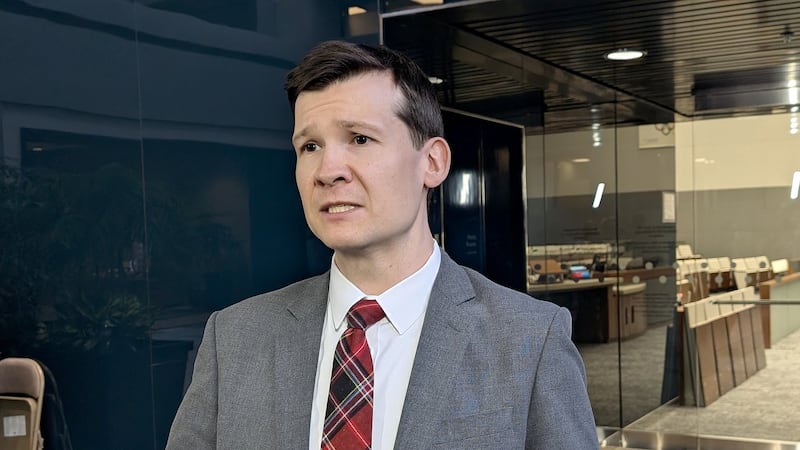
University of Alberta researchers are excited about a breakthrough that could improve how Alzheimer’s disease is treated. A new study, published in Alzheimer’s & Dementia, found mice with Alzheimer’s that were treated with nanoparticles showed reversal of the disease at the molecular and cellular level, as well as improved symptoms. “I’ve been working on Alzheimer’s for 30 years and I’ve never been so excited,” researcher and professor of medicine Dr. Satyabrata Kar said in a media release. Kar has published multiple studies on nanoparticles since he began studying them in 2020. His most recent research found nanoparticles delivered to the brain in mice prevented the overproduction of peptides that cause the harmful plaques in the brain associated with Alzheimer’s. Alzheimer’s is a fatal progressive disease with no cure. According to the Alzheimer’s Society of Canada, the disease accounts for between 60 and 80 per cent of dementia cases. There are two kinds of Alzheimer’s: genetic, caused by mutations in genes, and sporadic, where causes are unknown. Kenneth Cochrene’s mother and sister had the disease, so he knew what was coming when he was diagnosed with early-onset Alzheimer’s disease about a year ago. “It’s different than cancer, but it’s just as bad as cancer,” Cochrene said. “There’s going to be an end to your life, but it’s that loss in between, the loss that you don’t know your children, the loss that you don’t know anybody, and that’s the tough part.” Cochrene said he’s heard of Kar’s research and he’s excited by the possibilities. “It’s fantastic. It looks great,” he added. “That research is what we have to hope for and rely on.” The polylactic-co-glycolic acid (PLGA) nanoparticles used in the study are biodegradable and have been used in the delivery of about 20 drugs in humans. Kar said what makes his use of them so “novel” is that he is using the particles themselves as a treatment. “To find out that this molecule without drugs can have an effect, it takes time for the people to accept it,” he added. " Not only that, it has to be replicated by other labs. Then only people can start believing it." Arlene Huhn, director of programs and services for Alzheimer Society in Alberta, said the research is exciting but said the society has a popular phrase: “Help for today and hope for tomorrow.” “That is the hope for tomorrow,” Huhn said. “Anytime research gets a breakthrough and has a new step, obviously that’s exciting for us and all the families that we support,” she explained. “But it’s not today.” Kar said it’s a positive sign some of his results have been replicated by scientists in the U.S., though that research has yet to be published. While he can’t carry out human trials himself, he hopes his research and the known-safety of the nanoparticles will be enough for other scientists to move forward with. “If I provide enough evidence that these nanoparticles have some clinical relevance in the preclinical models, the clinician scientists … they maybe may develop some interest in taking them to the human trials,” Kar said. More information on the study can be found on the University of Alberta website. With files from CTV News Edmonton’s Nicole Weisberg