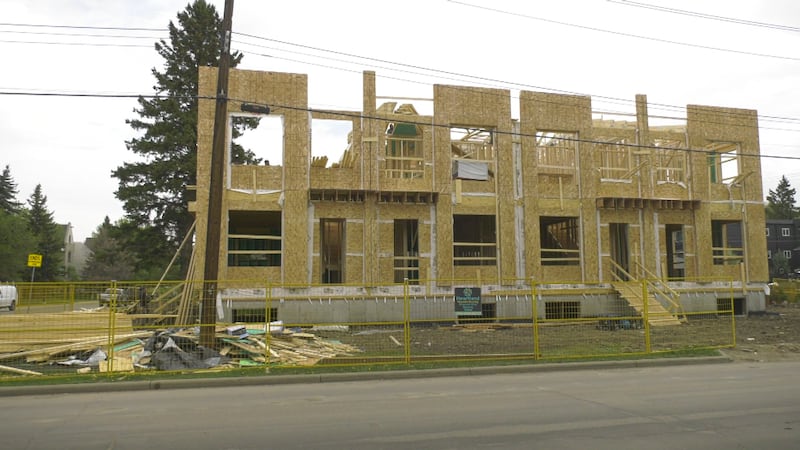
Edmonton business leaders have a plan they say will help the City of Edmonton spend more wisely. On Monday, the Edmonton Chamber of Commerce announced its Back on Track Business Budget, a set of recommendations it hopes will guide the city as it decides how much taxes residents will pay and where that money will go. “Public services cannot be measured in dollars alone, but our members know what it means to set priorities, live within a budget, measure what an investment achieves, and to change course when something isn’t working,” said Doug Griffiths, president and CEO of the Edmonton Chamber of Commerce. According to data from the Government of Alberta, Edmonton’s population broke a million people in 2018 and had reached 1,238,295 by 2025. Griffiths said the cost of serving a growing city is rising faster than revenues, pushing costs onto residential tax payers. The report, based on engagement with business and community leaders, includes ways to ease property taxes while investing in projects that have “a clear return for Edmontonians.” “That means maintaining roads and sidewalks, clearing snow, keeping downtown clean, and repairing neighbourhoods without automatically redesigning them from the ground up,” he added. The City of Edmonton will begin building its 2027 - 2030 budget in November. During consultations in spring, the city said issues residents most agreed on included: The chamber reported that about 20 downtown businesses had closed so far in 2026. It said construction disruptions is one area where the city needs to show more “discipline.” It wants to see more money go toward speeding up downtown construction, as well as treating cleaning and safety as everyday services. “At its peak, downtown contributed 10 per cent of the city’s tax revenue. Today, it’s about five per cent. When downtown contributes less, that tax deficit shifts to the residential property tax owners,” Cheryll Watson, chair of the Downtown Revitalization Coalition, said. Earlier this year, Edmonton Coun. Anne Stevenson passed a motion to build a business-friendly construction policy. She said, while the city is working to speed up construction to minimize impacts, it could make more improvements. “Construction isn’t just for the fun of it; it is for long-term investment and beautification of our city, but we have to make sure that we’re not losing businesses in the short term,” Stevenson said. Stevenson said she was “happy” to see many of the other priorities from the chamber align with the city’s plans, such as focusing on core services and cleaning up downtown. “Those are quick wins and really important investments we can make,” she said, adding the city has committed more than $550 million in funding to deliver on the Downtown Action Plan. As for property taxes, Stevenson said she does not expect Edmontonians to face the same sharp increases as they did during the last four-year budget cycle. “We were coming out of the pandemic, dealing with global supply chain disruption, significant inflation, and I’m really proud that we didn’t kick those cans down the road,” Stevenson said. “We had some big increases. We took those hits last term.” City of Edmonton CEO Stacey Padbury said the city appreciates its relationship with the Edmonton Chamber of Commerce, as well as its input on the budget. “Building a budget is about making choices about services, construction projects, taxes and user fees that will affect over 1.2 million Edmontonians and we take that responsibility seriously,” Padbury said. The city’s budget deliberation process and schedule will be decided Oct. 6 and deliberations will begin in late November and run until mid-December. With files from CTV News Edmonton’s Miriam Valdes-Carletti