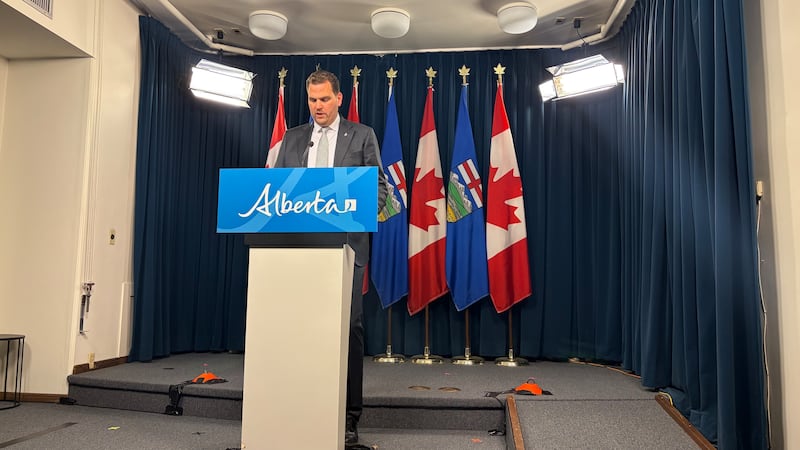
The Alberta government introduced legislation on Monday establishing a “dual-practice model” for some of the province’s doctors it says will increase surgical options for them and their patients and shorten wait times. Primary Care Minister Adrianna LaGrange brought forth the legislation, Bill 11: the Health Statutes Amendment Act, which also includes changes to primary providers of drug coverage and to food safety standards, new processes and rules for health cards, extension of employer-provided health benefits to people aged 65 or older who are working, and strengthening of rules to deter improper billing and claims. She told reporters at an embargoed media conference on Monday morning that family doctors would not be eligible to practise both publicly and privately under the new legislation as the government’s “priority right now is to make sure that every person in Alberta is attached to a primary care provider,” and that emergency services, essential procedures and surgeries such as those for cancer and emergent urgent will stay covered by the public plan “with no private options.” Matt Jones, the minister in charge of hospitals, said such a public-private surgery model exists already “in leading health jurisdictions around the world,” he told reporters. “Denmark, the Netherlands, the UK, France, Germany, Spain, Australia all offer dual-practice models.” Jones and LaGrange said their government believes the changes comply with the Canada Health Act as it “does not preclude private activity” by doctors, which already occurs in Alberta, New Brunswick and Quebec. “The Canada Health Act right now does allow privately practicing physicians to serve patients and patients to pay them privately,” Jones told reporters. “What’s changing is the ease or flexibility or red tape around that.” LaGrange said the province would put “clear safeguards” in place for the dual-practice model, including requiring doctors to maintain separate record for public and private services. She said other safeguards could include requiring surgeons to perform a certain number of publicly funded surgeries or a ratio of them to be able to offer private ones and limiting certain specialties to public service if it “threatens access to essential care.” Restrictions would come in regulations and not be written in the legislation, LaGrange said, so the government could make changes. “If in fact, we find that there’s a shortage of that particular discipline, or that we have to make some changes because all of a sudden we do need to shift, we need to be nimble,” she said. Opposition NDP Leader Naheed Nenshi, speaking Monday before the bill was tabled, said early reports about the health-care changes show the United Conservative Party government is “making things up as they go along. “People who can afford to pay will certainly see their wait times go down. But the rest of us will see our wait times go up, unless there’s way more doctors, way more anesthetists, way more nurses, way more people doing the surgeries — and there is no plan for any of that,” he said. News of the impending legislation became known a week ago. Critics, including the Canadian Medical Association, which represents physicians across the country, have warned the model could lead to more Albertans waiting longer to get treatment, and could weaken an already challenged public system. “The evidence from around the world is clear: where a parallel private health system operates, both health outcomes and access to care are worse,” association president Dr. Margot Burnell wrote Tuesday. With files from The Canadian Press