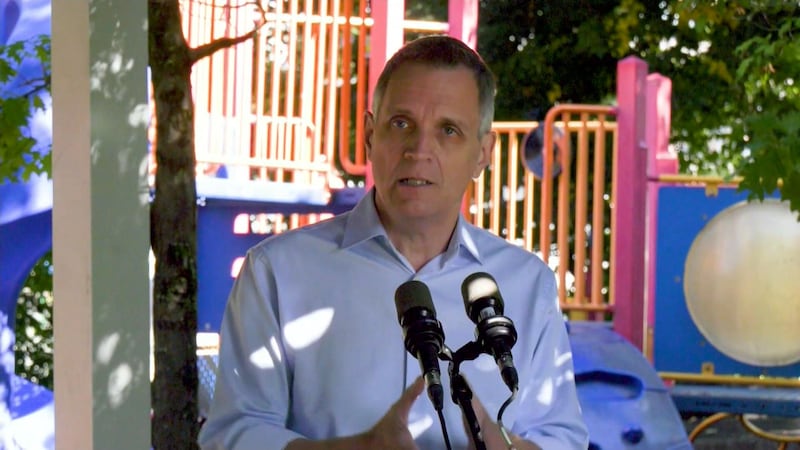
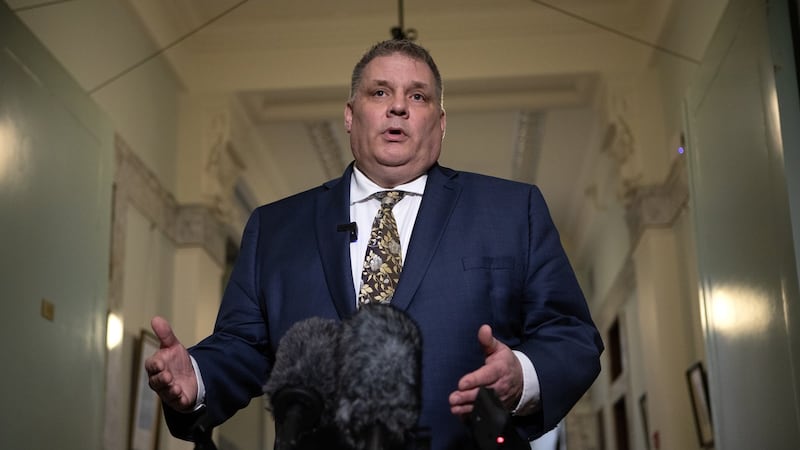
Alberta Municipalities president Dylan Bressey joins Alberta Primetime host Michael Higgins to discuss a new code of conduct for local governments and property tax collection following the organization’s Spring Caucus. This interview has been edited for clarity and length. Michael Higgins: How do your members see this new accountability framework impacting transparency and public trust? Dylan Bressey: First, we feel listened to. I want to be really clear the vast majority of city councillors are well-intentioned, incredible community leaders who behave with professionalism every day. At the same time, occasionally things do get off the rails. When that happens we want to be held accountable and we want to be able to hold each other accountable. We’re really grateful to the province for reinstating an accountability framework, and we’re grateful there’s going to be a third party investigator, which is something we have always asked for in this. We’re grateful the (municipal affairs) minister has committed to engaging strongly with us and other similar associations to make sure the associated regulations roll out well. So for us this seems like a real win today, although we’re really looking forward to conversations about implementation. MH: It’s going to be a blanket, universal code. Where do you see that leaving the involvement of local municipalities? DB: My understanding of what we’re going to see is, at the end of the day the local council will still decide on sanctions. The process will be: if a councilor makes a complaint about another councilor, it’ll go to a third party investigator who will make recommendations that will then go to council itself to decide what to do with them. MH: How do your members see this changing the political dynamic? DB: Again, for the vast majority of communities it won’t change anything because those councils already are operating at a high level of good governance and civility. In the vast majority of cases, it isn’t needed. In that very rare occasion where things go off the rails, this is a game changer. Being able to actually address behaviors that ruin local governance and ruin relationships with community and staff is so important for those rare instances where it’s needed. MH: Do you see new expectations changing the behaviours of municipal politicians? DB: I don’t think they’ll change the behaviors of the vast majority of politicians. All of our new councillors that have been elected across this province really are coming into this with the right intentions of building strong, cohesive communities where, even though we vigorously disagree on ideas, we still express them in civil, thoughtful ways. That is what the majority of councils are doing. But if you get one or two people on a council, which happens rarely, that aren’t committed to that civility and that good governance then it really can pollute the entire work of the municipality. For us, being able to address those very rare cases is so important. MH: You posed a question at this week’s Spring Caucus to the premier, saying decisions made by the provincial government have increased costs, decreased revenues and delayed infrastructure investments. You made a point of saying something has to give. What were you looking to hear from the premier? DB: Our point is we’ve seen successive governments make changes across many ministries that have increased costs for municipalities, taken away revenues from municipalities, removed property tax streams to local communities. The first response of councillors has been to sharpen their pencils to make sure we’re finding every operational efficiency possible to realign service expectations and to defer infrastructure investments where that’s prudent to do. When we see so many decisions impacting the fiscal ability of municipalities, eventually something has to give. Which means either decrease local services - not wise - delays of infrastructure investment, or increases to local property taxes. MH: Does that mean you don’t have a seat at the table to talk about this, and is that what you were looking for? DB: Yes, and we know there’s some fundamental conversations this province has to have about its future finances and how we’re going to fully fund all the public services and the infrastructure that Albertans rely upon. We know municipal infrastructure is the infrastructure residents touch most, and municipal services are the services that have the biggest impact on the day to day work of businesses and the day to day life of residents. So we really think that as the province is charting its course for its fiscal future, the needs of local communities and local infrastructure need to be a big part of that conversation. We want to be at the table to have conversations about which level of government should be paying for which services and how local infrastructure could best be funded. MH: How much of a focus was there on the issue of provincial property tax increases and the collection of those taxes? DB: This has been a huge issue with our municipalities because they really are working to address affordability in their communities, which means they’ve been doing their part to keep property taxes low. A lot of councils have managed to hold their own municipal tax increases at or below inflation. Meanwhile we’ve got many communities, most communities across the province, seeing a double digit increase to the amount of provincial property taxes they’re going to have to pay. That really does have an impact on the local residents and the local businesses. We’re having to shoulder that and we just don’t think increasing property taxes on Albertans is the right lever the province should be pulling to address some of its fiscal challenges. MH: In your discussions with the premier and members of her cabinet, did they give you any insight on how to move forward? DB: I don’t know if we’re going to see much movement on this particular issue. In fact, the finance minister was really clear they do expect to continue collecting 33 per cent of all education expenses through property taxes. That being said again, it’s not about any one decision, because every individual decision has reasons that go into it. For us it is that cumulative impact we’re talking about, and the idea that something has to give somewhere, somehow. When I talk about that cumulative impact instead of individual decisions, I am sensing from our colleagues in the provincial government that they get it and they understand we can’t keep on having these lost revenues, increased costs and remove property tax streams. Something has to change.