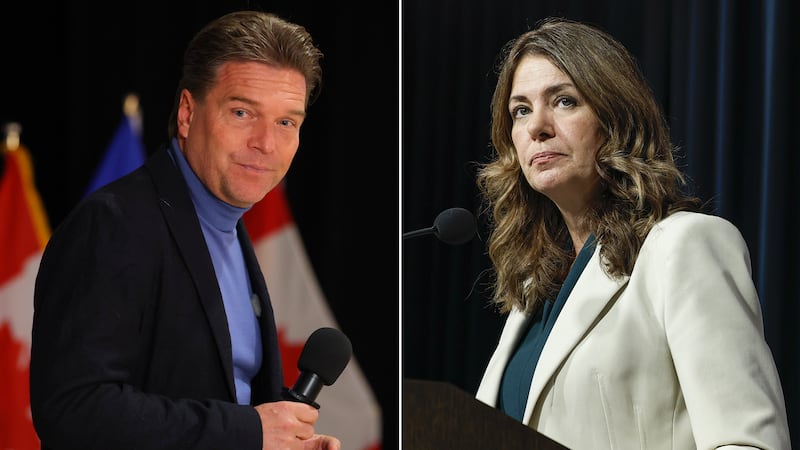
Outgoing president of the Alberta Medical Association Dr. Shelley Duggan speaks with Alberta Primetime host Michael Higgins about the measles outbreak and the future of health care in Alberta. This interview has been edited for clarity and length. Michael Higgins: Before we reflect on your 12-month term, let’s touch on the measles outbreak of the past several months. Now that there has been a death, does that change the conversation around how this outbreak is being handled? Dr. Shelley Duggan: I think it really confirms what we’ve been saying all along, which is that this is not just a simple infection. It isn’t an infection that we should just let children have and then they’ll be immune, and we can all go about our business. I think people now understand why we’ve been so concerned about low immunization rates, because we had a child die from a fully preventable disease. So we’ve got to step things up, and we’ve got to make sure that we get those immunization rates back up. MH: Where does this measles outbreak rank on the list of priorities you found yourself dealing with as AMA president? SD: It’s a huge priority for us, because public health is certainly not strong in Alberta. We don’t have a Chief Medical Officer of Health yet, at least a permanent one. We have a skeleton staff of medical officers of health. We can see that this is what happens when you don’t have a really strong public health arm. MH: Now is a time of change within Alberta’s health-care system. As AMA president, what kind of window were you afforded to all that’s happening within the system-wide overhaul? SD: I can only call it chaos. We’ve seen a system that was quite well integrated albeit not perfect, but very well integrated be completely dismantled. Now we have a system that nobody really knows how to maneuver. We have four pillars. We have four health ministers now we have organizations. We have numerous CEOs and CMOs. What the front line is seeing is that there is no integration, and we really don’t know how things are going to work going forward. So the chaos continues. MH: New mandate letters were issued today to the four ministers overseeing health delivery. What degree of confidence do they give you in governance and leadership of the overhauled health system? SD: Sadly, very little confidence. I would certainly say that it would be nice not to need four mandate letters, that we really should only have one health minister and one mandate letter. What we are seeing, for instance, is a disconnect. If we take two of the pillars between Acute Care and Assisted Living Alberta, where we now have two organizations that are going to have different metrics that are going to heavily rely on one another. And so far, we have not seen that happen. We have ALC numbers, particularly in the Edmonton zone, that are enormous, and it’s not clear how this system is going to make that better. So I would suggest that having four mandate letters is probably not necessary if we had an integrated health-care system. MH: Speaking of your letters and your final letter to AMA members, you highlighted high points. How has the landscape changed for the better for Alberta doctors? SD: I think we’ve made significant improvements in how family doctors are remunerated and we’re hearing from our colleagues across the province that it’s so much better. We’ve taken a really good stab now at trying to not only stabilize those practices, but help them grow and to attract young doctors to become family doctors. We’ve made some significant strides on working on acute care as well, but we have a long ways to go. I would say that the Alberta Medical Association does appreciate working with Minister LaGrange, and I certainly had a good relationship with her. Hopefully we can keep that going, because it’s the only way we can make things better. MH: What now rests on the shoulders of Dr. Brian Wirzba, as he takes over the reigns from you as incoming president? SD: Dr. Wirzba has a significant mandate in trying to really get people to understand why we need integration, and to try and figure out how we’re going to get that. We have an integration council that exists at the highest level between ministers and deputy ministers, but we have no way of making sure that the front line can get patients to move seamlessly through all the pillars and the different organizations. So that’s something where he’s got to take that ball and continue running with it. And of course, we have negotiations coming up in this fiscal year as well.