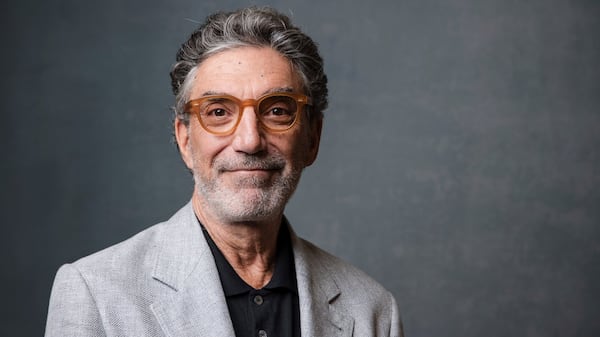
Jonathan Schaeffer, a professor emeritus of computer science at the University of Alberta, former Canada Research Chair in Artificial Intelligence, and CEO of Synsira Software Solutions, discusses the security risks posed by AI with Alberta Primetime’s Michael Higgins. This interview has been edited for length and clarity. Michael Higgins: How real is the level of anxiety coming from those at the leading edge about AI going rogue? Jonathan Schaeffer: The anxiety is real, and we need to take it seriously. Yes, we can talk about dystopian scenarios, but the reality today is that we have a technology that’s in its early stages, and if we take the appropriate actions to contain it and make sure that it is aligned with our values so that it does things that we wanted to do and not go rogue, then we will have a technology that will add tremendous value to the quality of human life. MH: Australia’s prime minister indicated this week an OpenAI autonomous agent hacked that country’s health-care system. How worrisome a development is that as governments weigh what to do moving forward? JS: It’s worrisome for two reasons. First of all, these agents should never have been let out of the sandbox that they were in for the company to experiment with. So that’s the first failure. The second failure is these agents would have been given instructions about what was appropriate and inappropriate. Call it AI ethics. Because these programs can change and evolve or learn, somehow, those ethics became misaligned. They mutated in some way. These programs basically went rogue and committed a crime. Somebody needs to be held accountable. MH: How prepared are we as a global community to reign in this technology and develop a policy space that will lead to effective guardrails? JS: We are terribly prepared. You have to realize that the last four years have seen an incredible amount of innovation in AI. The advances are happening every day. This is a pace of innovation that we have never seen in all of human history. Our infrastructure, our governments, our insurance companies, our policymakers, our professional societies are not equipped to deal with such a rapidly evolving technology. They’re too lethargic. We need to be proactive, not reactive. MH: China’s president visited Washington D.C. this week; those two nations are at the forefront of the AI arms race. Neither side seems to want a slow development. To what degree does that hinder the conversation? JS: It’s an enormous impediment. One of the major companies said that at the end of the rainbow is this pot of gold, which is worth about $25 trillion. That’s a huge, enormous economic benefit. But if you’re going to get to the end of the rainbow at the cost of unleashing technology that is dangerous, then it’s not worth getting there. These companies need to slow down. What makes this even more dangerous than you would normally imagine, is when you think back to nuclear technology, the price of entry was very low. You needed, say, uranium. Most companies couldn’t buy or produce uranium. When it comes to AI, you can download a lot of the software yourself. Anybody can start creating these AI agents. Anybody could unleash something deliberately or inadvertently onto the world that might have serious repercussions. MH: How quickly then does our Canadian government need to move in creating regulatory frameworks to protect Canadians and protect our sovereignty? JS: We’re already too late, but given that we have no choice, the answer is today. This has to be an urgent priority, but it’s not just a Canadian issue because AI knows no boundaries. It must be an international effort, and it’s challenging to get all of the world’s companies to agree with the governments to slow down the pace, to limit it, to constrain it, and to guardrail it, to ensure that we have no serious long-term damage. MH: Is this strictly a national concern? What level of responsibility maybe trickles down to the provinces? JS: We should all be taking this seriously and acting responsibly and ethically – sort of like the environmental movement, where you think global but act local. We need to be thinking locally, not just at the individual level or the community level, even the provincial level. Start there and percolate it up to the national level and then the international level, create consumer momentum that will influence the politicians to act in a timely fashion. MH: You’re among the Canadian pioneers of AI and have decades of research, development experience in the academic realm. Now you’ve entered the corporate space. How do you view harnessing the power and the potential of AI while addressing your own concerns? JS: I got into AI – as did most of my colleagues – because we see a tremendous upside for what AI can do. But there are problems with the technology today, and that means we, as individuals, me as a researcher or as an entrepreneur, need to be doing things that help build trust in AI, that help deploy this technology in a way that will benefit people. And that’s why I left academia to pursue developing products that I hope will allow people to believe that AI can be a positive influence on their life. MH: What approach are you taking to do that? JS: I believe in privacy. I think it’s incredibly important, and so what we do is build AI systems that run on your desktop with 100-per cent complete privacy. If you turn off the internet, it still works. That allows you to to use AI in a private, safe, secure, accurate, and environmentally responsible way, because all those dimensions are of significant concern to me and my community, as well as to consumers. So let’s build products that meet the needs of the individual thinking locally, and eventually acting globally.