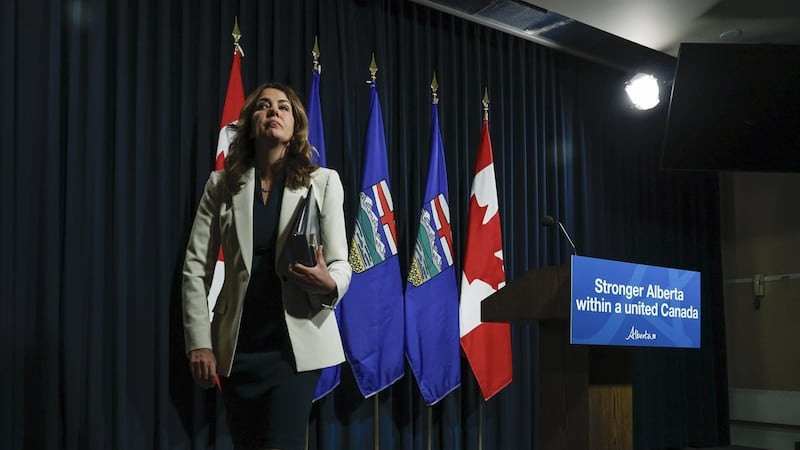
Proposed amendments to the Financial Statutes Amendment Act 2026 brought forward in this year’s provincial budget moved ahead on Wednesday. The Alberta government is putting the finishing touches on legislation it introduced a year ago to change how the province’s auto-insurance system handles injury claims. Finance Minister Nate Horner said Wednesday at the Alberta legislature the amendments to the bill will “modernize and strengthen” the province’s insurance framework to set the stage for the “care-first” approach that is purported to give people hurt in an automobile accident better access to support. “These changes improve clarity, transparency and consumer protections,” Horner said while reading from a prepared statement at a media conference Wednesday afternoon. “They also strengthen regulatory tools where needed.” The new system is slated to start in January and replace the tort-based one, in which those injured in an accident can seek compensation through legal means. Instead of people suing drivers who cause crashes for compensation, insurers would pay compensation rates set by the province. Benefits for those injured in an auto crash would be available to everyone regardless of who caused it. “The changes ensure consistency and alignment across Alberta’s insurance legislation to support a smooth transition to ‘care first,’” Horner said, adding the new system is expected to “provide better, faster and more reliable care for those injured in vehicle collisions, “will reduce time and money spent on litigation,” and “help deliver more stable and predictable auto insurance rates to Alberta drivers.” Alberta would be the first province in Canada to adopt a privately delivered, care-first insurance system. The province is also moving ahead with plans to drop the income limit for Alberta seniors to qualify for government programs. February’s budget lowers the income threshold by nine per cent, to $32,690 from $34,000 for individuals. The cut-off for couples will be dropped to $53,800 from $56,000. The amendments to the Seniors Benefit Act will apply to the Alberta Seniors Benefit, Special Needs Assistance for Seniors, and the grant portion of the Seniors Home Adaptation and Repair Program. Seniors Minister Jason Nixon said while reading from a prepared statement that the province will “continue to have the highest low-income threshold for seniors benefit in the country, meaning Alberta seniors can have more income in Alberta and receive benefits more than anywhere else in Canada” after the threshold adjustment. Nixon added there will be no reduction to the seniors benefit rate, saying the United Conservative government has already indexed it so it increases each year. The Official Opposition Alberta NDP on Tuesday criticized the amendments to the Seniors Benefit Act, saying that in the middle of an affordability crisis, they put even more financial pressure on people with fixed incomes. The province also proceeded with changes to two pieces of legislation, the Alberta Enterprise Corporation Act and the Alberta Research and Innovation Act, allowing two government arms, Alberta Innovates and the Alberta Enterprise Corporation, to co-invest as a minority partner in Alberta-based knowledge-based industry companies.