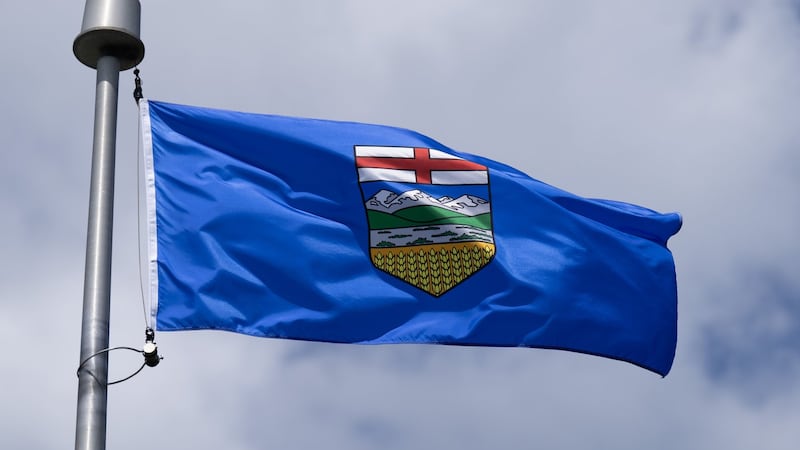
The scales are tipped toward an “exceptional” El Niño weather pattern for Banff, Kananaskis and the Bow Valley heading into winter 2026-27. Experts say the “super” El Niño means milder temperatures and less than average snowfall is on the horizon for the Canadian Rockies region. “There’s a very good chance that it will be stronger than anything that’s been observed for at least the past 100 years,” said Bill Merryfield, research scientist with Environment and Climate Change Canada. When surface waters in the Pacific Ocean, along the equator, become warmer than usual to create an El Niño, the ripple effect is seen across global weather patterns, Merryfield says. “A two or three degree warming of the ocean down by the equator may not sound like much, but it actually is enough to cause dramatic shifts in the atmosphere,” he said. Heading into the winter, temperatures could be about two degrees Celsius warmer than normal, with the peak effects being felt in December. The outlook isn’t exactly what most powder hounds would hope to see. “When you put those two things together, a relatively mild winter and less than usual precipitation … that is pointing toward there being a lower than usual snowpack,” said Merryfield, noting the mild temperatures will likely continue into the spring. “Usually the snowpack in Rocky Mountain ski areas is so healthy that hopefully it won’t cause any sort of drastic reduction of skiing opportunities.” According to OpenSnow, a weather forecast and snow report website, the advantage of Canadian Rockies resorts, like Banff’s Sunshine Village and Lake Louise, is their “resilience” to rain when winters are warmer than average because of higher elevation and colder air. Merryfield added that since the middle of the 20th century, about three other super El Niños have been recorded in the region. “These occurred in the winter of 1982 going into 1983, 1997 into 1998, and, most recently, 2015 going through 2016,” he said. “They have been tending to occur about every 10 to 20 years, so in that sense we’re due for one, but this is looking like it will exceed any of those other relatively recent events.” Merryfield added that the strong El Niño could mean global temperature records are in the pipeline for 2027. “We do expect the temperature of the planet as a whole to set a new record high in 2027, exceeding the previous record that was set in 2024,” he said. OpenSnow says that snowfall in March currently points to above average for the Rockies, while November to February are looking lower than average. Heading into spring, April is predicted to be drier. “This strong El Niño will definitely be tilting the odds toward a mild winter and our forecasts are pretty confident about that, but it’s not an absolute certainty yet,” Merryfield added. The Local Journalism Initiative is funded by the Government of Canada. This position covers Îyârhe (Stoney) Nakoda First Nation and Kananaskis Country.