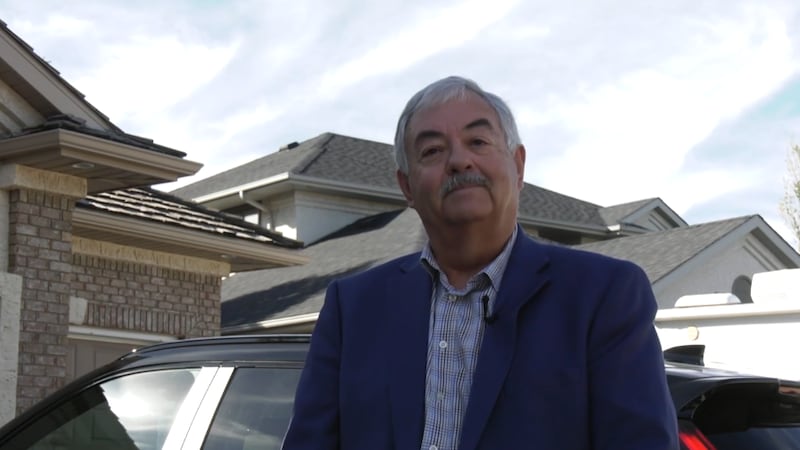
Karl Visser has a simple goal for his four-year-old daughter, Olivia; he wants to hear her say “I love you” just once. But Visser says a years-long wait for provincial support is standing in the way of the speech and physical therapy that could make that moment possible. Olivia has Rett syndrome, a rare genetic neurological disorder that leads to a loss of verbal and physical skills. Visser has been waiting since 2023 for his daughter to gain full access to the provincial Family Support for Children with Disabilities (FSCD) program. “It’s been years of waiting for an FSCD social worker. My family has not gotten the supports in a timely manner, which has led to delays and the progression of my daughter’s disability,” Visser said. He’s not alone. Advocacy group Inclusion Alberta is calling the current gap in care a “silent crisis.” While the province stopped providing official data on wait times in 2021, Inclusion Alberta’s latest report estimates families are waiting between three and four years to access a full range of services. “We know there are thousands of families waiting with no real understanding of how long they will wait,” said Trish Bowman, CEO of Inclusion Alberta. “These are critical developmental years for children that they never get back.” Bowman noted that while funding for the program has increased, it has not kept pace with inflation or Alberta’s rapid population growth. She added that social worker caseloads have decreased, further complicating access. “It’s particularly challenging times right now in Alberta if you have a child with a disability or a family member with a disability,” Bowman said. “Families are really lost and honestly left in the lurch. We’re hearing from families all the time who are really desperate for support.” Jason Nixon, the minister of assisted living and social services, did not respond to CTV’s request for an interview. In a statement, his office said funding for the program has been increased but noted that demand remains high due to a growing population and an “increasing prevalence of disabilities.” “Alberta’s government is committed to ensuring Albertans with disabilities have the supports and services they need. That’s why our government has invested record amounts into supporting Albertans with disabilities, spending more than $3.6 billion in Budget 2025 alone—an increase of more than $152 million from last year, including an increase of $30 million for the Family Support for Children with Disabilities (FSCD) program,” the statement said. The statement went on to say, “With Alberta’s growing population, along with the increasing prevalence of disabilities, the demand for the FSCD program remains high, and Assisted Living and Social Services is working hard to connect families to services as quickly as possible.” The province did not provide specific answers regarding the current length of the waitlist. Bowman warned that the long-term consequences of underfunding these services will be felt across the province for decades. “These are investments in children and families that will make Alberta strong. To fail to do that is really a failure that we will live with for generations,” Bowman said. Visser said he will continue to fight for resources for Olivia and is encouraging other families to contact various levels of government to demand change.