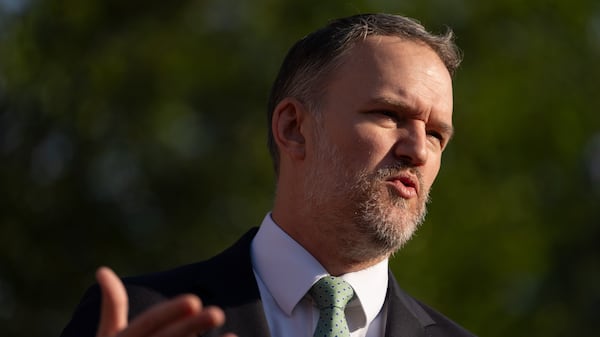
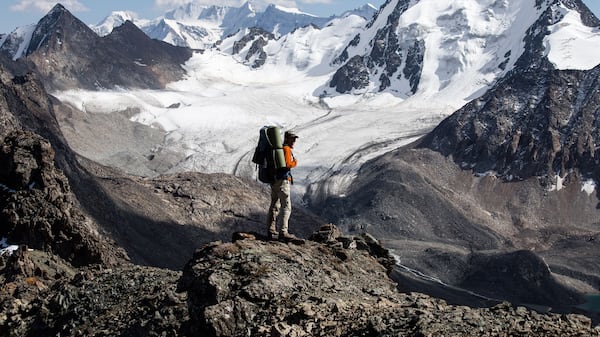
Calgary’s new film commissioner aims to attract new productions during a slower year for the local film and television industry. Adnaan Wasey began in August and thinks if more people know about the local world-class crews, jaw-dropping scenery and industry tax incentives, they will choose Calgary for their productions. “I’m really excited about the creative energy, and I want to take the momentum we have built the last couple of decades and turn it into a movement for Calgary.” Wasey was born in Toronto and launched the Kingston Canadian Film Festival but moved to Calgary from New York, where he was the executive director of Rooftop Films. He has worked in film and media for over two decades, including at PBS, The New York Times, The Gotham and on Emmy- and Webby-nominated projects. “I definitely have an advantage in the sense that I know producers in the (United) States that may have not thought of Calgary, and so I’m definitely going to look through my Rolodex of producers, studios and friends to say, ‘Hey, how about consider Calgary?’” he said. He has not tapped that resource yet because he has been busy with other leads. “We’re seeing a lot of interest,” Wasey said. “Even in my first month, we have had interest from not just local producers and national producers, we’re also getting connections from Hollywood. They have been reaching out saying, ‘We’ve heard about Calgary, and we want to produce there,’ and it’s really exciting to be able to have those conversations and build a pipeline.” ‘Not booming’ Wasey has also been busy meeting local industry groups, including the Calgary Society of Independent Filmmakers (CSIF) and IATSE Local 212, the union representing 23 areas, including camera technicians, wardrobe staff and sound mixers. Both organizations say 2025 has been slower than the previous year for the local film and TV industry. “Employment is at about 65 per cent this year, so we’re not booming, but we’re steady,” said Damian Petti, president of IATSE Local 212. Andrew Long, executive director of CSIF, says other major centres have around 100 productions shooting at a time, but Calgary typically has only a handful, which means more of a boom-and-bust environment for workers in between jobs. “We find a lot of people head to Vancouver or Toronto and pick up some work there for a while,” Long said. “But it’s really wonderful when you see more things happening locally so that people don’t have to move away every time it gets a little quiet here.” Focus on local While major productions including HBO’s The Last of Us (which shot in the Calgary area in 2021 and 2022) bring in big dollars, smaller projects are just as welcome and sometimes offer longevity. The Canadian TV series Heartland just wrapped its 19th straight season here. “It’s not that all of it has to be big stuff. You know, much the way that a lot of the economy nationwide is made up of medium and small businesses, the same thing is true in media,” Long said. He says he is encouraged by his initial meeting with Wasey. “I think he’s on board with the idea of making sure that we have more things developed locally that are shot locally and not relying so heavily on these things that are maybe at the whim of politics even outside of our country,” Long said. U.S. uncertainty United States President Donald Trump announced multiple tariffs in 2025, which caused economic uncertainty across many industries, including the plan for a 100 per cent tariff imposed on American productions shot outside the country. The Canadian film and TV industry said that would be a devastating blow, but since the initial announcement from Trump in May, the idea has faded away. “When (the tariffs) were announced, they sort of slowed decision-making down because people really didn’t know what was going to happen, but as time goes on, they see that it’s very difficult to impose a tariff on a service,” Petti said. “None of those tariffs have come to fruition, so it really hasn’t impacted the bottom line, and of course we’re going to pay attention when (if) they do,” Wasey said. Financial incentives Calgary’s film commissioner thinks Alberta’s tax credit program is a selling point for prospective filmmakers. “There are already really competitive incentives in Calgary to make it competitive provincially, nationally and internationally, and we want to make sure that people know that Calgary is a premier place where finances do make a lot of sense to make your production in Alberta and Calgary,” Wasey said. But the local head of entertainment’s biggest union suggests changes. “Here in Alberta, we could improve our incentives, and that would make us more attractive,” Petti said. He says tax credits in the United Kingdom have increased that country’s production volumes, and other Canadian provinces are introducing lucrative incentives, including Manitoba, Ontario and British Columbia. “I think Alberta, if it wants to remain competitive, should look at minor tweaks to the incentives. We just have to make it a level playing field with the other jurisdictions.” 2025 production Industry insiders say several projects are currently scouting Calgary but have not yet been confirmed. So far, 2025 has included the third season of the popular Netflix series My Life With the Walter Boys, the final season of Billy the Kid, Heartland, a special episode of Murdoch Mysteries and new Canadian series Anna Pigeon. Calgary’s access to 11 standing western sets, mountains and hoodoos has always offered seasonal work, but several sound stages built over the past few years now also offer year-round opportunities. “Co-productions with the U.K. and Canadian producers seem to be a thing now, so we’re hopeful that we will rebound to some degree,” said Petti. “Probably not to the level we saw in 2021 when the streaming wars were on, but we still have a viable industry,” he added. New filmmakers The head of CSIF says while the industry always ebbs and flows, creating more steady work is important for building capacity toward growth. “Looking forward to maybe getting a little bit busier; you know, those are important opportunities not just for the people who work day-to-day but for the people who are trying to find a career,” Long said. SAIT expanded its film and video production program in 2022 to meet growing demand, and Bow Valley College also offers programs in film production and entertainment arts. The graduates often rely on local projects to get their first jobs and enough hours to qualify for unions. Calgary’s new film commissioner is optimistic about the potential for growth. “There’s been tremendous work over the decades, so my goal is not to interrupt the momentum,” Wasey said. “This is an opportunity for collaboration between the massive creative industry in Calgary and to take that to the next level.”