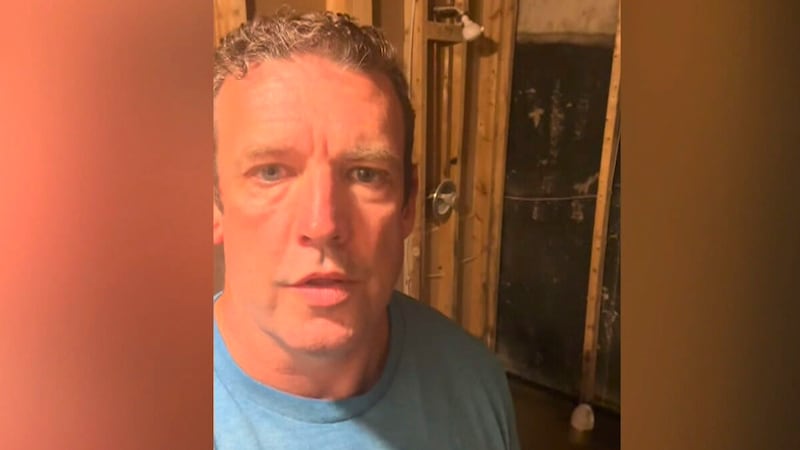
An Alberta man living with Alzheimer’s disease is calling on Ottawa to approve two new drugs already available in dozens of countries around the world, saying they could give patients like him a chance at a better quality of life. Brian Bates, 71, from Airdrie, was diagnosed with mild Alzheimer’s and dementia in March. “It was a surprise to me,” Bates said. “And it was all so abrupt when I got the news.” “I was driving a school bus at the time – and I loved being around all the kid’s smiling faces – but I was just told I had to stop. I was worried I wouldn’t remember the right routes to be driving down.” Bates, who worked in the telecommunications industry for much of his career, says the prognoses was discouraging. His wife Sylvia says Bates’ cognitive skills had slowly begun to decline. “He used to have 16 men that that he was in charge of at his old job, and he was able to do most things just over the phone without even seeing what they were doing on their own computers, but now he has difficulty using his own personal computer,” she said. Adjusting to the new lifestyle hasn’t been an easy change for the Bates family, but two new drugs for adults with early symptoms of Alzheimer’s are giving them hope. Slowing down the disease The drugs are Donanemab, sold by pharmaceutical company Eli Lilly under the brand name Kinsula, and Lecanemab, sold by pharmaceutical company Eisai and Biogen under the brand name Leqembi. “These are the first new drugs to come along in more than 20 years,” said Dr. Eric Smith, professor of neurology at the University of Calgary and Katthy Taylor Chair in Vascular Dementia. “They are not a cure, but they do slow the disease.” Smith notes that the drugs administered through monthly intravenous infusions work by targeting and removing amyloid plaque in the brain, one of the main buildups that cause Alzheimer’s disease. “The other drugs we have for Alzheimer’s disease help modify the symptoms – but don’t prevent the brain cells from getting sick and dying like these ones, and they don’t remove the plaques from the brain,” he said. “So these are the first plaque removers that we’ve ever had for Alzheimer’s disease.” According to Eisai and Biogen’s research, Lecanemab slowed cognitive decline by 27 per cent. Research from Eli Lilly showed Donanemab slowed Alzheimer’s progression by 35 per cent over 18 months. However, Health Canada has yet to approve the drugs. It means patients like Brian Bates have to wait. Bates says he worries he could lose out on critical time spent with his family. “I don’t feel as old as I am, but I know I’m getting older,” he said. “The support of my family means everything, and I couldn’t do this without Sylvia or my two sons; I stay positive because of them.” “We’re really hoping that Health Canada will improve these treatments just to help all the people out there with Alzheimer’s and dementia, to give them a better life for themselves and for their families,” Sylvia said. Health Canada approval still on hold Both drugs have been approved in the United States by the Food and Drug Administration; Lecanemab in 2023 and Donanemab in 2024. Donanemab is approved in 13 countries, while Lecanemab has approval in 48 countries worldwide, but Health Canada has yet to give the green light to either one In a statement to CTV News, Health Canada said it is conducting its review for both drugs “as efficiently as possible” after submissions were received for Lecanemab and Donanemab in May 2023 and February 2024, respectively. “Health Canada recognizes the urgent need for effective treatments for Alzheimer’s disease,” the department said. “At the same time, it must ensure that the benefits of these drugs outweigh the risks.” The department added that it is working with international regulators, and the review process involves ongoing engagement to gather comprehensive data. “While the standard review timeline is 300 days, more complex submissions that require additional data or analysis may result in extended timelines,” the statement continued. “The length of the review depends on many factors, including the complexity of the drug, the data submitted by the company, and the need to evaluate potential safety concerns,” Health Canada said. Smith says there are a number of factors could have resulted in a delay, as it is well over a year since applications for the drugs were made to Ottawa. “They can cause swelling or bleeding in the brain, and for about a quarter to a third of patients, often it’s asymptomatic and just shows up on scans and can be managed, but three or four per cent of patients have serious complications like a seizure or a symptomatic stroke from these medications.” Another issue is the lack of availability to MRI. Since both treatments require intravenous infusions and frequent monitoring with MRI scans of the brain, some are concerned that uptake of the new products may be impacted due to the logistics of long MRI appointment wait times in Canada. The annual cost of each drug is also staggering. The estimated cost per year for Lecanemab is US$26,500, while the estimated cost per year for Donanemab is US$32,000 per year. “It’s really a tough challenge because our society is aging fairly rapidly, and so the number of people with Alzheimer’s keeps going up and up and up,” Smith added, “Unless we have even better prevention, we will need treatment as well, so we’re going to continue to suffer an increasing burden from Alzheimer’s disease.” Time is critical Family physician Dr. Rick Ward, a clinical associate professor at the Cumming School of Medicine at the University of Calgary, said the drugs work best if patients can access them as soon as possible. “The critical thing is time,” Ward said. “We can’t wait a year or two years.” Ward, who is currently working with the Bates family, says that waiting for approval means patients with Alzheimer’s Disease lose ground that can’t be recovered. “These drugs don’t work if you’re too far along in the disease,” he said. “You have to catch people early, so it’s difficult when patients know there are drugs available elsewhere that could help them, but they can’t access them here.” Despite the delay in approval for new treatments, Ward still places a focus on prevention of Alzheimer’s disease entirely. He tells his patients that healthy eating, regular exercises and cognitive stimulation are critical. “It’s also simple things like having your hearing assessed, ensuring that you’ve got proper vision, it’s being screened for things that are unhealthy for our blood vessels, so high blood pressure, diabetes, cholesterol,” said Ward. “You put all these things together and there’s lots that can be done in the preventative space to prevent people from having to walk down that journey of cognitive impairment.”