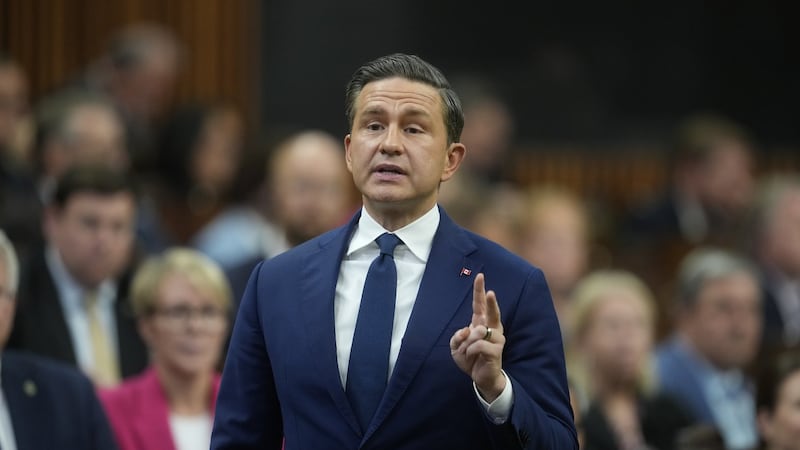
Alberta’s United Conservative government has made provincial sovereignty its top legislative priority, tabling Bill 1, the International Agreements Act. Premier Danielle Smith said the new law would ensure “decisions that affect Albertans are made by Albertans,” declaring that the Constitution gives provinces control over their own jurisdictions and that “authority cannot be signed away by Ottawa.” “Ottawa can sign international agreements with other countries. That’s their right,” Smith told reporters. “But this legislation makes it clear that those agreements will only become enforceable in Alberta if implemented under provincial legislation.” The government says the act replaces the International Trade and Investment Agreements Implementation Act first passed in 1995, extending its scope beyond trade and investment to any treaty that touches areas of provincial authority, including health, education and natural resources. Smith said Quebec’s framework, in place since 2000, inspired Alberta’s approach, and she confirmed plans to expand Alberta’s network of foreign offices. “I’m very inspired by some of the things that Quebec has done,” she said. “We’ll be opening up a couple of additional embassies or offices within those embassies in the next number of weeks.” Asked to name an instance where Alberta had been bound by an unwanted international accord, Smith said she “might have to do a bit more of a granular look before I would be prepared to say that.” She instead pointed to her frustration at the COP28 climate conference, saying federal negotiators had not consulted Alberta on issues affecting oil and gas. “We’re drawing a line,” she said. “They cannot make decisions in our areas of jurisdiction at an international table without including us.” By receiving top billing in the legislative order, Bill 1 typically displays what a government considers its most important legislative item of the session. In this case, it was tabled while thousands of striking teachers, in their third week off the job, rallied outside the legislature building’s doors. The premier insisted the timing of Bill 1 was coincidental and unrelated to the provincewide teachers’ strike. “The process for developing legislation takes place months and months in advance,” she said. “We can do two things at once.” NDP Leader Naheed Nenshi dismissed the legislation as “performative politics.” “They’re passing a bill that nobody wants, that nobody really cares about, and they’re trying to distract from their terrible record this week, especially on education,” Nenshi said. “It’s blatantly unconstitutional, it violates everything that we stand for as Canadians and it’s just another excuse for Danielle Smith to blame Ottawa for her failures.” Asked by CTV in a morning briefing, the premier did not cite an example of an international agreement that harmed Alberta sovereignty. Nenshi said the bill is meant to appeal to the premier’s base rather than solve the province’s current problems. “If the government cannot come up with a single example of a time where an international agreement has hurt Alberta, why would they make that their Bill 1?” Nenshi said. “It’s because they’ve run out of things to do. … They have no idea how to solve the problems that Albertans are really facing.” Mount Royal University political scientist Keith Brownsey described the legislation as a diversionary tactic. “The federal government has jurisdiction over international relations,” Brownsey said. “They (the province) can assert all the sovereignty they want, but it doesn’t mean anything.” Brownsey said the move is intended to deflect attention from the province’s other troubles. “We have 51,000 schoolteachers … out on strike. We have a crumbling health-care system,” he said. “It’s a deflection. It’s to rile up their base against the federal government for one reason or another. “It’s like a Seinfeld bill—a bill about nothing.” Brownsey said this reinforces perceptions that the government is more interested in symbolic fights with Ottawa than in managing domestic issues. Bill 1 continues Smith’s sovereignty-themed legislative strategy, asserting that Alberta can refuse to implement federal agreements that conflict with provincial interests. The law would require any international treaty affecting provincial jurisdiction to be debated and passed in the legislature before taking effect. Once passed, the International Agreements Act will repeal the International Trade and Investment Agreements Implementation Act (RSA 2000 c I-7) and take effect upon Royal Assent.