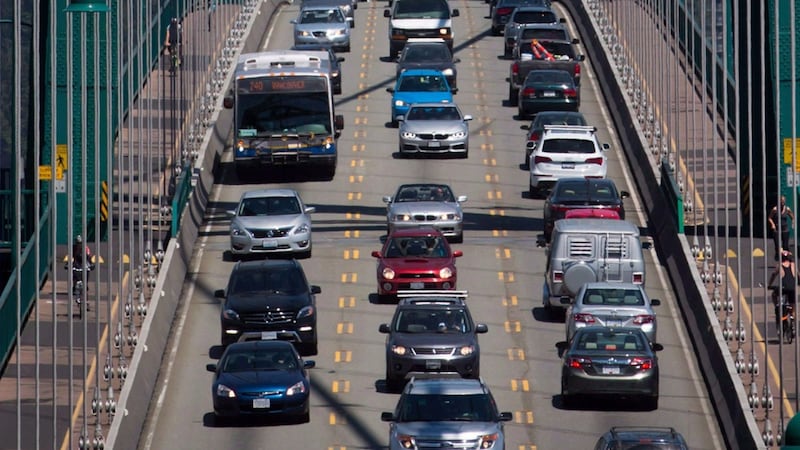
Halifax Regional Council voted down a motion at Tuesday evening’s meeting that would further discuss possible alternate routes for the Morris Street East Connection. The Morris Street East Connection is a proposed bicycle network that would be accessible to all ages and abilities. A report recommends east-west cycling lanes in the south end of Halifax. The bike lanes would connect Morris Street, University Avenue and segments of South Street, Cartaret Street and Oakland Road. The plan would also see Morris Street become a one-way street for vehicles. Mayor Andy Fillmore asked councillors to consider other options. “Our transportation system has to work in a way that allows all roadway users to have their needs met, but not at the expense of other roadway users having their needs met,” said Fillmore. “Morris is the best location” The motion fell 13 to four Tuesday night. Coun. Trish Purdy was was not in favour of sacrificing two-way vehicle traffic. “It seems like the AAA bike network is the top priority and all other priorities just fall to the wayside when it comes to making decisions for this,” said Purdy. Coun. Laura White said the Morris Street bike lanes are the best option. “I feel strongly that Morris is the best location for this cycle path that’s been designed since 2017,” said White in an interview with CTV News. “It’s a design that has been well-researched and consulted.” The design was previously approved by council in October and again for the second time at Tuesday night’s meeting. “Worsening traffic congestion” Mayor Andy Fillmore put forth a motion last month to pause the construction of new bike lanes in the municipality, citing a “growing public concern over worsening traffic congestion.” Council voted 12-to-five against that motion – and in favour of proceeding with what’s been in the works. “Council is always looking to make decisions in the best interests of residents, of long-term sustainability, of finances, and we want to collaborate and work together to find the best solutions,” White said. “It hasn’t felt collaborative to this point; I’d really like it to go back in that direction.” Bike lane compromise White said a compromise made at Tuesday’s meeting was to implement the Morris Street bike lanes tactically, which would allow the city to put them in sooner. Tactical lanes are bike lanes protected by concrete slabs. White said most tactical bike lanes in the city later become permanent facilities, which are more visually appealing. “Another benefit of doing something tactically is that if it’s not working, we can change it,” White said. CAO Cathie O’Toole raised the concern that the province could override this decision and cost the municipality more. “That’s the new piece with Bill 24: the ministerial power now exists that the province can order us to remove transportation infrastructure at the municipality’s expense,” said O’Toole. “That’s one of the reasons taking a more slow and cautious approach and making sure there’s broad stakeholder support and making sure that we’re making a wise investment might be a good idea.” The original cost was $5.1 million, but White says the concrete option will be cheaper and faster. “It is a risk that Bill 24 exists. The province hasn’t used it yet, but the worry that’s in my mind as CAO, if there’s ever one project that would be a candidate to use it on, I think it would be this one - based on the letters that I’ve seen be submitted that were circulated in the council correspondence package,” said O’Toole. The motion says staff will come back in two years with an evaluation report on the overall Peninsula South Complete Streets project, which includes the Morris Street East Connection. But the councillor said she doesn’t want this to be a pilot project. “This is a bike lane that has been planned since 2017,” White said. White said the bike lane would help further fulfill the AAA network – an “All Ages and Abilities” bikeway – the city is late on delivering. “For now, we need to deliver on what we said we were going to do in 2017,” White said. White hopes the bike lane will be set up next year, or the year after. Planning is also being done to convert a small segment of Lower Water Street, in front of Nova Scotia Power, to two-way traffic to help alleviate some traffic impacts. With files from CTV Atlantic’s Callum Smith For more Nova Scotia news, visit our dedicated provincial page