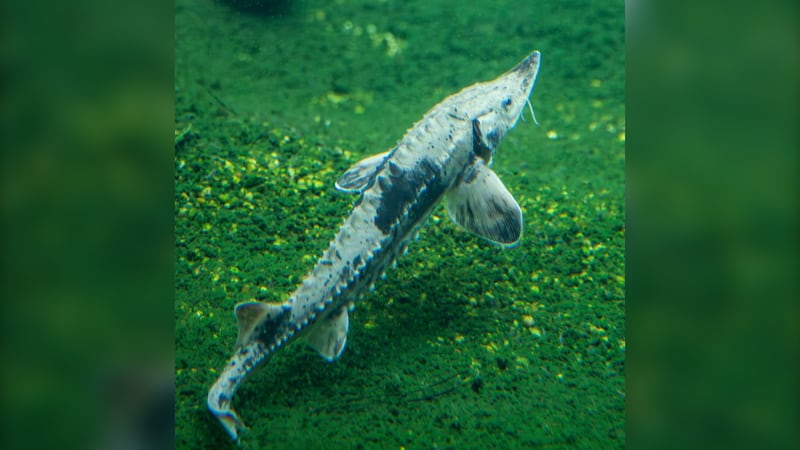
For thousands of years, the Mi’kmaq in New Brunswick have relied on salmon, or as they call it, plamu, to sustain themselves. Now, that is very much in jeopardy with the Atlantic Salmon population in the Miramichi River shrinking at an alarming rate. Joe Augustine, a biologist and field technician with the North Shore Mi’kmaq Tribal Council (NSMTC), explained the drop in numbers through the perspective of an Indigenous person. “When my grandfather was a kid in the 1940s, you could catch salmon by the hundreds really. You could go out fishing one day and feed the family for almost the entire summer. Nowadays, you’re lucky to go out and catch one fish a summer, one fish a spring, one fish a season. It’s been a drastic decline,” said Joe Augustine. His brother Ethan Augustine, a senior biologist with the NSMTC, said the numbers have been down for years and there’s currently around 10,000 total in the river. He said salmon numbers have declined 75 per cent since 2022 due to predators and climate change. “It is not good,” said Ethan Augustine. “There’s only about 5,000 between both sides of the river compared to a few years ago when there was 20,000.” The council is calling the salmon situation a crisis and is looking for long-term federal funding and support. The NSMTC has developed a five-year, Indigenous led strategic plan called Plamu First which urges action to prevent the collapse of the species that they say is critical to the economy and a way of life for people in the Miramichi area. Miramichi Salmon Association president Butch Dalton said the significant decline in numbers is mostly driven by the explosion of the striped bass population in the river. “It’s tough times for salmon,” said Dalton. “There’s a history and a culture here that if it was lost it would be just a real tragedy.” Some of the decline can be mitigated by implementing the five-year strategy which he believes will make a difference in the salmon population. “What we really need is some dedicated funding similar to the $600 million plus investment that was made for Pacific coast salmon,” said Dalton. “We haven’t had that kind of investment for Atlantic Salmon on the East Coast. So, in order for this plan to work we’re going to need DFO [Department of Fisheries and Oceans] to support it and fund it.” Joe Augustine said getting the numbers back up starts with collaboration between all the concerned stakeholders. The council, the Miramichi Salmon Association, the Atlantic Salmon Federation and the provincial government all work together on salmon preservation projects. Joe Augustine said building the numbers back to where they once were starts with help from the federal government. “But we want to do it together,” said Joe Augustine. “We’re looking for funding from DFO, but we’re also looking for collaboration.” One of the projects are smolt wheels under the Wayerton Bridge. The floating wheels spin and capture smolts as they’re coming down river. They’re then tagged and released up river to determine a population estimate. The hope is by putting them in a truck and bypassing the area where striped bass are feeding, they’ll be able to escape their predators. “It gives them a better chance of surviving and making it out to sea to hopefully come back and reproduce a couple of years down the line,” said Joe Augustine. The council’s Plamu First plan was submitted to DFO for review in April with a budget request for $38 million to support operations and conservation projects. DFO spokesperson Naomi Librach said they’ve received a copy of the Plamu First plan. “The Department will continue discussions with North Shore Mi’kmaq Tribal Council and its collaborators,” said Librach in an email to CTV News. Librach said DFO recently released a national strategy for the future of Atlantic salmon this past March. “The goal of the strategy is to create the conditions necessary for Atlantic salmon, Indigenous peoples, and the broader salmon community to thrive,” said Librach. “It is intended to provide guidance at a national, species-wide level, and proposes a place-based approach to mitigate threats to salmon.” For more New Brunswick news, visit our dedicated provincial page.