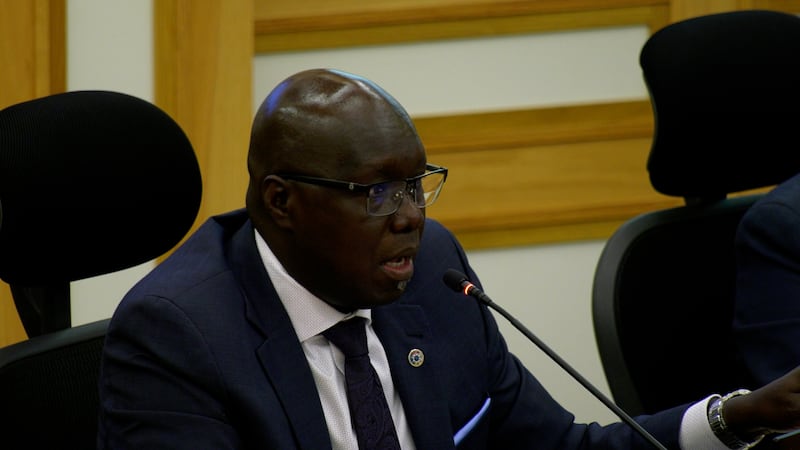
A series of reviews and rulings about bilingualism in New Brunswick has become the backdrop for a first-of-its-kind provincial tour starting next week, gathering public feedback on the province’s Official Languages Act. The legislature’s standing committee on official languages – which has representatives from the Liberals, Progressive Conservatives and Green Party – is reviewing the act with a final report due before the end of this year. For the first time, the act’s review will include public consultations hosted in nine communities across the province: The legislature’s standing committee met at four meetings inside the legislature last month, featuring presentations from invited organizations. The meetings broached multiple topics, with several questions centred around extending official language obligations within privately operated nursing homes – a recommendation made in a 2021 review of the act (which also recommended the legislative standing committee’s formation). Société de l’Acadie du Nouveau-Brunswick president Nicole Arseneau-Sluyter said that as an Acadian living in Saint John, she had personal concerns about not being able to access a special care home in southern New Brunswick while still being served in French. “I know that if I spend my final days in a special care home in Saint John my dinner will be served to me in English,” said Arseneau-Sluyter in French, via the legislature’s translation service. “I don’t expect that tomorrow Shannex in Saint John will be full of French speaking staff,” she said. “But if they had just one or two?” The New Brunswick Association of Nursing Homes said the implementation of official language services inside nursing home facilities could destabilize a vulnerable environment without careful thought and consideration. “You need to take a needle and thread the tapestry,” said association chief operating officer Justin Weiss. “You can’t hit it with a hammer.” Discussion at the committee meetings have also touched on French immersion through the primary and secondary education system, and language training for newcomers. The province’s Official Languages Act was first enacted in 1969 under Liberal Premier Louis J. Robichaud. The act had a major revision in 2002, establishing the position of Commissioner of Official Languages and setting municipal government language obligations. Implementation of the Official Languages Act across provincially regulated, privately operated services has become recent focus, following a separate ruling last month from the Office of the Commissioner of Official Languages for New Brunswick. Last month, the commissioner ruled Alcool NB Liquor must offer bilingual service at agency stores operated by private third parties because it delivers services on behalf of a Crown corporation. The commissioner’s ruling stemmed from a complaint made in February 2025 at an ANBL agency store where service was only available in English. The Commissioner’s ruling on agency liquor stores was supported by all three parties in the legislature. Also separate from the act’s review, the Supreme Court of Canada ruled on Friday that the lieutenant-governor of New Brunswick must be able to perform their functions in both official languages. The decision followed a legal challenge to the2019 appointment of Brenda Murphy as lieutenant-governor, on the grounds she could only speak English. On Friday, Premier Susan Holt said her government supported the Supreme Court’s decision. “Brenda Murphy did an impressive amount of work to become bilingual during her time as Lieutenant Governor,” said Holt, to reporters. “But the appointment should’ve been for a bilingual person.” For more New Brunswick news, visit our dedicated provincial page.