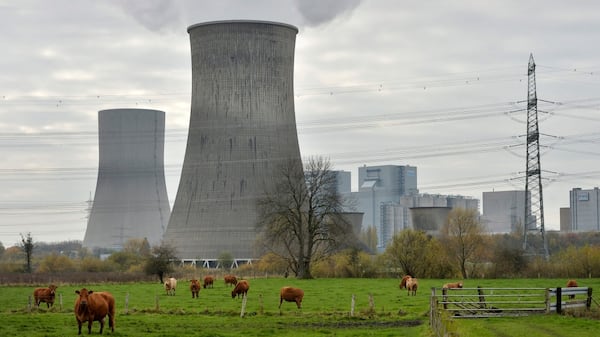
A storm of opposition is brewing in the Tantramar region of New Brunswick as residents and local officials voice urgent concerns over a proposed gas plant, threatening to disrupt the delicate balance of the ecologically sensitive area. From fears of contaminated well water and displaced wildlife to accusations of short-sighted energy policy, the project is facing intense scrutiny. Kellie Mattatall, a resident living just outside Sackville on Route 940, was among the first to raise the alarm. Learning about the plant through social media chatter, her immediate reaction was visceral. “Absolutely not in my backyard!” she said. “I live out on Route 940… and I am in a rental, so I don’t have a choice. And I’m on well water and that was my immediate concern.” Beyond personal anxieties, Mattatall questions the project’s compatibility with broader climate goals. “The federal and provincial governments have both publicly stated that they are trying to move away from fossil fuels and move into net-zero, into renewables. And I find that this project is really short-sighted.” She believes the plant, set to rely on fossil fuels for the next 25 years, is a step in the wrong direction. “I’m really concerned about my well water, my drinking water,” she added, highlighting the potential impact on groundwater, surface water and the area’s wildlife. Fueled by the fact that “490,000 liters of water per day would be taken from groundwater.” Her concerns are amplified by the plant’s proposed location “in the middle of the protected areas, environmentally protected areas,” as she emphasizes, referencing the Tantramar National Area, the Fundy biosphere, and its designation as a Ramsar Convention protected area for migratory shorebirds. “It just seems unacceptable that such a gas plant and fossil fuel plant would be going in, in the middle of all of that. This is going to impact all of that environment and that ecosystem,” she said. Matthew Hicks, a local business owner, echoed these environmental concerns, highlighting the potential impact on wildlife. “The birds, the migrating birds and all that, they’re going to be driven out of this area and their numbers are going to fall,” he said. He is particularly worried about the region’s growing bald eagle population and the Canadian lynx, fearing their displacement due to the plant’s presence. “They’re going to be driven right out of here,” he said. Hicks also emphasized the safety implications, questioning the emergency response capabilities in the event of a disaster. “My concerns are mainly about the safety issue of this facility and the response time of the fire trucks in the fire department.” Given the remote location, he worries that it would take “at least 15, 20 minutes to even get out to this spot and another 10 minutes down the road” in a worst-case scenario. Kristen LeBlanc, shared similar sentiments. “Living in a vicinity I guess that’s less than 10 kilometers away from where they’re proposing this gas plant is a little bit disheartening,” she admitted. “We look out on our front steps and we’re able to kind of just see clear skies, we’re able to see our migrating birds in the area, all of the animals at peace, you know. And it’s something that’s drastically going to change.” LeBlanc has spearheaded a petition to voice community concerns to provincial and federal officials, as well as Pro Energy and NB Power. Currently, it has around 140 signatures and with the support of the community she will distribute that information to anyone willing to learn more. She also expressed alarm over the lack of transparency and community engagement surrounding the project. “A lot of the people in the community don’t realize what’s at stake, what’s about to go on.” She fears the potential impact on well water, stating, “Everybody in this community...is on a well, and there’s no promise that it’s not going to contaminate any well.” The project description document on the Government Of Canada website includes mitigation measures for many of these concerns including: The document also outlines some benefits to having the gas powered power plant. But the local Green Party MLA Megan Mitton, representing the Tantramar area, says it’s not enough voicing her opposition to the project, stating she was “extremely disappointed” upon learning that a “frac gas plant” was planned for her riding. “It’s completely unacceptable,” she declared. She criticized the lack of consultation and called for a comprehensive environmental impact assessment (EIA) to be conducted. “We need to see a public Q and A session in person with the company in order to be able to answer people’s questions and have a more in-depth analysis. But again, we need a comprehensive EIA.” Mitton echoed resident concerns about air and water quality, wildlife and the project’s implications for the climate crisis. “This is for burning fracked gas and diesel. And we should be remembering that we’re in a climate crisis and rather than continuing down the old path of building new fossil fuel infrastructure, we need to see climate leadership and change pathways and implement renewable energy and battery storage and improve our grid energy efficiency. There are lots of solutions. We just need political will.” In a statement to CTV, NB Power says: We evaluated locations in the southeast of the province due to population and economic growth and proximity to existing natural gas and electrical transmission infrastructure. We selected Centre Village as our preferred location because it offers the best opportunity for timely project delivery and cost savings over other potential locations. Dual-fuel combustion turbines were selected because they are a low-cost capacity source to back up the grid when usage levels are below the allowable operating limits. They are a mature and predictable technology and provide needed reliability with limited capital investment. This is consistent with NB Power’s 2023 Integrated Resource Plan and 2023 Request for Expressions of interest for battery storage that identified that battery technology would not fill the need to integrate renewables and provide grid security later in the plan. NB Power does intend to issue another REOI for storage solutions later this year. There are many advantages to dual-fuel turbines: The size of the facility is projected to generate 500 MW of power. The approximate development footprint of the project site is expected to be 14.7 hectares. As the Aug. 13 deadline for submitting comments to the National Assessment Agency approaches, residents like Kellie Mattatall are urging their neighbors to make their voices heard. For more New Brunswick news, visit our dedicated provincial page.