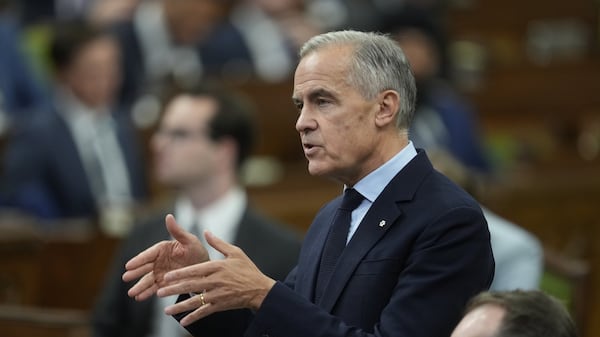
The U.S. administration’s rejection of a new CUSMA deal by this week’s deadline may have been one of the more predictable developments in the ongoing trade war, albeit with plenty more uncertainty to come. The U.S. rebuff means the existing Canada-United States-Mexico Agreement will be subject to an annual review for the next decade, with sectoral tariffs imposed by the U.S. still in place. “We predicted this and we are ready for this,” said Ron Marcolin, the divisional vice-president for Canadian Manufacturers and Exporters. Marcolin said the trade war situation remains status-quo since Wednesday’s deadline passed without the agreement achieving a 16-year renewal, as favoured by Canada and the U.S. “The Americans of course have objected to that, but on the other hand they have said they want to come back to the table,” said Marcolin. “So that’s a very positive plan B. It’s not a full rejection. “The concerning thing is the 232 sectorial tariffs which of course affect aluminum, steel and the auto sector, which is very concerning to Atlantic Canadians and of course elsewhere.” Canada-U.S. Trade Minister Dominic LeBlanc issued a statement saying CUSMA “remains fully in force until 2036 and can be renewed at any time for another 16-year period.” The CUSMA agreement will expire if a deal isn’t struck between the three countries in 10 years. Any of the three countries are also able to pull out of the deal entirely with six months’ notice. Industry Minister Mélanie Joly answered questions from reporters on Thursday at an announcement in Quebec, saying her message to Canadians was “we’ve got your back.” “We’re working with you, and we’re building Canada strong,” said Joly. “And these are not only slogans. These are real decisions that we’re taking as a government to protect jobs and create jobs across the country.” The official opposition said the federal government and Prime Minister Mark Carney haven’t been properly focused on achieving a deal through negotiations. “Once again, the same cabinet that brought us the first iteration of CUSMA has allowed the United States and Mexico to negotiate amongst themselves and then impose a deal upon us like they did last time,” said Shuvaloy Majumdar, a Conservative shadow minister, in an interview with CTV News Channel. “Let’s not play that movie out again, it wasn’t good the first time.” “This time, let us take the same kind of intensity that we’re bringing to diversification, which is good for Canada, to at least bring that same level of intensity to negotiating with the United States. I think the Prime Minister has spent more time in other capitals than focusing on the United States trade deal.” Officials from the U.S. and Mexico already have a date set for official bilateral talks later in July, with representatives from the two countries having already met before. Canada, however, has not launched official negotiations with the United States. Leading up to the July 1 deadline (set by U.S. President Donad Trump during his first term), Carney downplayed the risk of not having a CUSMA agreement signed by July 1. Following the G7 Leaders’ Summit in France last month, Trump said he would rather leave CUSMA unsigned and have it immediately terminated, though he also said he may sign the deal. Marcolin said he wasn’t expecting any real movement on the file between Canada and the U.S. until after Labour Day. “This throws another wrench into that work, and has for the last year and a half,” said Marcolin. “We just hope we can come to an agreement with the Americans in relatively short order.” With files from CTV News’ Stephanie Ha and Spencer Van Dyk