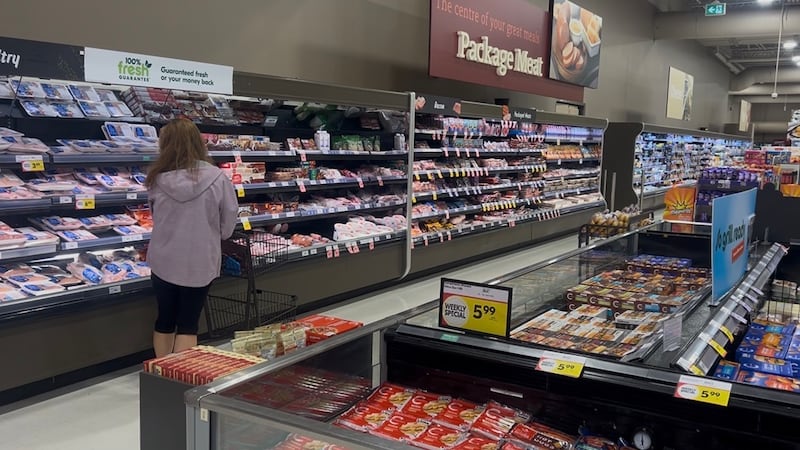
A new survey shows more Canadians are borrowing funds and dipping into savings to put food on the table. One in three Canadians report drawing from their savings or borrowing to eat, according to the new Canadian Food Sentiment Index from Dalhousie University’s Agri-Food Analytics Lab. Provincial trends vary. In Nova Scotia, the issue is reported by 24 per cent of respondents, for New Brunswickers it’s 28 per cent, and in Prince Edward Island the response is 14 per cent, though the survey had a smaller sample size for the Island. “Household food spending shows an overall upward trend,” reads the index report, which is released twice a year and tracks how Canadians manage spending and food buying habits. Total monthly spending increased from an estimated $497 in the Spring of 2025 to $521 in Fall 2026, an increase of $24. One in four Canadians still expect food prices to go up more than 10 per cent over the next year, according to the report, even as actual grocery inflation sits below three per cent. Affordability is the top concern When making decisions at the grocery store, most Canadians have affordability at the top of their mind, beating concerns for nutrition, taste, or environmental responsibility. “Overall, the results show that Canadians are not just confronting higher food prices; they are changing how they live with them,” says lead author Dr. Sylvain Charlebois in the report. And the familiar grocery-saving strategies don’t appear to work as well anymore. Couponing, shopping at cheaper stores, looking for better prices online, buying less non-essential foods, seeking sales and discounts and switching to cheaper brands are all on the decline, according to the survey. “With all six of the top grocery-saving behaviours declining overall since Fall 2024, it appears Canadians are doing less to chase grocery savings,” reads the report. “That suggests consumers may be reaching a degree of adaptation or strategy fatigue after several years of elevated food prices.” Dr. Stacey Taylor echoes this idea of consumer fatigue. “Canadians have spent years adapting their shopping habits to stretch their food dollars,” she says in the report. “Households have limited time and energy to chase every deal, especially when getting to the store is becoming more expensive.” Not just food expenses on mind Charlebois also points to transportation expenses taking a bite from Canadians’ savings, too. The majority of survey respondents, or 76.7 per cent, say their food expenses have increased the most over the past year. But transportation jumped to second place at 41.2 per cent. “This sharp increase is consistent with the renewed pressure Canadians have experienced from higher gasoline and diesel prices, which can affect both household transportation budgets and broader supply-chain costs,” reads the report. Charlebois highlights a bigger picture to be taken from the data. “Transportation is taking a bigger bite, savings strategies are wearing thin, and one in three people is turning to savings or credit to put food on the table,” he says. “That is a warning sign for household financial resilience.”