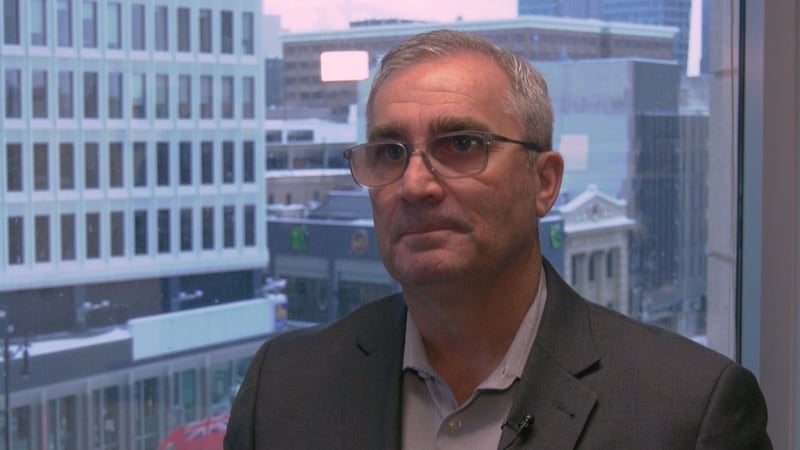
A gas pump price of $182.7 greeted motorists across Halifax Tuesday after the Nova Scotia Energy Board once again used the interrupter clause to increase the price of gas by 7.1 cents a litre provincewide. “I’m very cost sensitive as it is and now adding in that now my daily commute to go to school, to do the necessities is so much more expensive,” says student Aryan Kapur. Since the beginning of March, Nova Scotians have seen 10 gas price adjustments to the minimum cost of self-serve gasoline, six of which were the result of the interrupter clause. Petroleum prices have skyrocketed from $147.7 to $182.9 a litre. “When we’re looking at prices around the country, prices on the gasoline side or up by more than 40 per cent and on the diesel side, and I’m sure truck drivers have noticed, it’s way above 50 per cent,” says Carol Montreuil from the Canadian Fuels Association. Petroleum analyst Patrick DeHaan says the increases can be traced back to the start of the war in Iran and the subsequent closure of the Strait of Hormuz. “Everyone’s just trying to figure out the Strait of Hormuz, whether it will be blocked and what that looks like to a global economy that needs 100 million barrels of oil, that’s only getting about 80 to 85 million barrels.” The increases aren’t just affecting motorists. A new report says global jet fuel prices have more than doubled since the war began. The International Air Transport Association shows worldwide average jet fuel prices now sit 104 per cent above where they were just last month. That cost gets passed on to consumers by increasing their prices through surcharges. “Companies like Air Canada and WestJet along with their US based counterparts have been increasing airfares drastically,” DeHaan says. “The cost of jet fuel has been swinging wildly sometimes on a five-to-10 per cent daily fluctuation. I can’t imagine being an airline having hundreds of planes in a fleet and trying to figure out heads or tails what’s happening to jet fuel prices.” On top of Tuesday’s gas price hike, the federal industrial carbon tax is scheduled to increase on April. “A carbon tax on refineries makes it more expensive to drive. A carbon tax on fertilizer plants makes it more expensive to eat and a carbon tax on electricity makes it more expensive to live,” says Franco Terrazzano, federal director of the Canadian Taxpayers Association.