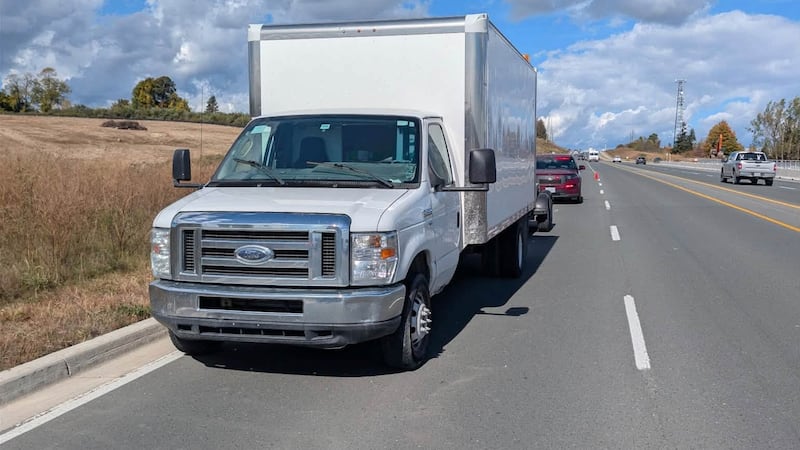
By all indications, Canada will wake up Tuesday with tariffs in place on all Canadian products headed to the United States. President Donald Trump’s executive order to implement a 25 per cent tariff on all Canadian products and a 10 per cent levy on energy is set to take effect March 4. The tariffs were initially supposed to take effect a month earlier, but they were delayed when Canada agreed to implement new security measures at the Canada-U.S. border. Despite the continued work to boost border security and countless diplomatic efforts by Canadian officials to Washington in recent weeks, Trump said last Thursday the tariffs will go ahead as planned. “What I heard on the weekends was it’s coming, it’s happening (Tuesday), but the amount is up in the air,” says Lobster Council of Canada president Geoff Irvine. “If it’s 10 per cent, we will have to deal with that, 25 per cent we’ll have to deal with that, but companies have been preparing for weeks and months.” Irvine says companies have been moving inventory over the border in recent weeks to try and get ahead of the tariffs. While he is unsure how much, he expects the price of lobster and seafood to rise once the tariffs take effect. He says some American customers have already admitted to not being able to pay more if the prices do rise. He says the month delay on the tariffs has been helpful in some regards to help industries better prepare, but he is hopeful for clarity on the matter one way or the other. “People make decisions around what to buy and when to buy, these things are going to be necessary to know,” Irvine says. “The sooner we know, the better. Another month delay is not going to be helpful. “It’s very frustrating. Business needs certainty.” Irvine says continued efforts need to be made to build new alliances in Asia and Europe, but knows Canada’s most important customer will always be the neighbours to the south. “We’re never going to replace the American market,” says Irvine. “We need to separate politics from the people, and I think that’s an important thing that we need to remember. Our American customers, they’re as unhappy about this as we are.” Those who move the region’s seafood, and just about every other export that leaves the Maritimes, are also watching the tariff news. Of the roughly $26 billion worth of exports that goes to the United States each year from Atlantic Canda, transport trucks are responsible for moving around 75 per cent of that product. Chris McKee, executive director for the Atlantic Provinces Trucking Association, says tariffs of 25 per cent have the potential to leave a “devasting” impact on the industry. “We are in the midst of one of the worst freight recessions we’ve seen,” says McKee. “There’s historically low freight volumes in our country right now and depressed freight rates, meaning our members are already struggling to make ends meet. Facing down the barrel of these tariffs now is… just a perfect storm, unfortunately.” While the impact of the tariffs is still unknown, McKee says it will likely result in job losses. “We can’t live under the month-to-month threat of tariffs being imposed upon us and that uncertainty that it brings to our economy, to our businesses, and to our business owners,” McKee says. “We need something to happen, hopefully no tariffs are placed on our goods but that doesn’t seem to be the case.” Jobs could also be lost in New Brunswick lumber industry, as some sectors were already struggling to make ends meet before the tariff talk began. Rick Doucet, president of the New Brunswick Federation of Woodlot Owners, says the added cost of tariffs may be too much for some woodlots. “(People already are) hanging on by their fingernails right now with the wood prices the way they are without the tariffs,” says Doucet. “I suspect that if this was to impact them financially, it could be the end.” He says it has been tough for woodlot owners to plan for the future due to the uncertain status of the tariffs. He says a lot of private woodlots in the western part of the province sell directly to the U.S. In an email sent to CTV News Atlantic, Forest NB executive director Kim Allen says members are “deeply concerned with the looming US tariffs on Canadian forest products and the implications of retaliatory measures on the highly integrated Canadian and US economies.” The sector had previously made their feelings on the tariffs known before they were initially supposed to be implemented in April. In her weekly update video posted on social media, New Brunswick Premier Susan Holt says her government is ready and prepared for the Tuesday tariffs. “We are watching for Tuesday’s tariffs news and either way our team is ready,” says the premier. “We have a comprehensive support package and action plan ready to share with you as soon as we have confirmation on what’s coming from the U.S.” The premier previously stated the tariffs could result in thousands of jobs lost in New Brunswick.