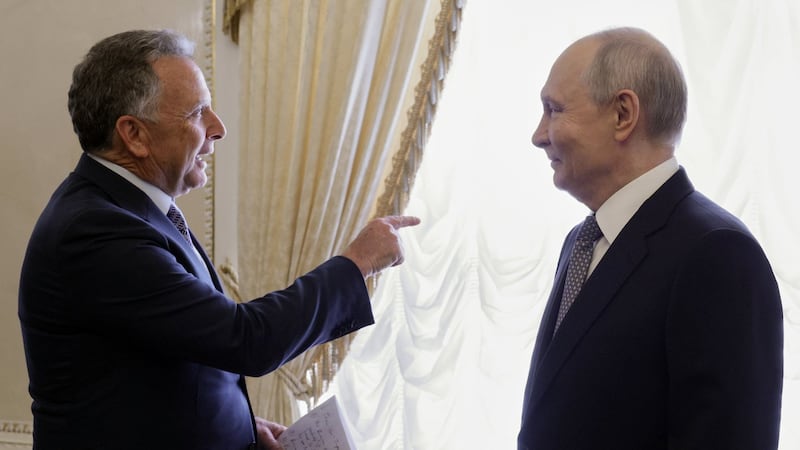
Britain on Friday hit back at Israeli Prime Minister Benjamin Netanyahu derisively calling the country an “Islamic republic” in an interview, branding the remarks “completely unacceptable.” The diplomatic tit-for-tat came after the right-wing prime minister made the reference in an army radio podcast interview the previous day, in which he criticised the U.K.’s stance on Israel. It echoed the language of far-right politicians and commentators in the Western world who have made baseless claims that parts of Britain have come under Islamic law due to immigration, drawing accusations of Islamophobia. “These comments are completely unacceptable and we have raised them with the Israeli Government,” a U.K. government spokesman said Friday. In the podcast interview, Netanyahu spoke of how Winston Churchill’s grandson and namesake vocally supported Israel during the 1967 Arab-Israeli war. “Would you find that now?” Netanyahu asked. “Someone once said that the first Islamic republic with nuclear weapons would be the Islamic republic of Britain,” he added with a smile. “We’re making sure there’s not another one here in Iran.” In a BBC radio interview earlier Friday, Israeli government spokesman David Mencer appeared to downplay Netanyahu’s comments. “He [Netanyahu] was making a quote that someone else had given,” Mencer said, noting United States Vice President JD Vance had “made those comments” previously. “He was quoting what the vice president had said.” Vance told the Munich Security Summit in 2024 that the U.K. could become “the first truly Islamist country that will get a nuclear weapon”, drawing a rebuke from senior U.K. politicians at the time. Britain was one of a number of European countries that recognized Palestinian statehood last year, infuriating Israel. More recently, its new prime minister Andy Burnham has said that his predecessor Keir Starmer did not put enough pressure on Israel to halt its offensive in Gaza. In an interview with The Guardian shortly before taking office, Burnham said that Britain would consider banning trade in goods from Israeli settlements in the West Bank, which Israel has occupied since 1967. Britain, usually closely aligned with Washington, has also kept its distance from the U.S.-Israeli war launched in February against Iran. Netanyahu has long vowed to prevent Iran from acquiring nuclear weapons, a goal that Tehran denies pursuing. Britain and the U.S. are nuclear powers, and Israel is widely known to have atomic weapons, although it has never publicly acknowledged its arsenal. In 1998, Pakistan became the first Islamic nuclear power when it tested an atom bomb in response to parallel tests by its historic rival India.