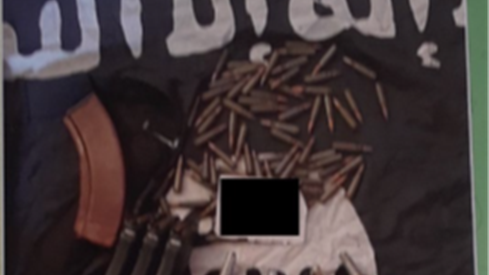
Two men in New York have been convicted in a financing scheme in support of the Islamic State (ISIS), a designated terrorist organization, a case which also has a Canadian connection. Abdullah At Taqi, 26, of Queens was convicted by a jury in Brooklyn, New York, last Friday of conspiring and attempting to provide material support to ISIS, as well as conspiring to launder money. His co-defendant, Mohamad David Hashimi, had previously pleaded guilty to all counts of the indictment. In total, At Taqi, Hashimi, a third co-defendant, Seema Rahman, along with co-conspirator Khalilullah Yousuf, sent more than $24,000 to the bitcoin address of a self-proclaimed ISIS member named Osama Obeida, a news release from the U.S. Department of Justice (DOJ) says. The four also sent more than $1,000 to Obeida’s PayPal account. Rahman and Yousuf, a Toronto resident, also established several GoFundMe campaigns that claimed to raise money for charitable causes, which At Taqi and Hashimi contributed to. Rahman raised around $10,000 through the GoFundMe campaign, which she wired to people connected to Obeida through Western Union. Each defendant faces a maximum of 60 years in prison. In January 2025, Rahman pleaded guilty to provide material support to a foreign terrorist organization. She currently awaits sentencing. In May, Yousuf pleaded guilty to two charges in connection with what the RCMP called Canada’s “largest terrorism financing scheme.” The case Investigators had uncovered the pair’s use of bitcoin, Paypal and fundraising platform GoFundMe to transfer thousands of dollars to ISIS as part of a fraudulent charitable giving scheme. Evidence at the trial showed that At Taqi transferred 15 separate bitcoin transactions to Obeida over the course of nearly 12 months, the DOJ said. At Taqi had told an online confidential source, referred to as CHS-1, that he’d used cryptocurrency to send money “unnoticed” through a “brother,” a term used to reference an ISIS supporter, that he was in touch with on an encrypted communications platform. He also confirmed that the “brother” was “from Dawlah,” a moniker for ISIS. The brother in question was Obeida, who At Taqi confirmed to CHS-1 was trustworthy and the pair had vouched for each other’s support for ISIS, the DOJ said. Obeida revealed to CHS-1 that he’d known At Taqi for two years and that At Taqi been regularly transferring money to him. He also shared a photo that verified the money sent to him was being used to buy weapons, the DOJ said. The photo in question included an ISIS flag with weapons on it, inscribed with CHS-1’s screenname and date, to prove the authenticity of the photo and the time it was taken. In other messages, Obeida directed At Taqi to delete messages and change his IP address. Meanwhile, Hashimi was proven to be a member of an ISIS supporter group chat. In April 2021, members of the chat spoke about posting links that claimed to be fundraising for humanitarian causes. However, the money raised would be diverted to fund the “mujahideen,” an Arabic term which the DOJ said is used by ISIS supporters to refer to ISIS fighters. In the chat, Hashimi warned other members to be careful when posting links to a PayPal campaign and bitcoin address, which were controlled by Obeida, as the links could be detectable by law enforcement.