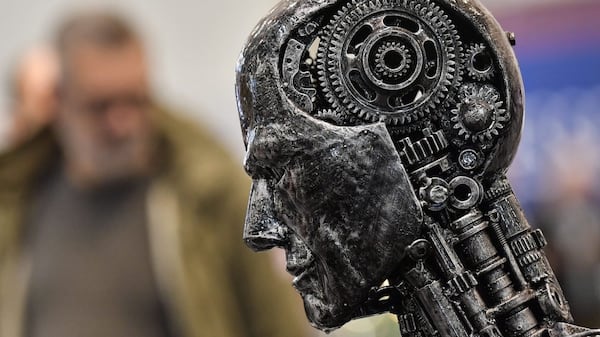
All of us have used “Dr. Google” in the past to look up symptoms and even self-diagnose. But now, with AI, many more people are getting advice before even seeing a doctor. Winnipegger Joanne Mason turned to OpenAI’s ChatGPT when she was experiencing symptoms related to her blood pressure. “I have some symptoms,” Mason recalled asking the program, “And do they match up that it’s, you know, urgent care or the emergency?” Mason is far from alone. According to a 2024 poll by the Canadian Medical Association, 75 per cent of Canadians have gone online to get information on a health condition or symptom, with 69 per cent looking for treatment options for a specific condition. And Doctors Manitoba say this isn’t a new phenomenon. “We have had patients engaged in their care and doing their own research ever since online information became so accessible,” said Dr. Nichelle Desilets, the organization’s president. What sets ChatGPT and other large language models apart from “Dr. Google” is the authoritative way it communicates that information to users. But the quality of that information can be suspect. “Those search engines and those AI technologies are only as good as the information that they have access to on the internet,” said Dr. Desilets. “There’s good information, but there’s also misinformation.” But even if AI isn’t ready to replace the advice of a human doctor, experts say that doesn’t mean it can’t be a big help. Physicians in Canada are already using artificial intelligence transcription programs to cut down on their administrative work. Qian Liu, an associate computer science professor at the University of Winnipeg, says AI is already quite good at diagnosing abnormalities in some test results. “A.I. can do a better job in the literature,” said Liu. “The performance has better accuracy, is better than a human doctor.”