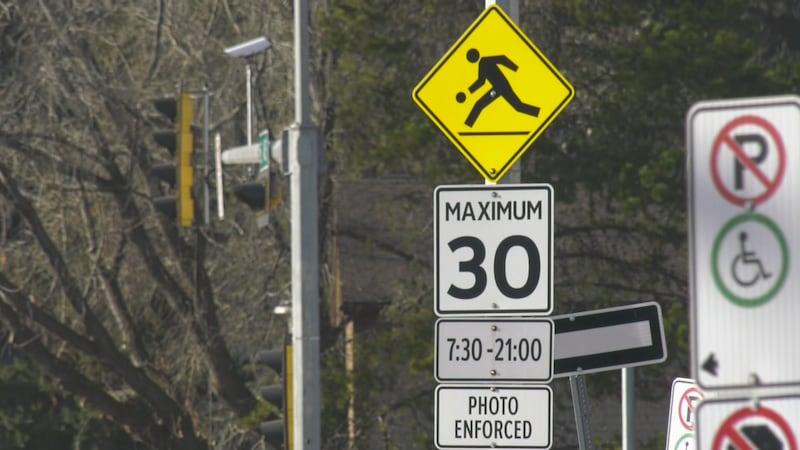
Pedestrians at school crosswalks are nearly hit by vehicles every day, according to a new study from the Canadian Automobile Association. The research found an average of 4.5 near misses per crosswalk each day. It also shows reduced speed limit signs and traffic lights cut the risk, but more can be done. Researchers used video cameras to monitor 30 school crosswalks in Winnipeg and 10 other Canadian cities. They recorded 660 near misses over five days, an average of 4.5 near misses per crosswalk every day. École J.B. Mitchell School principal Matt Couture says two students and a teacher have been hit by vehicles in the last few years, along with a number of close calls. “What we’re seeing are too many driver infractions, right near schools and daycare and this is just unnaceptable to us,” Couture told CTV News on Thursday. Couture says the national findings don’t surprise him. “I would say that that is on parr with what we are seeing here,” he said. Parent Scott Hofer says any effort to reduce the number is welcome. “You’d like the number to be as low as possible so anything you can do to bring that down I think is a good thing,” Hofer said. The study found crossings with school zone or reduced-speed zone signs had fewer near misses. Those without had a 67 per cent higher rate of close calls. It also found that crossings with a traffic signal, stop sign or roundabout had a near-miss rate 20 times lower than those without. The report recommends expanding the size and hours of reduced-speed school zones, along with signage. It also suggests planning routes that avoid crossing major streets, and making sure any crossings on those streets have traffic control devices such as lights. Couture would like to see new speed bumps and a set of lights down the road at Grant Avenue and Lanark Street to help protect students walking to school. But he says that in the end, the responsibility rests with drivers. “Ultimately, regardless of time changes, regardless of adult crossing guards, regardless of patrols, what we need is adult behaviour to change behind the wheel.”