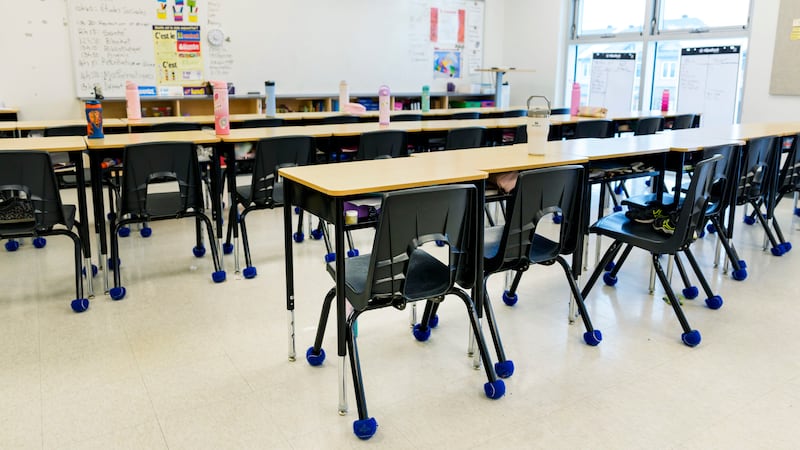
A new report from an education think tank is raising alarms over low literacy levels across the country, particularly in Manitoba, where more than half its students are failing to meet literacy targets. The Aristotle Foundation for Public Policy finds more than one in three Canadian students are unable to read proficiently by the time they finish Grade 3. In Manitoba, the report pulled from provincial data released in 2024, finding 56 per cent of grade three students missed English reading literacy targets. The foundation said these numbers can have lasting effects on a child’s education. “Grade three and four, according to the empirical information that we have, are really critical years for laying the foundation for literacy for students moving forward,” said David Livingstone, a senior fellow with the foundation. “It just becomes harder for them to catch up if they don’t have those basic skills set by that point.” According to Manitoba’s Grade 3 and 4 assessment data, over the past five years less than half of Manitoba’s Grade 3 students have been meeting expectations when it comes to reading in English. In northern parts of the province, it’s less than 25 per cent, dipping as low as 14 per cent. In a statement to CTV News, Manitoba’s education minister Tracy Schmidt said the province is working to revitalize its curriculum. “This year, we implemented universal early reading screening for the first time for all students in K-4 and a new K-8 ELA curriculum is being piloted that ensures literacy is a core part of every kid’s education,” the minister said in a statement. “We’ve also added 964 teachers to Manitoba schools, helping students get the extra one-on-one time they need to excel.” Parents in the St. James Assiniboia School Division, for example, might notice something new in their kids report cards this year. The division is rolling out an early reading screening assessment for students in Grades 1 to 3 and sharing the results in the Term 1 and Term 2 updates. “Universal screeners are short, standardized assessments that give a ‘temperature check’ of key skills such as phonemic awareness, phonics, oral reading fluency, and comprehension,” said Jordana Buckwold, the divisions assistant superintendent of educational programming, in a statement. The division said these assessments will help teachers, parents, and caregivers better understand how students’ reading skills are developing and provide timely support.