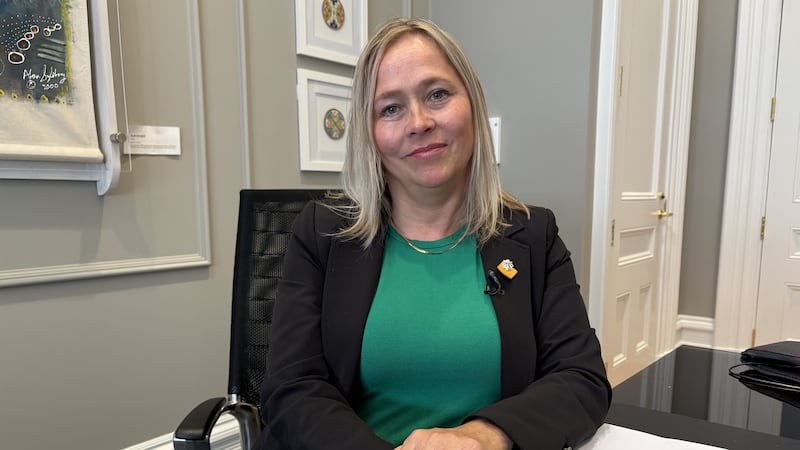
Work to implement the Calls for Justice could be undone according to a new report, which is raising concerns about the long-term commitment of funding from the federal government. The National Inquiry into Missing and Murdered Indigenous Women and Girls was shared seven years ago. With it were 231 Calls for Justice, which are designed to help end violence against Indigenous women, girls, two-spirit, and gender-diverse people. The federal government has spent or earmarked more than $146 billion for programs according to the Canadian Centre for Policy Alternatives and the National Family and Survivors Circle Inc. But a new report entitled “Fragile Progress” is highlighting that many of these programs have already ended or could end soon as funding from the government lessens. “There has been significant investments into moving this work forward, but the concern is that there’s no commitments that are long-term and substantive beyond what is identified in the report,” said Hilda Anderson-Pyrz, the president of the National Family and Survivors Circle Inc. “There’s no pass or fail in relation to the work the government’s doing. All we’re saying is its incomplete and we have to keep moving forward collectively.” The report said annual spending is expected to drop by 51 per cent by 2028-29 and onward, going from $3.7 billion in 2024-25 to around $1.8 billion. The report describes the process as austerity through expiration. “Where commitments are not explicitly withdrawn but are, instead, allowed to lapse, producing structural instability while preserving the appearance of ongoing reconciliation investment,” the report reads. Anderson-Pyrz said seeing this always leads to concerns that the Calls for Justice will eventually fall to the wayside. “The Calls for Justice are built on the inherent and human rights of Indigenous women, girls and two-spirit and gender-diverse people and should never be on political agendas. There should be long-term substantive commitments made to ensuring that they’re fully implemented and that it’s a whole-of-government approach,” said Anderson-Pyrz. She notes the Calls for Justice aren’t just for people now; they are for future generations, ensuring they are safe and live a good life. “I don’t want generations coming after us to have to continuously worry if they’re going to go missing or if they’re going to experience violence or if they’re going to end up murdered. This is why this work is so critical.” The report highlights 10 recommendations for the federal government to stay on track for the Calls for Justice, including stabilizing funding for programs and creating a permanent funding framework, as well as recognizing the Calls for Justice as a “core human right obligation.” In a statement to CTV News, a spokesperson for Crown-Indigenous Relations and Northern Affairs Canada said the government has made progress on 163 of the Calls to Justice. As well, it has supported other initiatives such as community justice programs and “cultural safety and anti-racism training in medical education.” “We recognise that we cannot end this national crisis through one plan, individual or institution alone. Real, lasting solutions require a collective commitment to learning, listening, and collaboration. To that end, as we look to the year ahead, we will work across all orders of government, institutions, organizations, and communities to continue making progress and build a stronger, safer future for Indigenous women, girls, and 2SLGBTQI+ people,” the spokesperson said. They added support from the federal government continues across multiple avenues, “with a growing focus on long-term, Indigenous-led approaches.” Anderson-Pyrz said the government and Canadians need to put themselves in the shoes of the families of victims and survivors. “What if this was your daughter? What if this was your mother? What if this was your sister? What would you do to protect them and how would you hold the state accountable?”