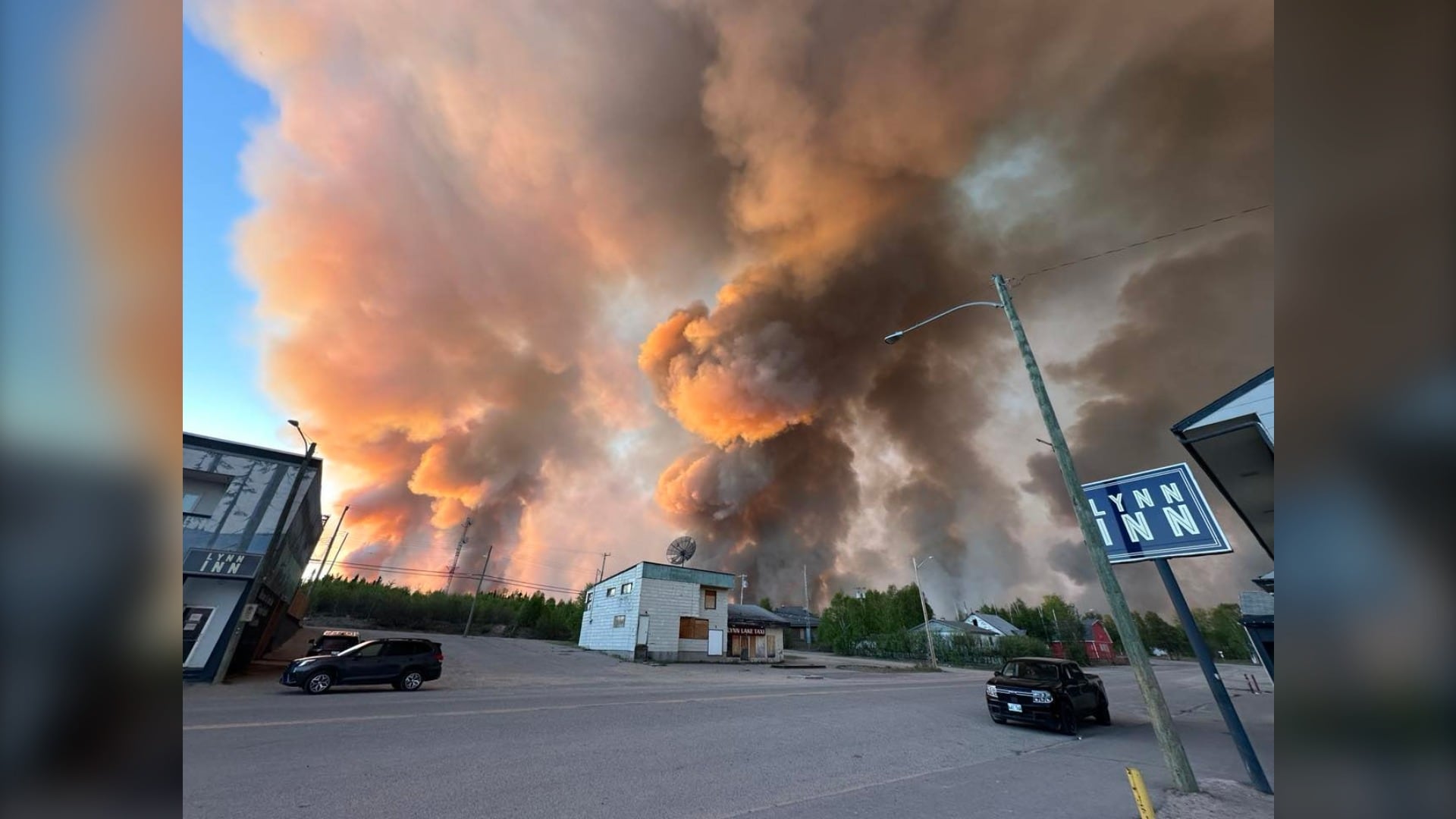
The company behind a Lynn Lake-area gold mine is accused in a lawsuit of setting off a wildfire that grew to tens of thousands of hectares and forced residents to evacuate as flames closed in on the northern community. The statement of claim, filed in Manitoba’s Court of King’s Bench on July 6, alleges Toronto-based Alamos Gold Inc. let a controlled burn get out of control last year, sparking a wildfire that caused “significant damage” to property nearby. Manitoba Wildfire Service data shows a 40-hectare fire burning in the area in the first week of May 2025, which grew to more than 85,000 hectares by August. The fire prompted the evacuation of Lynn Lake — home to roughly 600 people, located about 800 kilometres northwest of Winnipeg — in late May 2025. A provincial spokesperson said the cause of that fire remains under investigation. According to the statement of claim, Alamos performed a controlled burn at or near the gold mine in May that allegedly escaped its control and spread through the surrounding Lynn Lake and Burge Lake area. Eight area property owners are named as plaintiffs in the lawsuit — a man whose Burge Lake cottage was badly damaged as the wildfire spread, and seven residents of the Rural Municipality of Lynn Lake who incurred expenses evacuating the fire. Brent Ross, part of the MLT Aikins legal team behind the filing, told CTV News that the lawsuit was initiated at the “behest” of an insurance company. He would not identify the insurer behind the action but said the company is tied to the plaintiffs in the suit. “I can’t disclose that,” he said. “That might come out, but I don’t have instructions to disclose their name.” According to the statement of claim, “Alamos knew or ought to have known that there was a real and foreseeable risk that the burn could escape and cause damage to the surrounding community and neighbouring lands which would necessitate the evacuation of community members.” The filing alleges the company, which operates gold mines in Canada and Mexico, was responsible for the burn’s execution and monitoring and is liable for the resulting damages. It also accuses the company of negligence, alleging it failed to deploy sufficient personnel and equipment to maintain control of the burn and failed to report the burn to relevant authorities in a timely manner. The statement of claim seeks special damages of $94,496.29, along with general damages and costs. It alleges one plaintiff’s cottage sustained nearly $80,000 in damage, while the remaining plaintiffs’ collective evacuation expenses amounted to just over $15,000. In a statement, Alamos said the company has only recently become aware of the lawsuit and is not in a position to comment. “We understand the effects that the 2025 wildfires have had on community members, and as a member of the community we stepped in right away to provide support and resources both during the evacuation and now during the recovery period,” the statement said. “This includes a signification donation to the Canadian Red Cross and a donation locally for community-focused support, and we have since partnered closely with community leaders on joint emergency planning and responses.” One of the plaintiffs, however, said he wants no part of the case and only learned he had been named as a plaintiff through media reports. Eugene Shin, a Lynn Lake town councillor, is named in the suit along with his wife. He said their names appear together on the insurance policy for their residential property, but that the home itself was never touched by the wildfire. The couple’s claim relates only to evacuation costs. “Our insurance company paid out a per diem on a daily basis for us and our children,” he said, adding that is what the statement of claim is seeking. Shin said, as far as he knows, neither he nor the other claimants had any idea the matter was headed to court, and that he had no prior communication or notice from either the law firm or the insurance company. “We didn’t know about any of this until we saw this on the news... which is why we were very shocked to hear about it.” As a sitting councillor who works directly with Alamos on community initiatives, Shin said the lawsuit — and the way it became public — put him in a “very difficult position.” He described it as feeling like “a slap in the face” from the lawyers for filing the claim without notifying the claimants directly. Shin said he has since instructed his own lawyer to discontinue the legal action on his behalf. He also pointed to what he described as the “tremendous amount of support” Alamos has provided to Lynn Lake, adding that the company put $250,000 into one of the community’s funds that supports local events and expenses, and has committed $400,000 toward a new fire truck. Alamos also built a sliding hill for residents last winter, Shin said, and is working with the community on other capital projects. None of the claims have been tested in court, and no statement of defence has been filed yet.