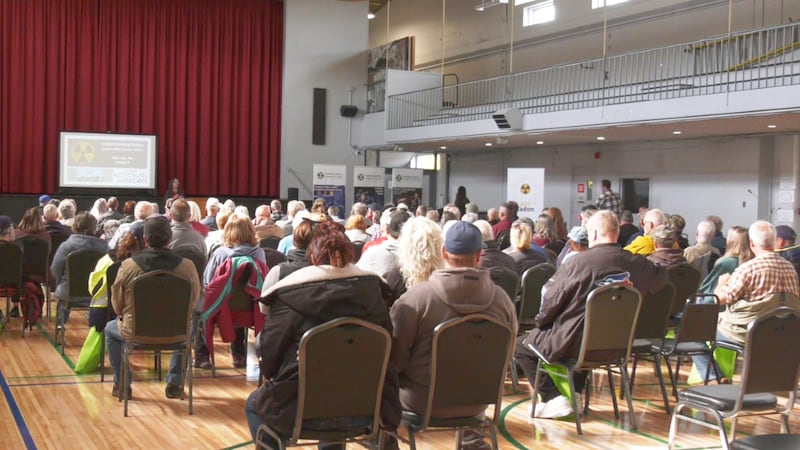
A Montreal-based charity is calling on Canada’s religious communities to unlock their idle land for affordable housing and community services—and it’s launching a national declaration to mobilize support for the cause. Relèven, founded in 2018, held a virtual news conference Monday to promote what it’s calling the “Winnipeg Declaration,” a public pledge aimed at faith leaders, politicians, and everyday Canadians who want to see idle church properties put to better use. “There are 30,000 acres of land in Canada held by Canada’s religious communities — that’s approximately twice the size of the city of Vancouver,” said Relèven CEO Graham Singh. “And at the same time, we have many needs in terms of housing and community resilience.” Singh, an Anglican priest who worked with the Church of England for over a decade before coming to Canada, said religious organizations too often sell properties at a loss without considering their potential community impact. “At times, religious organizations sell in a less-than-ideal way... It gets called a fire sale, and at times it truly is,” he said. “We would like to see more intention with the community impact, social impact that can be produced from those properties.” Singh said he worked with England’s Closed Churches Team—which manages the transition of churches no longer needed for regular worship—before coming to Canada to start Relèven. “We went around meeting a lot of bishops and equivalents, a lot of mayors, and we kept hearing the same thing, that there’s no… structure to bring these conversations together,” he said. The declaration calls on individuals, faith leaders, and all three levels of government to take more deliberate action when church properties are sold, leased, or redeveloped. “We encourage congregations in any form of tenure as they proceed in these projects,” Singh said. “That really helps come up with the best kind of idea.” He said the charity, which is funded by multiple government agencies and charitable foundations, works with multi-faith communities, including mosques and synagogues, but noted that “empty religious properties are almost all Christian.” The charity said municipal, provincial, and federal governments each have a distinct role to play—from adjusting zoning and tax frameworks to offering longer-term financing for social-purpose organizations. “If you have a church that has some tenants, if those are all churches, you continue to pay no local tax. If they are other types of nonprofits, you might start getting taxed, and it becomes a nervous thing,” Singh said. “That’s the kind of thing government could help with.” In Winnipeg, the charity says it has held two stakeholder roundtables—in April 2025 and February 2026—bringing together community agencies, faith leaders, architects, developers, and municipal and provincial representatives. Mike Wood Daily, Relèven’s director of research, said the sessions focused on identifying obstacles specific to Winnipeg, including heritage designations on many of the city’s older faith properties. Among the local partnerships is one with St. Mary’s Road United Church, which is working to build affordable housing and community space on its property. CTV News has reached out to the church for comment. Singh said Winnipeg was chosen as the declaration’s namesake city not because the housing crunch is unique there but because of its bilingualism and geographic centrality—a city he said brings together Canadians from east to west. Looking ahead to November, Singh said Relèven intends to formally present the declaration at several conferences in Winnipeg with national leaders in attendance. “We’re trying to make as much noise as we can for the average Canadian of any background to be able to sign the declaration and create some initiative around this simple message,” Singh said. “If you have a stake in what happens with religious property, even just beginning to make a step in this direction gets people excited.” Relèven said it is also working with the federal government on a proposal for a new financing tool designed to help social-purpose organizations take on and renovate faith properties.