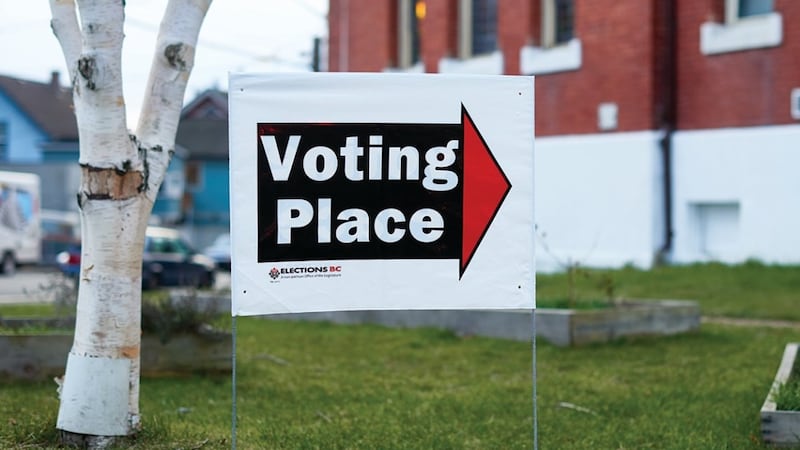
Polling officers braced for a busy election day as Manitobans filed into voting booths across the province to elect the next federal government. “We’re expecting lots of people,” said Pierre Guérrin, polls operations manager with Elections Canada. “That’s what happened with advance polling, and we’re expecting something similar today.” Probe Research’s Mary Agnes Welch said that high advance voter turnout, a 22 per cent bump in Manitoba compared to the 2021 federal election, doesn’t necessarily correlate to large turnout overall. Still, she said Canadians seem much more engaged this time around. “It’s been kind of a wild race, so that’s made people perhaps a little bit more likely to get out and vote.” Joanna Oznowicz said U.S. President Trump was a big factor when casting her ballot. “Those who love their pensions, they love their Medicaid. I’m four years away from retirement. I don’t want to mess with that,” she said. She’s not alone. Welch said this federal election campaign has been defined by Trump and his tariff war. “A big issue for all Canadians, and then in Manitoba, a pretty close second, is that cost of living, those kind of kitchen table—taxes, jobs, grocery prices—kinds of issues.” Andrew Thomas said Trump’s talk of making Canada the 51st state was a big factor in his decision, but so was housing. He began house-hunting last year and hopes the next government will make expanding inventory a priority. “How is each party going to handle it? Is it going to be more of an injection in terms of housing? That would be great. Immigration [is] another thing, and health care is a big one.” Manitoba Chambers of Commerce president Chuck Davidson said business owners are also concerned with affordability as well as workforce challenges. A reduction in immigration has made it challenging for businesses to access the staff they need, he said. Overall, he believes business owners are looking for someone who can Trump-proof the economy. “We need to make sure that we’re focused on all of those elements that are going to be key to growing our economy.” For Pat Wally, climate change was top of mind at the ballot box. She chairs Seniors for Climate Manitoba, an organization advocating for country-wide action on climate change. “Seniors, we’ve all got experience. We’ve been through tough economic times. We’ve survived recessions, but the concern is humanity as we know it may not survive the climate disaster unless our governments get doing and making very important changes,” Wally said. Canadians grapple with strategic voting Polling data by Nanos Research found the Liberals had a narrow, three-point advantage over the Conservatives on the eve of the election. As of Sunday night, a one-day ballot tracking by Nanos Research conducted on April 27 has the Liberals at 43 per cent (42.6) over the Conservatives, who are at 40 per cent (39.9) nationally. The New Democratic Party is at eight per cent (7.8), followed by the Bloc Quebecois (6.4), Green Party of Canada (1.9) and the People’s Party of Canada (1.1). In the Prairies, the Conservatives remain far ahead with 55 per cent of those surveyed backing them, versus 32 for the Liberals. The NDP is at 11. Welch suspects many left-leaning Canadians are grappling with voting strategically, particularly those who tend to vote NDP. “Maybe those die-hard NDPers who’ve thought, ‘I’m going to think about the Liberals because I really don’t want a Pierre Poilievre government,” she said. -With files from CTV’s Ainsley McPhail and Phil Hahn