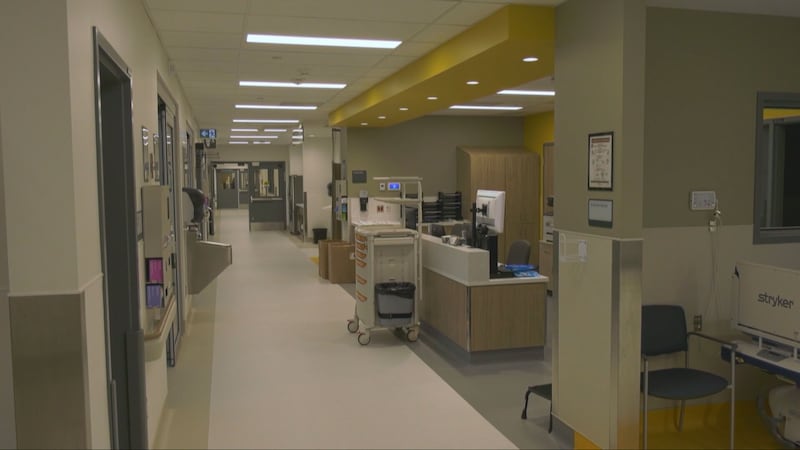
Erie Shores HealthCare (ESHC), based in Leamington, Ont., has implemented two new programs and created a new unit to be more efficient. ER efficiency “Physicians should see a patient within about three hours of arrival,” said ESHC President and CEO, Kristin Kennedy. “We were sitting at about six and a half hours, which is not ideal.” ESHC started tackling the wait times two years ago, when they rolled out new programs geared at efficiency. “Medical school teaches you how to be a subject matter expert on medicine. But it does not teach you to be a subject matter expert on efficiency,” said Dr. Braedon Hendy, ESHC Chief of Emergency Medicine. For one thing, ER doctors are scheduled based on historical data. “We’ve maneuvered how physicians are working and adjusting the schedule,” said Dr. Hendy. “We know which times are peak when patients are typically arriving, which times we can have less overlap.” Plus, the computer system in the ER flags to all staff if it’s been more than three hours since a patient has seen the doctor. ESHC has asked its doctors to take an online course in efficiency and patient flow. 70 per cent of ESHC’s doctors have willingly taken the course, where they learn, for example, how to “batch patients”, according to Dr. Hendy. “Going to see two to three patients in a batch and then coming in to put those orders in and putting the greatest amount of effort into the first four hours of your shift,” Dr. Hendy explained. ER doctors, he said, routinely order bloodwork and diagnostic imaging for many of their patients; results which can take “a few hours”. “Ordering imaging is a major bottleneck and it’s no one’s fault,” Dr. Hendy said. “It’s very difficult to make a decision where this individual goes based on their presentation without that imaging done and also reported by the professional staff.” That’s where the second program comes into play. Diagnostic imaging blocks ESHC sets aside 30-minute time blocks for ER patients only. “Having set blocks in our schedules each day to allow for patients to be put into those blocks as opposed to going home and coming back the next day or waiting five hours,” explained Kennedy. “We’ve had 20 per cent improved times to have that imaging done,” Dr. Hendy added. The hospital has also used historical data to staff the diagnostic imaging department when they typically experience surges in need. “We’ve done a lot of work in the last two years to increase our imaging department,” said Katelyn Dryden, ESHC Vice-President of Outpatient Services and Chief Financial Officer. “We’ve increased our studies, basically doubled at the end of the day.” According to Dryden, the CT scan suite runs 24 hours a day, seven days a week. The efficiency training and diagnostic imaging blocks are cutting wait times in the ER, according to both Kennedy and Dr. Hendy. “I’m seeing 20 per cent more patients per shift,” the doctor says. The CEO said all those measures have allowed the hospital to cut ER wait times “within the last six weeks to three and a half hours,” according to Kennedy. As for ER wait times, Kennedy said, “we’ve dropped that just within the last six weeks to three and a half hours, which is quite remarkable.” The sooner a patient is seen, the sooner they can be assessed, tested, and diagnosed, which determines whether they can go home, or they need to stay. When a decision to admit is made, the ADU comes into play. Admission and Discharge Unit “The ER is not the best place for an inpatient,” said Patti Fields, ESHC Home First Lead. After spending the first 15 years of her nursing career in the ER, Fields was part of the team to develop the Admission and Discharge Unit (ADU). “What the Admission Discharge Unit does is just help to keep that patient flow going throughout the hospital,” she said. When the ER doctor admits the patient, they will move from the ER over to the wing where the ADU operates. “There is an admission-discharge nurse there. She completes all the admission paperwork. And then the patient either will stay in the admission-discharge unit or will go up to an inpatient bed from there,” explained Fields. Meanwhile, a maintenance staff member is already cleaning the ER room and bed for the next patient waiting after triage. Once that inpatient is discharged to go home, they return to the ADU. “The same nurse, the admission-discharge nurse, will do all the patient education, go over the medication reconciliation, and provide any health teaching that is required, before the patient leaves,” Fields said. “Even when patients get discharged, sometimes they’re waiting for transportation or family. That can take five or six hours,” said Fields. Freeing up bed space in the emergency department or acute care wing, reduces what’s called the “idle bed time”. Dryden, Kennedy and Fields all said they have reduced their idle bed time by six hours. “If we reduce that bed idle time, more patients can be seen (in the ER),” said Dryden. “And then also in our inpatient units, there’s better flow of patients coming up and down.” If the discharged patient does not have a primary care physician, they are “latched” to the staff at the nurse practitioner led clinic in Kingsville for any follow up care. “It’s phenomenal that we have this new program where somebody is discharged from the hospital and people are asking, ‘Well, now what?’,” said Dr. Hendy. “The evidence is there. It’s so important that people are taking care of those individuals because if they do, it helps to avoid the next presentation to the emergency room.” The financial impact It costs ESHC $2.8 million to operate the ADU, but they’ve done it with existing funding by reallocating funds from other parts of their $75 million budget. Yet, now that they are seeing results from their efforts, they hope to request and receive funding to support their innovations. “There is a financial incentive for the hospitals on improving those metrics and ultimately getting more money,” said Dryden.