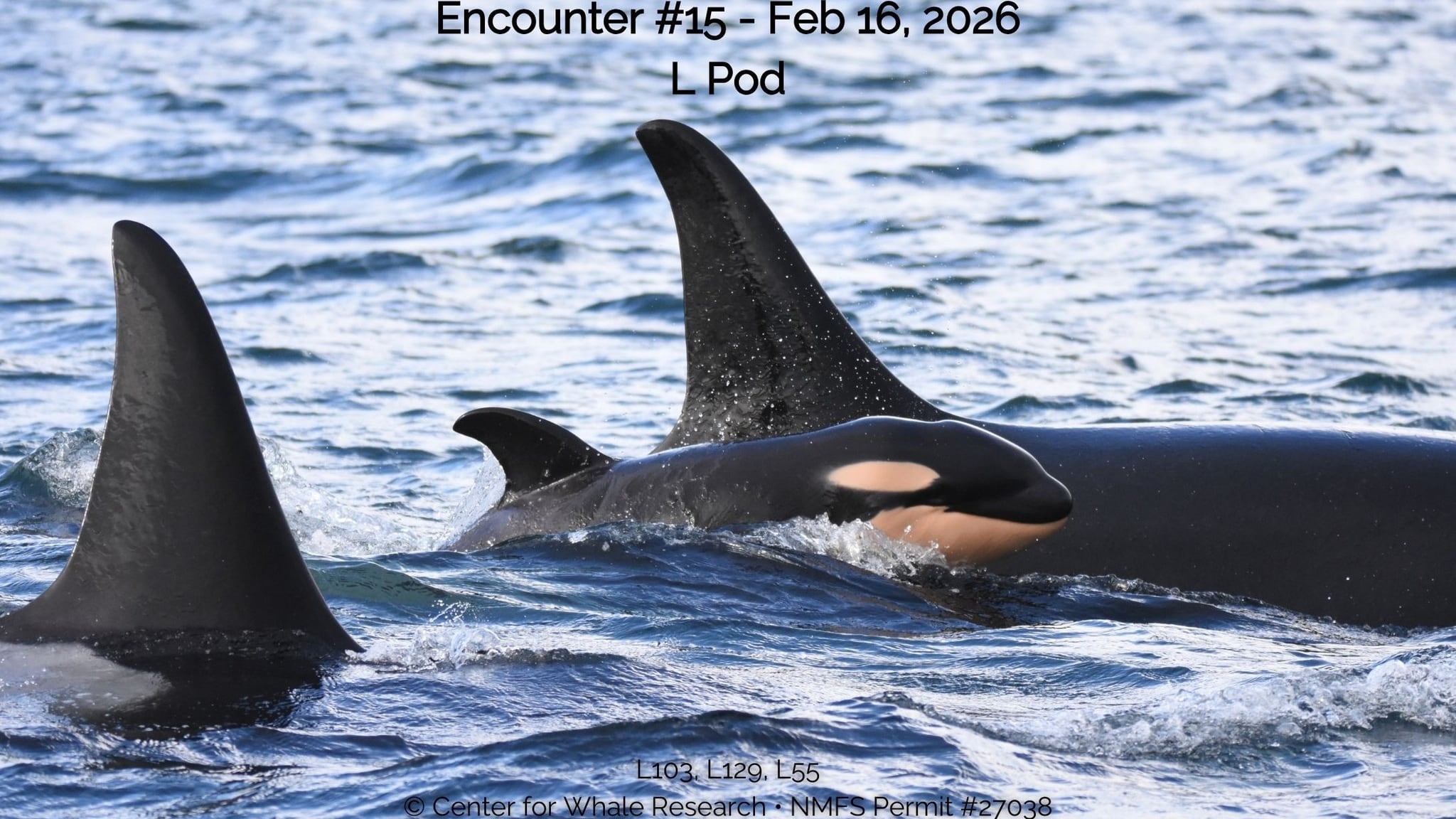
A new addition to a pod of endangered southern resident orca whales was spotted by researchers off Vancouver Island earlier this week. Biologists with the Washington-based Center for Whale Research made the exciting discovery in the Strait of Juan De Fuca near Sooke on Monday. The researchers encountered the whole group of the L pod subgroup known as the “greater L4s,” which is now 19 members strong, the organization said in a social media post. They estimated the “energetic young calf” was just days, or even hours, old at the time. The newborn killer whale, dubbed L129, was traveling with approximately 49-year-old L55 and her two daughters, and stayed closest to the elder orca. “We will need further encounters before maternity can be determined. Pregnancies in the late-40s are not unheard of, but calves are rarely ever carried to term at this age,” researchers wrote. Biologists say they’re maintaining cautious optimism about the new calf, and it’s too early to tell how healthy it is. “The first year of life, especially these early days and weeks, are difficult for killer whales, and many calves don’t make it. We hope to see L129 again soon, and that the calf’s mother can find enough food to keep this new addition healthy,” the post reads. Unlike transient orcas, also known as Bigg’s killer whales, southern resident orcas eat exclusively fish. There are fewer than 80 living in the wild, in three matriarchal pods: J, K and L. RELATED STORIES: