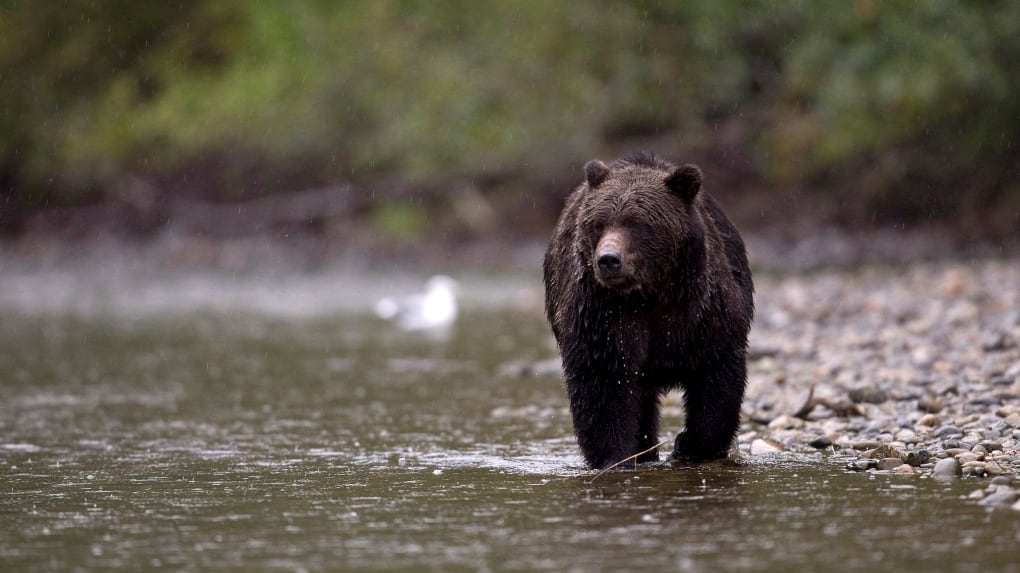
A B.C. wildlife organization is calling for a lifting of the province’s ban on hunting grizzly bears in the wake of an attack that hospitalized an adult and three children in Bella Coola Thursday afternoon. Students and staff from the Nuxalk First Nation’s Acwsalcta School were on a field trip on a trail in the remote, northern community when the bear attacked, injuring eleven and leaving three students and a staff member with serious injuries. According to the B.C. Wildlife Federation — a group which advocates for anglers, hunters, outdoor recreationists, firearms owners, and recreational shooters — the incident marks the latest in a growing number of attacks that have occurred throughout British Columbia since the province brought an end to the hunting of grizzly bears in 2017. “We’ve definitely seen the number of human-grizzly-bear conflict calls increase across the province,” says the federation’s executive director Jesse Zeman. Zeman says the number of conflict calls made to the B.C. Conservation Officer Service had trended downwards prior to the ban being implemented, with the amount ranging between 300 to 500 a year in the preceding decade. Since the ban, calls regarding grizzlies have effectively doubled to nearly 1,000 a year. “We have places like Creston in B.C. with people who don’t want to go for a walk outside because they’ve had so much conflict with grizzly bears,” says Zeman. One farmer in the Kootenay town no longer leaves his house without dogs and a spotlight because he is enduring conflict “on a weekly basis,” he says. Numerous people have been seriously injured, and one person has died as a result of grizzly attacks in B.C. this year. In July, two grizzlies attacked a couple riding e-bikes around Kootenay Lake in Creston, and two hikers were left with serious injuries after being attacked on a trail northeast of Prince George last month. A man in Fort Steele, northeast of Cranbrook, recently succumbed to his injuries after fighting off a grizzly that had attacked him while hunting in the East Kootenay region. In September, two people were charged after killing a grizzly bear that had settled on Texada Island after swimming to its shores four months prior. The bear had a history of stalking people and breaking into boats, and had been relocated by conservation officers twice before it made its way to the Gulf Island. “This is a change that is happening because we’re not dealing with problem behaviour, or problem bears,” says Zeman. Not culling “problem” bears, particularly those who are mothers, enables the behaviour to be passed on, he says. “When the grizzly bear hunt was stopped, we expected there would be a slow change over time where these bears that are more bold, or have a propensity to getting into conflict, would have offspring, and their offspring would continue to get into conflict,” Zeman says. Public education around managing attractants and carrying bear spray only “gets us so far,” he says. “In the case of bears who have bad behavior and are not afraid of people, there’s no solution there other than the fatal solution,” Zeman adds. The provincial government implemented an immediate ban on trophy hunting of the province’s estimated 15,000 grizzly bears in 2017. The province had made the decision to protect one of the province’s “most iconic” species following a consultation process with First Nations, stakeholder groups and the public.