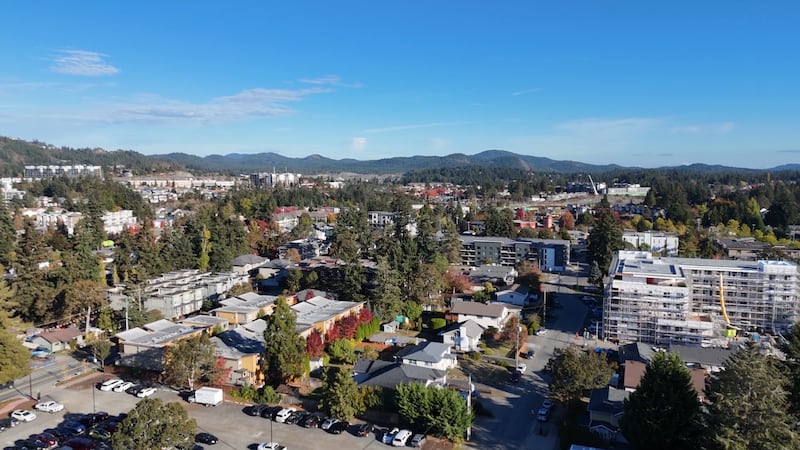
A Vancouver landlord has lost her bid to overturn $39,000 in compensation she was ordered to pay to tenants she improperly evicted in 2023. Jianshuang Huang purchased her unit in the high-rise at 1005 Beach Ave. in August of that year, according to a B.C. Supreme Court decision issued last month and published online Monday. Kevin Mathew Stroesser and Mona Lotfizadeh were renting the two-bedroom condo from its previous owner for $3,245 a month, according to the decision. The decision indicates the tenants received a two-month notice to end tenancy for landlord’s use of property in late May 2023, and they moved out on July 31. A year later, they took Huang to the Residential Tenancy Branch, arguing that she had failed to accomplish the stated purpose of the eviction by occupying the property herself. Huang told the RTB that she and her daughter had moved into the unit on Aug. 1, 2023, but the RTB arbitrator found insufficient evidence that this was the case, according to the court decision. The arbitrator awarded Stroesser and Lotfizadeh $39,040 in compensation, representing 12 months of their previous rent, plus RTB fees. The landlord applied for the RTB to reconsider its decision, but that application was denied. Huang then petitioned the B.C. Supreme Court for a judicial review of the RTB decision, arguing that the arbitrator’s decision was patently unreasonable for a variety of reasons. Justice Jacqueline D. Hughes dismissed the petition, ruling that Huang had presented no basis for finding the RTB decision unreasonable. Huang argued that the RTB arbitrator had failed to properly interpret or define the term “occupancy,” misunderstood the evidence, imposed an “excessively high” evidentiary burden and failed to provide adequate reasons for her decision. Hughes rejected each of these arguments. The judge’s decision reproduces several paragraphs of the RTB decision, including one in which the arbitrator defines the term “vacant possession” and explains that owning a property and leaving it vacant does not meet the legal definition of occupying the property. Huang argued that this focus on vacant possession amounted to a failure to properly define occupancy, but Hughes disagreed. “Considered within the context of the arbitrator’s finding that she was not satisfied that the petitioner ever occupied the unit, the arbitrator’s reference to the definition of vacant possession, which is also impermissible in this context, is, in my view, a sufficiently clear indication that she understood the definition of ‘occupy,’” the judge’s decision reads. On the question of misunderstanding the evidence, Hughes again disagreed with Huang’s argument. The landlord said the arbitrator had failed to consider or disregarded her evidence and testimony, but Hughes found the arbitrator had provided an explanation for why she did so. Huang’s evidence, according to the decision, “amounted to her own uncorroborated evidence, utility bills, and correspondence indicating she was the new owner of the unit.” The arbitrator’s decision noted that Huang had “ample time” to prepare for the hearing and gather additional evidence of her occupancy of the condo, such as photos taken inside the home and mail or deliveries sent to the address. “The arbitrator noted the lack of corroborative documentary evidence and commented on the evidence that could easily have been adduced by the petitioner which, in turn, gave rise to ‘significant doubt’ about the petitioner’s credibility,” Hughes’ decision reads. “This provides sufficient reasons for the arbitrator rejecting the petitioner’s bare assertion that she occupied the unit.” The lack of evidence from Huang in support of her case before the RTB was also the basis for Hughes rejecting her arguments about the arbitrator imposing an excessively high burden of proof and providing inadequate reasons. The landlord pointed to the arbitrator’s comments about a “concerning” lack of evidence as an indication that she was imposing a burden of “proof beyond a reasonable doubt,” which is not the standard of proof typically required in civil matters. “In my view, the effect of the arbitrator’s reasoning in this respect is that she would have expected more evidence of occupancy to meet the usual civil burden of proof, namely proof on a balance of probabilities,” Hughes’ decision reads. “I find the arbitrator was speaking to the amount or quality of the evidence before her where she found the lack of evidence concerning, not speaking to the burden of proof that she was applying or imposing a standard of beyond a reasonable doubt on the petitioner.” The judge dismissed the judicial review petition, allowing the RTB decision to stand.