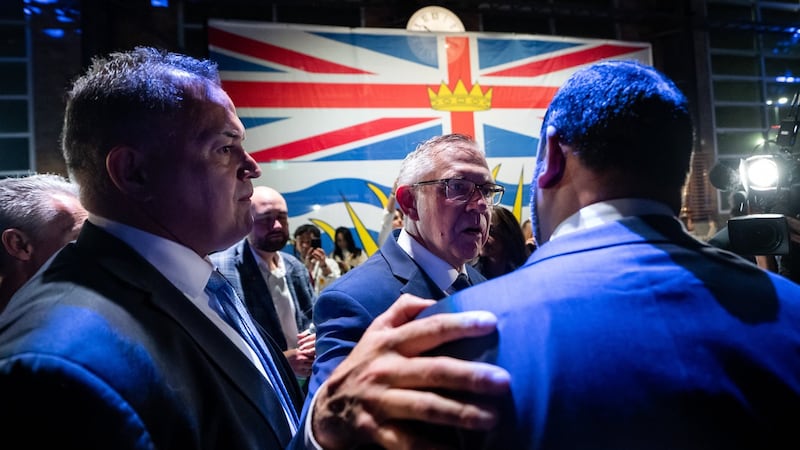
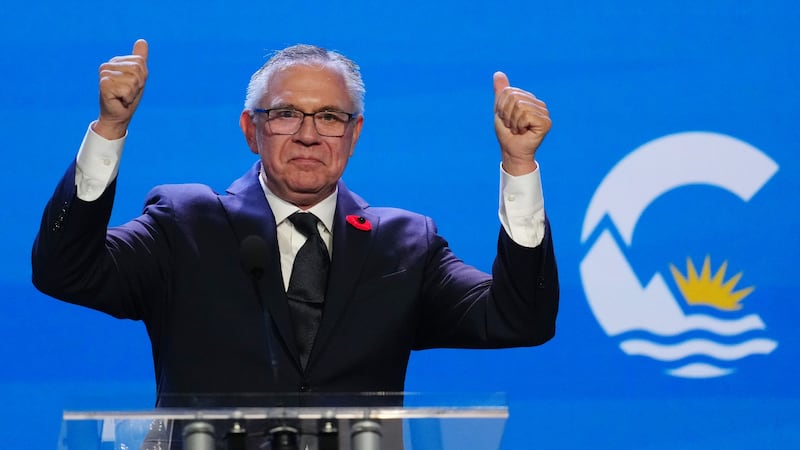
VANCOUVER — Voters gave Lorne Doerkson’s B.C. Conservatives a two-thirds majority government on Saturday, now members of his party need to do the same to change their constitution to allow an interim leader to become permanent. The party’s constitution prohibits an interim leader from seeking leadership in subsequent ballot, and change would require the support of two-thirds of the party’s members. The party’s board said after the election was called that if Doerkson became the premier, he would remain leader and that it would pursue appropriate means “to give effect to this intention.” Conservatives celebrated the win Saturday, praising the premier-designate for uniting the party after a tumultuous few months under the leadership of Kerry-Lynne Findlay, who quit days before the election was called. Caroline Elliott lost to Findlay for the leadership race by a few percentage points but she won the riding of West Vancouver-Capilano on Saturday. She said that Doerkson was the “right person” to lead the party to victory as “things were splintering.” “He’s earned it. He’s earned the trust of British Columbians. He has earned more votes in this general election than we could ever dream of in a leadership race, and so, for me, that’s mandate enough and I’ll support him for as long as he wants to stay on,” she said Saturday. Doerkson became the party’s interim leader just days before the snap election was called Sept. 22 by outgoing New Democrat premier David Eby, and the victory ends nearly a decade of NDP government in the province. But how the party’s board would ensure Doerkson will lead Conservatives remains unclear. “A premier chosen by British Columbians deserves the certainty of leading his party. This amendment will provide it,” the board’s statement said in a social media post on Sept. 23. Doerkson also has the support of former B.C. premier Gordon Campbell, who called him a “decent, honest, straightforward guy.” “He gets people to understand how good they are and where we can be. We can be a province of possibility and promise again, and I think that’s what we’re going to get to,” Campbell said while attending the Conservative election-night celebration. Hamish Telford, an associate professor in political science at the University of the Fraser Valley, said it’s an interesting situation because a large portion of the party’s base wanted to make sure there was no taint of the B.C. Liberals, as was made clear in the leadership results and Findlay’s win. “And now they want to represent themselves as a reincarnation of the B.C. Liberals. How is the base going to react to this new direction of the party? This is now a mainstream business-oriented party, that’s not the party they wanted,” he said. Doerkson was elected in 2020 as a B.C. Liberal, which became B.C. United, but jumped to the Conservatives before the 2024 provincial election to win again in Cariboo-Chilcotin. As recently as the 2020 election, the party received less than two per cent of the vote, but the collapse of BC United paved the way for its rise to official Opposition status and now government. This report by Brieanna Charlebois, The Canadian Press, was first published Oct. 25, 2026. With files from Brenna Owen and Wolfgang Depner, The Canadian Press