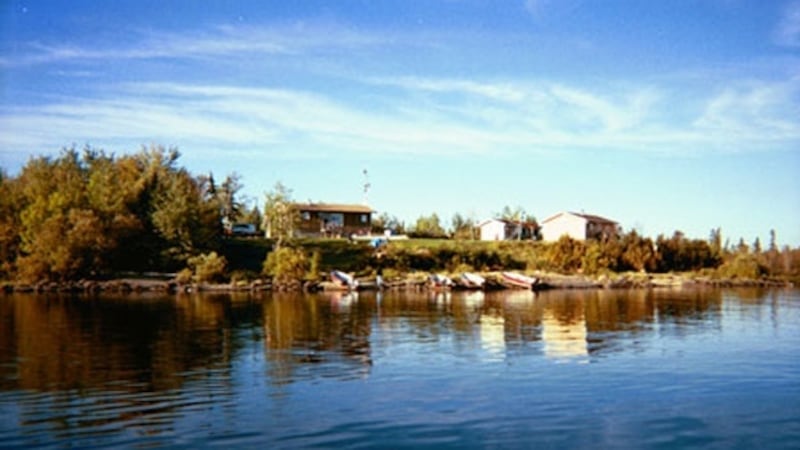
Residents of the Gulf Islands are speaking out against an application made by a travel organization to use campsites on the B.C. coast. The National Outdoor Leadership School, a U.S. non-profit that teaches students skills through various wilderness programs, is applying for 77 individual sites of Crown land for overnight sea kayaking programs. The campsites, selected from the B.C. Marine Trails network and scattered across Vancouver Island and the Gulf Islands, will add to the organization’s list of sites it has used locally since it first began operating on Crown lands in the B.C. Coastal Range in 1998. According to a spokesperson from the Lasqueti Island Local Trust, 46 emails have been received from residents objecting to the application for the 77 sites, one of which is planned for Lasqueti Island. “The top concern is the possibility of a fire, especially as there is no road access for the volunteer fire department to respond to any fire incident,” said a trust spokesperson in a statement. “Other concerns include the appropriateness of the site, why adjacent landowners were not consulted, and questions as to why a private, U.S.-based organization should be considered for licence of occupation for 77 sites in B.C.” One of many draft letters circulating on social media for residents to sign and send states there is a pushback against the application due to a “wide array of reasons,” which include “lack of meaningful Indigenous consultation, lack of adjacent property owner consultation, fire risk, and not collaborating with B.C. Marine Trails,” alongside “conflict with existing activities such as hunting and other traditional permitted uses” and “an inadequate review period.” The application also proposes inappropriate commercial use of Crown Land and Marine conservation protection area, and provides no local economic benefit, the letters state. “There’s just concern because people really want to keep home safe, and (they) just want to have access to their own places,” says Texada Island resident Janice Richards. “It will mean there’s more areas being used without supervision, and we don’t have the financial resources to supervise these areas, and they’re hard to get at if there is a problem.” Richards says she has been “blown away” by the response from island residents since she made a social media post highlighting details of the application earlier this week. Many of those in opposition feel particularly stung by the “outsider” nature of the organization, given the current political tension between Canada and the U.S. “A lot of it is a really emotional, visceral response right now,” she says. “It just boils down to it not being good timing, because of our relationship with the south right now, with our neighbor.” If the application gets the green light, NOLS will run an annual course for a group of 10 to kayak the entire B.C. coastline, starting in Washington and ending in Alaska. The first is planned for between May and August next year. The length of the expedition will be 15 to 20 nights, and many campsites in the application would not be used unless necessary to evacuate “due to weather or sea state emergencies,” the organization said. “The permit that NOLS applied for is for operating courses from 14 to 90 days in length and is not a location move for the organization, this is a part of the application process to renew our existing operating licence,” said Rich Majerus, NOLS vice-president of expeditions. Majerus said NOLS has been “working closely with B.C. government agencies and local First Nations to adhere to the proper application process for this licence renewal, as it has in applications put forward before.” Consultation with First Nations is in its early stages, the ministry said. Majerus said NOLS has historically offered sea kayak trips in the Central Coast region and on the West Coast of Vancouver Island. Courses have paddled to and from Bella Bella and the surrounding islands and have previously sea-kayaked a round trip from Telegraph Cove, circumnavigating Gilford Island. “The waters around Vancouver Island have been an area NOLS has loved and appreciated for decades,” he said. According to B.C. Marine Trails, there is one site within the 77-site application that has been removed from the publicly accessible map at the request of local First Nations. “We have reached out to NOLS to alert them of this discrepancy, and with questions about individual campsite capacity,” a B.C. Marine Trails spokesperson said. As for whether there are any other concerns regarding the application, the spokesperson assured that NOLS, being one of the developers of Leave No Trace campsite cleanup movement, has a “robust understanding” of the importance of responsible recreation and fire safety. “B.C. Marine Trails is an advocate for public recreation that is done in a safe, respectful and sustainable way to ensure long term access for all,” the spokesperson said. A statement from the Ministry of Water, Land and Resource Stewardship said all relevant issues of every application, such as wildfire risks, pollution risk and cumulative effects risks, are “thoroughly assessed” by the ministry. Community input is welcome, and the public is invited to submit comments via the online application until Oct. 5, before a town hall meeting will provide further space for discussion Oct. 6. “Outdoor and adventure tourism play a large role in B.C.’s economy,” the ministry said. “The government of B.C. encourages people and companies from around the world to spend and invest in sustainable eco-tourism that utilizes the splendor of our province in ways that are good for both our economy and the environment,” the statement said.