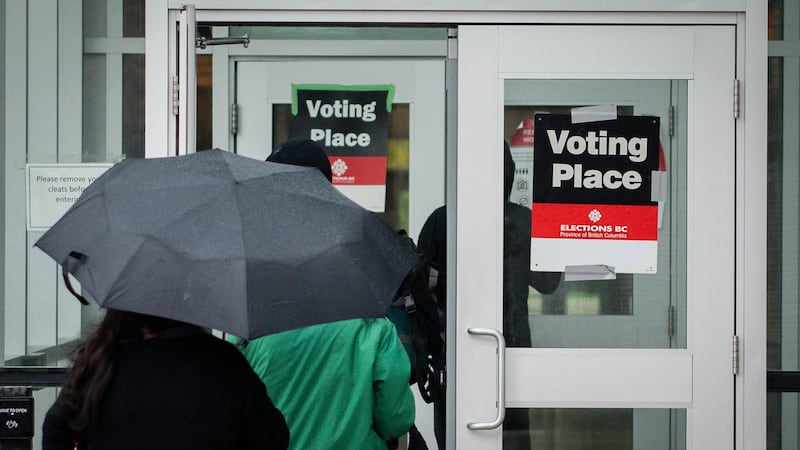
NDP Leader David Eby says interim B.C. Conservative leader Lorne Doerkson is a cover for extremists in his party who could oust him if he is elected premier, as campaigning wraps up ahead of Saturday’s provincial vote. Eby said it was the danger hanging over the snap election that has put his own political future on the line as he faces a rival who rose from obscurity to vie for the premiership. “You may think you know what you are getting, but Mr. Doerkson is a Trojan horse filled with the most extreme views that British Columbians have ever seen running for office,” Eby said Friday. “And we don’t even know that he will be the leader postelection.” That was a reference to Doerkson’s status as interim leader, and while the Conservatives have said they will do what it takes to retain him as leader if he becomes premier, they have not explained exactly how they will overcome their party’s constitution that says an interim leader cannot run for the permanent leadership. Eby was in the election battleground of Surrey on the final full day of campaigning Friday, before heading to campaign stops in Coquitlam and Langley, while Doerkson campaigned in his rival’s home riding of Vancouver-Point Grey. Doerkson did not hold a media availability, and his party has said he will not take questions from reporters on election night if he wins. The closing stages of the campaign have been dominated by the focus on Surrey, where Doerkson rallied on Thursday night alongside former premier Christie Clark and Surrey mayor-elect Doug McCallum. McCallum told the crowd that they had changed Surrey — which has 10 provincial ridings — and it was time to change B.C. It has been an unusual campaign — Doerkson has held no media availabilities on at least three days this week — and it has featured shifting justifications from Eby about why he called the election. He expressed some regret on Friday about the way he handled the early stages of the campaign, acknowledging British Columbians’ were “surprised and frustrated” by his decision to go to the polls two years early. He had said at the time that the election was necessary to respond to the threat posed by U.S. President Donald Trump, but he said he now wished he had been clearer about his rationale. “I would say my biggest regret of the last 32 days is I was ahead of British Columbians, where their understanding was about the legislature, when I called the election,” he said. He said he “should have done a better job of letting them know how stalled out the legislature was,” referring to his party’s one-seat majority that he described as one of the most frustrating experiences of his life. The legislature at dissolution consisted of 47 New Democrats, 29 Conservatives, two Greens, and 13 Independents, with two vacant seats. But that information from the clerk’s office does not reflect the fact that in the days before dissolution, most of the nominal Independents said they were returning to the Conservative fold, after former leader Kerry-Lynne Findlay stepped down and Doerkson took over. Taking that into account, the Conservatives went into the election holding about 37 seats. The Independents also included former Conservatives Jordan Kealy and Hon Chan, who exited the party after it was revealed they were facing criminal charges, as well as OneBC’s Dallas Brodie and CentreBC’s Elenore Sturko. Doerkson became interim leader on Sept. 20, just two days before Eby called the election. This report by Wolfgang Depner, The Canadian Press, was first published Oct. 23, 2026.