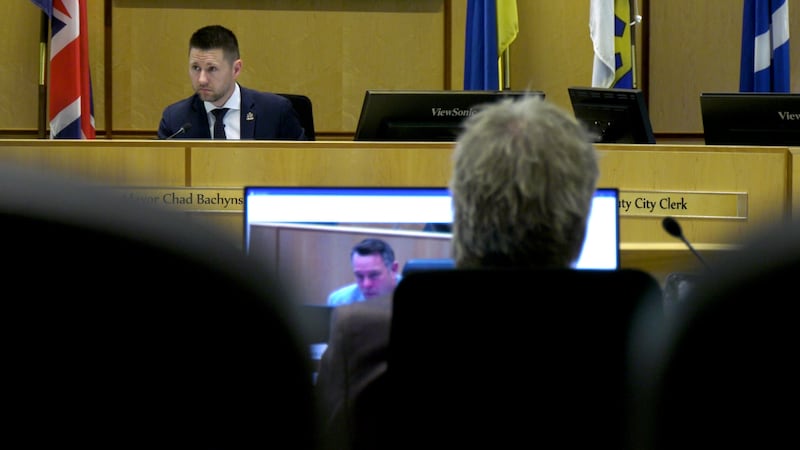
City council has voted to approve a pilot project that will allow food delivery robots to operate on Vancouver’s sidewalks. Wednesday’s vote means Serve Robotics will be bringing its green-and-white delivery robots to Kitsilano and Downtown neighbourhoods come this fall. The company says its robots are a solution to the “last mile problem,” a reference to the common cost and logistical challenges associated with the final stretch of the delivery process. Serve Robotics argues that with fewer emissions, a higher conversion rate, and no additional costs, it’s solving that issue. Two of the major purported benefits of food delivery robots are the savings and the reliability. Without the cost of paying human couriers, the company ends up saving money. Proponents have also noted robots don’t need eight hours of sleep like people do, let alone bathroom breaks or time to eat. Bowen, one of the robots already on the streets in some cities, can be available to deliver 24/7, says the company. In the council meeting on Wednesday, a number of Serve Robotics employees addressed council with reasons why the pilot should be approved. Michelle Li, accessibility lead, explained how the company planned to tackle challenges the robots have already faced in other cities—in particular, the issue of shared sidewalk space. “Our proposal builds accessibility considerations into the operational design from the beginning. Not as an afterthought, and not as a nice to have or a checkbox,” Li said. “Before this pilot begins, we plan to engage with local disability organizations and advocates, not only to just present a finished plan, but to listen and really engage with concerns and adjust our operations accordingly well before we launch.” Popular videos online have shown the robots blocking people using wheelchairs, rolling through active medical emergencies, and not giving pedestrians the right of way as promised. Accessibility wasn’t the only concern mentioned. Coun. Sean Orr questioned whether Coun. Mike Klassen, who brought the motion before council, had connected with any labour organizations or delivery workers for their opinion. Klassen said those discussions would be important to have, but not until after things got underway with the project. Patrick Johnson, president of UFCW 1518, the union that helped secure a collective agreement for Victoria’s rideshare drivers, shared his thoughts on what council should be considering with projects like these to protect gig workers’ livelihoods. “Folks are driven to gig work in a way that has become a large source of their income and sometimes their primary source of income,” Johnson said. “The city councillors need to look at what the impact on existing workers and what are ways to mitigate that negative impact?” Opinion is still divided on the program, including worries about how the robots will fare in the city’s downtown core, but the city plans to move ahead with the pilot that promises the robots rolling along Vancouver’s sidewalks this fall.