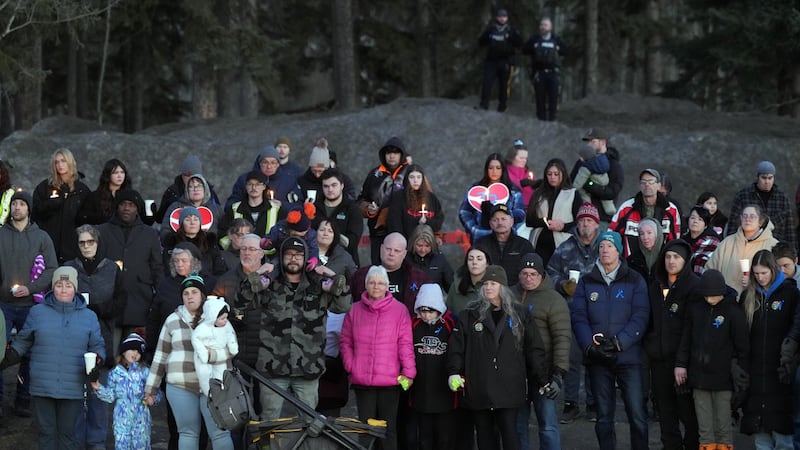
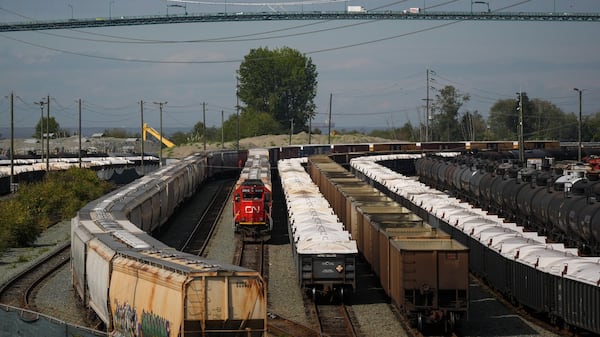
The planned closure of Canfor’s Northwood pulp mill in Prince George is the latest sign of the challenges facing British Columbia’s forestry industry. Canfor says the mill will close in late 2026, affecting roughly 300 workers. But industry leaders say the shutdown is part of a broader trend that has seen thousands of forestry jobs disappear across the province in recent years. According to the B.C. Council of Forest Industries, approximately 15,000 forestry jobs have been lost in B.C. since 2022. For communities like Prince George, the impact stretches beyond those directly employed at the mill. Prince George city councillor Kyle Sampson said the closure affects families with generations of ties to the forestry sector. “I saw one friend of mine on Facebook say that they, their father and their grandfather all worked at Northwood,” Sampson said, describing the closure as a blow to the community. Industry representatives point to several factors behind the sector’s struggles, including low pulp prices, rising costs, fibre supply challenges and growing global competition. B.C. Council of Forest Industries president Kim Haakstad said the effects of mill closures extend far beyond a single operation. “Then it’s the harvest contractors, the truck drivers, the manufacturing machine manufacturers and repair. All of that has the potential to be impacted.” B.C. Forestry Minister Ravi Parmar points to China’s rapid growth as a pulp producer, adding new competition in a market where B.C. has traditionally been a major supplier. “They are now making their own pulp, and has brought on 10 million tons just in the last few years, with more to come,” Parmar said, referring to China. “So that, on top of Indonesia and Brazil, jurisdictions that have zero environmental standards, zero labor practices, it’s hard for us to compete with that from a price perspective.” Industry representatives say challenges closer to home are also affecting the sector. Kim Haakstad, president of the B.C. Council of Forest Industries, argues the province needs to speed up permitting approvals. “We need to improve permitting timelines,” Haakstad said. “We’ve seen a mine this year approved in ten months, seeing two to three years to get a forest cut permit.” Parmar, however, maintains market conditions remain the industry’s biggest obstacle. “I’ve got permits that are just sitting, approved, ready to go, and fiber is not moving,” he said. “The reason it’s not moving is the economics of forestry doesn’t make it viable for people to go out and cut that wood and take a loss.” The province says it will work with the ministries of jobs and social development to provide support for affected workers. The Northwood closure is the latest setback for B.C.’s forestry sector, which has seen more than 20 lumber mills close permanently or indefinitely since 2023. “We have seen the absolute decline of pulp prices over the course of the last year and a half, two years,” Parmar said. “And it doesn’t look like it’s getting any better.”