These are Toronto’s 'supertall' skyscrapers set to remake the skyline
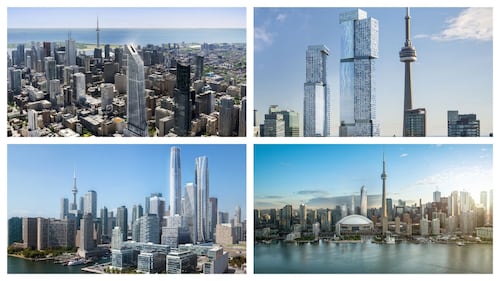
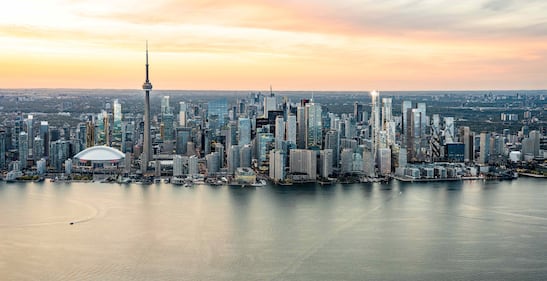
Toronto is on the cusp of its tallest building era yet, with a wave of supertall skyscrapers topping 300 metres and poised to permanently alter the city’s skyline. Here is a look at some of the tallest buildings proposed for the city.
Published:
Image 0 of 14
Toronto is on the cusp of its tallest building era yet, with a wave of supertall skyscrapers topping 300 metres and poised to permanently alter the city’s skyline.
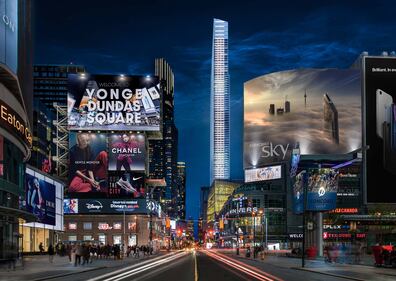
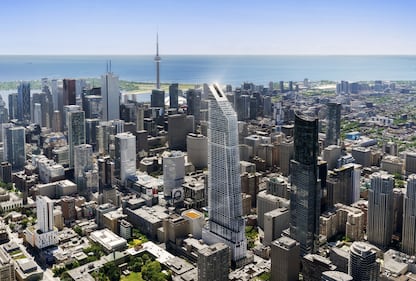
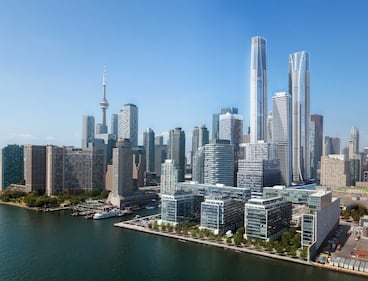
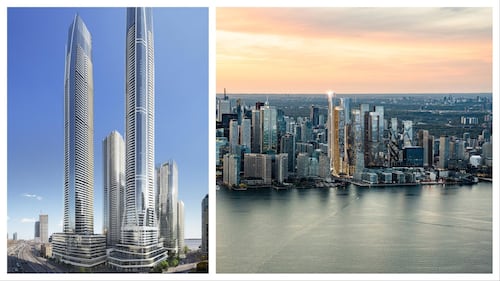
The Council on Tall Buildings and Urban Habitat defines "supertall" buildings as those rising above 300 meters and “megatall” buildings as those spanning beyond 600 meters. From Yonge Street and Bloor to the downtown waterfront, nine major towers meeting the "supertall" standard are approved, proposed, or already rising, signalling a shift in how the city is growing upward rather than outward. In this photo, a 300-metre residential building proposed for Yonge and Gerrard streets is shown. (Concord Adex photo).
Urban infrastructure experts say the clustering of these towers reflects planning choices, market pressures, and Toronto’s evolving role on the global stage — while also raising questions about design, livability, and what happens at street level when cities reach for the sky.
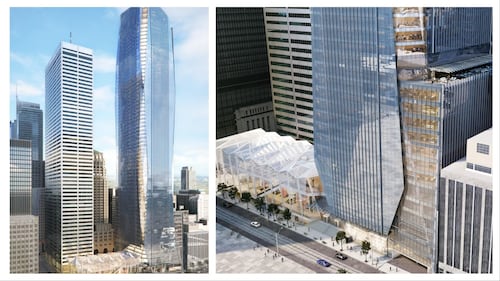
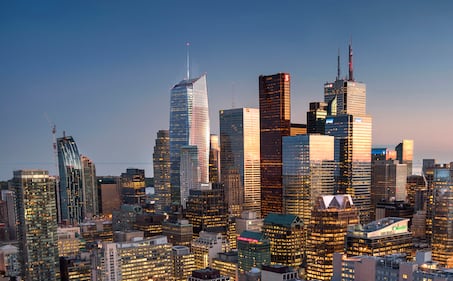
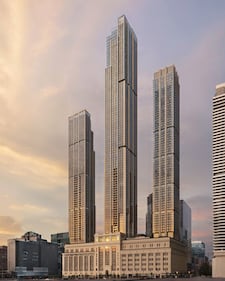
“These big, tall towers, put Toronto into the global story of city building, where buildings are increasingly reaching for the sky,” said Matti Siemiatycki, director of the Infrastructure Institute at the University of Toronto. In this photo, a 301 metre residential building planned for the Commerce Court complex at the foot of Bay Street is shown. (Hariri Pontarini Architects photo).
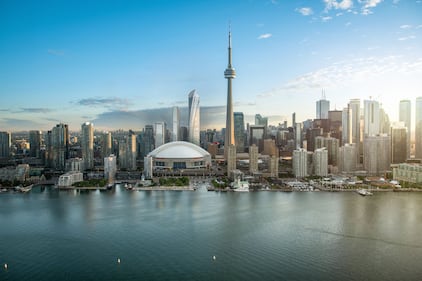
Toronto does not currently have any "supertall" buildings as the CN Tower does not qualify for the designation as a freestanding communications tower and First Canadian Place falls just short of the threshold at 298 metres. Here is a closer look at the nine "supertall" skyscrapers that could one day transform Toronto's skyline.
Concord Sky — 300 metres Rising from the southeast corner of Yonge and Gerrard streets, Concord Sky will become one of the city’s tallest residential towers once complete designed by KPF and Architects. Projects like Concord Sky illustrate how Toronto’s tallest buildings are no longer isolated landmarks, but part of emerging vertical clusters.
“The cluster idea reinforces the notion that Toronto is growing in a tall and sprawl pattern in places where it’s permitted and where planning has designated that it’s appropriate to go tall,” Siemiatycki said. (Concord Adex photo).
191 Bay Street - 301 metres Set to rise above the Commerce Court complex, 191 Bay, designed by Hariri Pontarini Architects, will include one of the city’s highest public viewing platforms. Siemiatycki notes that office-focused towers at this scale underscore how supertalls are no longer limited to residential development, even as post-pandemic office demand continues to evolve. (Hariri Pontarini Architects photo).
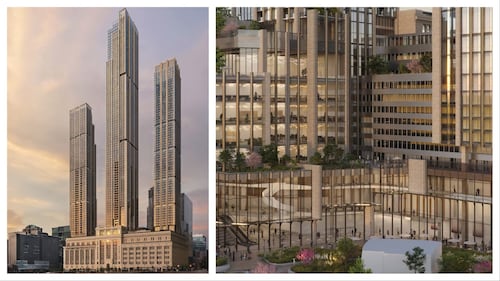
Union Park Office Tower — 303 metres Planned as part of a four-tower complex near Front Street West and John Street, Union Park is a proposed mixed-use development – inclusive of office, residential, and retail space. While height can be iconic, Siemiatycki cautioned that what happens at ground level can ultimately define whether these buildings succeed as city-building projects.
“If someone builds a building which is super tall, iconic, but totally hostile at the ground floor … that can have a negative impact,” he said. “And by contrast, if someone builds a building that’s tall, but the first six stories are the TIFF Bell light box … then it can be really positive.” (Oxford Properties Group photo).
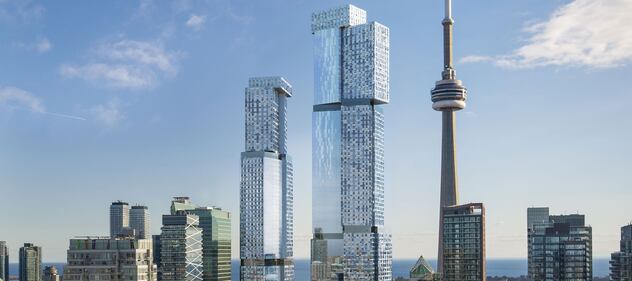
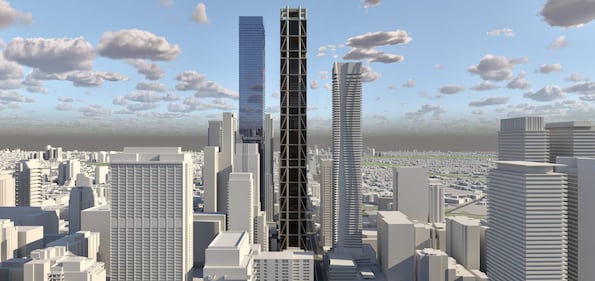
Forma West Tower — 308 metres Part of a two-tower Frank Gehry–designed development in the Entertainment District, Forma West blends residential, commercial, and institutional space, with construction already underway on the shorter East Tower. (Photo supplied by KG&A).
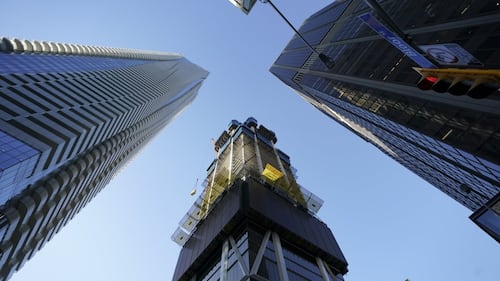
One Bloor West — 308 metres Formerly known as The One, One Bloor West anchors the northern edge of downtown at Yonge and Bloor. Designed by Foster + Partners, the 85-storey tower includes residences, an Andaz hotel, and retail space, and is already structurally topped out. “Building these tall towers, the engineering and architecture of them is hard,” Siemiatycki said. THE CANADIAN PRESS/Arlyn McAdorey
19 Bloor Street West. — 317 metres Planned just west of the Yonge and Bloor intersection, this 99-storey residential tower by Reserve Properties would deliver nearly 1,300 units to one of the city’s busiest areas. But height comes with trade-offs, particularly around who these buildings are ultimately for.
“The trade off is, this is not going to be affordable housing, like people are not putting up these, 95 story buildings with really affordable for family,” Siemiatycki said. (Stephen Velasco photo).
College Park Redevelopment Tower 2 — 333 metres Proposed for 444 Yonge Street, this 96-storey tower would introduce supertall height to one of Toronto’s most well known retail and transit hubs. The mixed-use project includes residential, hotel, office, and public space components. At the same time, Siemiatycki flagged broader sustainability questions tied to vertical megaprojects.
“There are questions about the environmental implications, like in terms of the energy that it takes to build one of these to go this tall, it starts to get really energy intensive,” he said. (GWLRA/rendering)
SkyTower at Pinnacle One Yonge — 352 metres Now under construction, SkyTower has already made history as the first building in Canada to reach 100 storeys. When complete, the 106-storey tower will stand as the tallest building in the country, with 958 residential units and a distinctive 12-sided, tapered form designed by Hariri Pontarini Architects. (Photo supplied by KG&A).
One Yonge Phase 3 (shorter adjacent building) — 320 metres The final residential phase of the Pinnacle One Yonge development will rise next to SkyTower. Its carved form is designed to reduce wind loads and visually unify the site. Siemiatycki says these towers also create their own environmental conditions, both positive and negative.
“These buildings create these micro environments, and they can have pros and cons,” he said. (Hariri Pontarini Architects photo).
While SkyTower is becoming reality, Siemiatycki stressed that not every proposal on paper will follow the same path.
“A plan on paper is not a building under construction,” he said. “So some of them are being built, but those probably started a few years ago, and it’ll be interesting to see in the short term if any of these images manifest a project into reality.” (Photo supplied by KG&A).