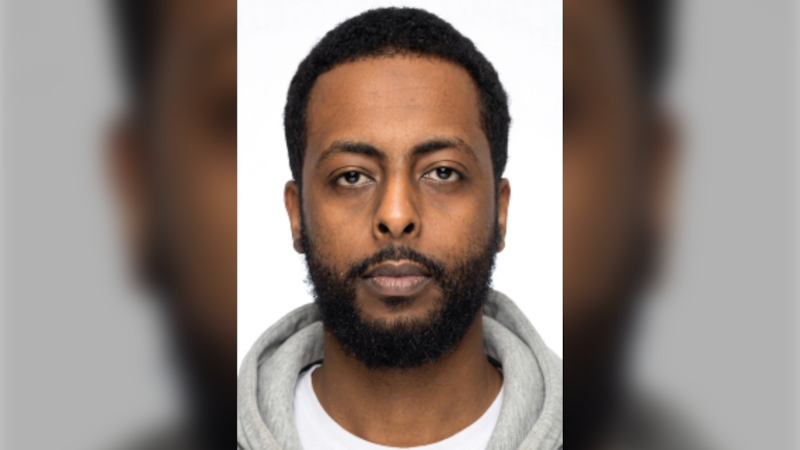
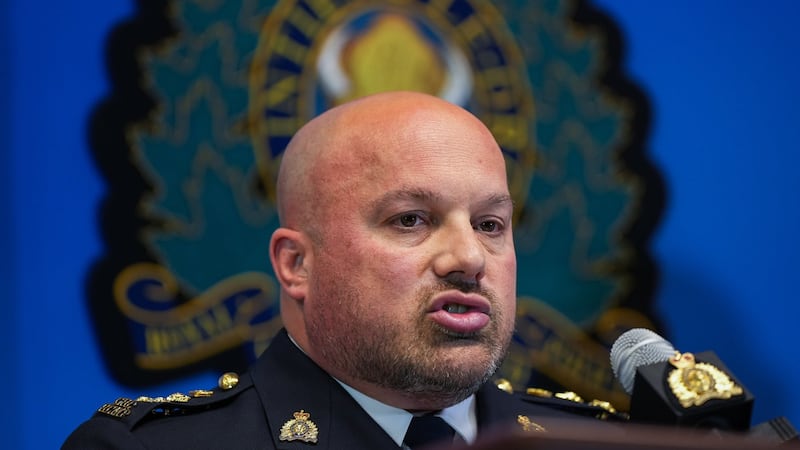
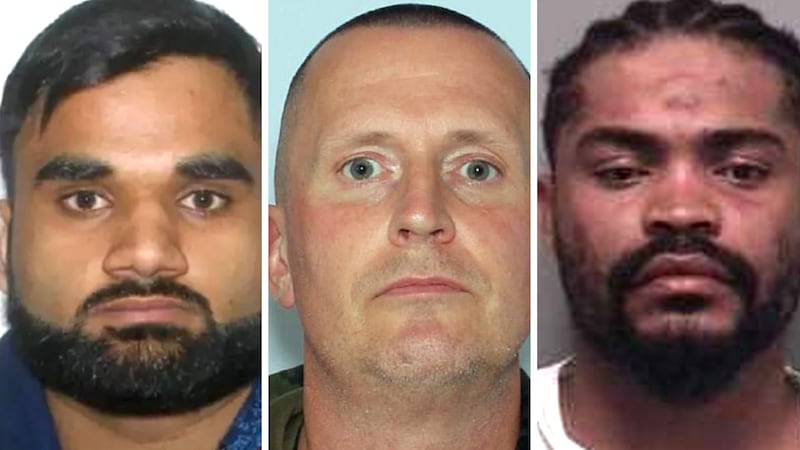
On a Wednesday night in June 2025, a 22-year-old Toronto man was jolted awake by the sound of the front door hitting the floor as a police tactical unit entered his family’s home in Toronto. The man was handcuffed in front of his distraught parents and taken away. He was brought to a police station west of Toronto, where he would learn that he was being charged in connection with an alleged organized group behind a number of violent home invasions in Peel Region. “They came inside with guns and forcefully took me from my home. That’s something very scary,” the man, whom CTV News is only identifying by his last name, Amir, due to concerns about future job prospects, said. “I am somebody who hasn’t really had interactions with the law that much, so I was really confused. I was really startled.” He ultimately spent five days behind bars at the Toronto South Detention Centre before being released on bail with an ankle monitor. Amir would soon discover that police had seized phones linked to the crime group. One phone number, he was told by detectives, had been registered under his name. Amir was banned from his university campus and had to wear the ankle monitor for months, but in October that year, the case against him would collapse, and charges were stayed. In court, his lawyer called the evidence “palpably deficient” and said Amir was “factually innocent” and should have never been charged. Peel Regional Police would quietly admit that Amir was not involved. A note atop the press release regarding the investigation now reads: “At the time of this announcement, there were 13 individuals arrested. Since then, one individual has been deemed not involved, and all charges on that individual were dropped.” That is in contrast to the news conference they held to announce the results of the investigation, which was attended by several elected Mississauga and Brampton officials, including Mayor Patrick Brown. “Imagine being asleep at your home at three o’clock in the morning, with your family, your kids, when the door explodes open and masked armed criminals break into your home and immediately begin to rob you and assault you,” Deputy Chief Nick Milinovich said during the news conference. Amir never forgot Milinovich’s words. “Chief Nick stood there describing the fear and trauma of having armed individuals break into a family’s home in the middle of the night, yet his own officers put me and my family through that exact same nightmare,” he said. Despite being absolved, the damage is done, says Amir, who has been trying to get back to the life he had before that June night. To this day, Amir maintains he never knew the phone number nor used it. He believes his identity was stolen and used by criminals. “I should have never even been in this situation to begin with,” Amir told CP24. “I’m a victim in this case because the police should have been helping me, but instead, they turned me into a villain in front of the public.” CP24 reached out to Peel police for comment, and media relations officer Cont. Laurie McCann said, “This is an ongoing prosecution. In the circumstances of this particular case, Peel Regional Police has removed Mr. Amir’s image and name from all communication materials, including website, media releases, and official social media channels.” The phone number and ‘Project Ghost’ Amir first learned about the phone number while being interrogated following his arrest. “I’m telling them that ‘Hey, this is a huge misunderstanding,’” he recounted. He remembered detectives showing him a bunch of text messages during his initial interrogation. Amir said he had never seen or sent those messages. Frustrated, he said he asked the detectives, “What does this have to do with me?” That’s when they shared that a number that they believed traced back to him sent the messages. “They essentially said that ‘this was you.’ I’m like, ‘What are you talking about?’ They said that there was a phone number that was registered in my name that was used to communicate crimes,” Amir recounted. According to Shayan Shaffie, Amir’s lawyer, police had only that phone number as evidence linking his client to the investigation. “Subscriber records told police that someone had registered a cell phone number using our client’s identification. That number later surfaced in the organized crime investigation. As far as we could see, that was it,” Shaffie said. “Nothing in the hundreds of pages of disclosure we reviewed after our client’s arrest connected him to this case, despite months and months of investigation.” Shaffie suggested that someone had clearly used Amir’s ID, evidence that he said never justified the arrest. He demanded that the police apologize to Amir for what they put him through. “Our client is owed one,” he said. The investigation, dubbed ‘Project Ghost,’ began in 2024 following two violent home invasions in Brampton and Mississauga that resulted in three people being stabbed and another being shot. The suspects were arrested, and investigators later linked them to the same group who they say was responsible for other similar incidents. Police said they seized phones, which helped them identify the other people involved. In total, the group was accused of stealing $1.8 million in property, including luxury vehicles and high-end jewellery. Nearly 200 criminal charges were laid against alleged members of the group, including 17 charges laid against Amir. “It is theoretically possible to register a phone number with somebody else’s name and then go out and essentially cause issues for that person,” cybersecurity and tech expert Ritesh Kotak told CP24. Some of the methods that criminals can use, he said, include caller ID spoofing, SIM swapping, or using a VoIP number, which uses the internet to make phone calls. Kotak says eSIMs also present a “real gap in the system.” “Think about it this way: you have a phone number, and you want to move from carrier to carrier. You literally have to go to a kiosk. They’re supposed to ask for ID,” Kotak said. “Is the person at the kiosk actually able to identify a fake ID from a real ID?” Based on what Amir has claimed, Kotak said law enforcement can’t rely on a single phone number to link someone to an alleged crime. “You can’t take information at the surface level anymore as an investigator. It’s getting that much more complicated,” he said. “These investigations definitely should be going beyond, ‘Oh, here’s a phone number.’ So, again, there’s probably more than what meets the eye here. But clearly, if all it was a name and a phone number and they identified a person and laid charges, especially in the social, cyber, and digital age, more needs to be done before you can meet that threshold.” Wrongfully arrested According to the Ontario Court of Justice Statistics, of the 247,586 cases disposed of between April 2025 and March 2026, 125,793 involved charges being stayed or withdrawn before trial. Catherine Latimer, the executive director of the John Howard Society of Canada, a nonprofit organization that advocates for reform in criminal justice, said Ontario has an “overcharging” problem. She said pre-charge screening would make a difference. It is the process in which the Crown approves charges being laid, taking into consideration several factors, including the likelihood of conviction. For Amir, it still pains him to talk about what happened, especially the night of his arrest and the fear his family endured. “They smashed through my front door, pointed guns at my family, terrorized everyone inside, and dragged me out of my own home. And for what? They didn’t even have the right person,” Amir said. At that time, he was a fourth-year student at the University of Waterloo taking a bachelor’s degree in accounting and financial management. He said after his arrest was made public, he was banned from campus. “It’s like my entire life just flipped upside down based on allegations that are completely false,” Amir said. When reached for comment, Anne Galang, the University of Waterloo’s media relations and issue management, said: “The University does not normally comment on individual student matters, including circumstances related to an individual’s access to campus.” Despite the charges being stayed, the ban remained in place, Amir said. He added that he had to get a letter of permission to take courses at another post-secondary institution so he could fulfill the requirements needed to graduate. “I wasn’t able to attend my graduation because of these allegations,” Amir said. “It was pretty heartbreaking knowing that I can’t be up on that stage.” (Amir shared this week that the university finally lifted his ban.) The ordeal has not only affected his personal life but also his job prospects. “This is very detrimental to my professional career because, especially in the finance industry, a lot of trust is involved, and these allegations could really ruin my career,” he said. While police background checks have not been an issue, Amir said the investigation still comes up when companies search his name. “I feel like it’s hard to even get my foot in the door. It’s difficult to know how many opportunities I’ve lost before getting a chance to explain what happened,” he said. When asked if he plans to pursue legal action against police, Amir said he is looking into all possible avenues. “As of right now, what I really want is my life back,” he said. “It’s very hard to say if I’ll be able to get it back because how do you move on with your life knowing something like this has happened?”