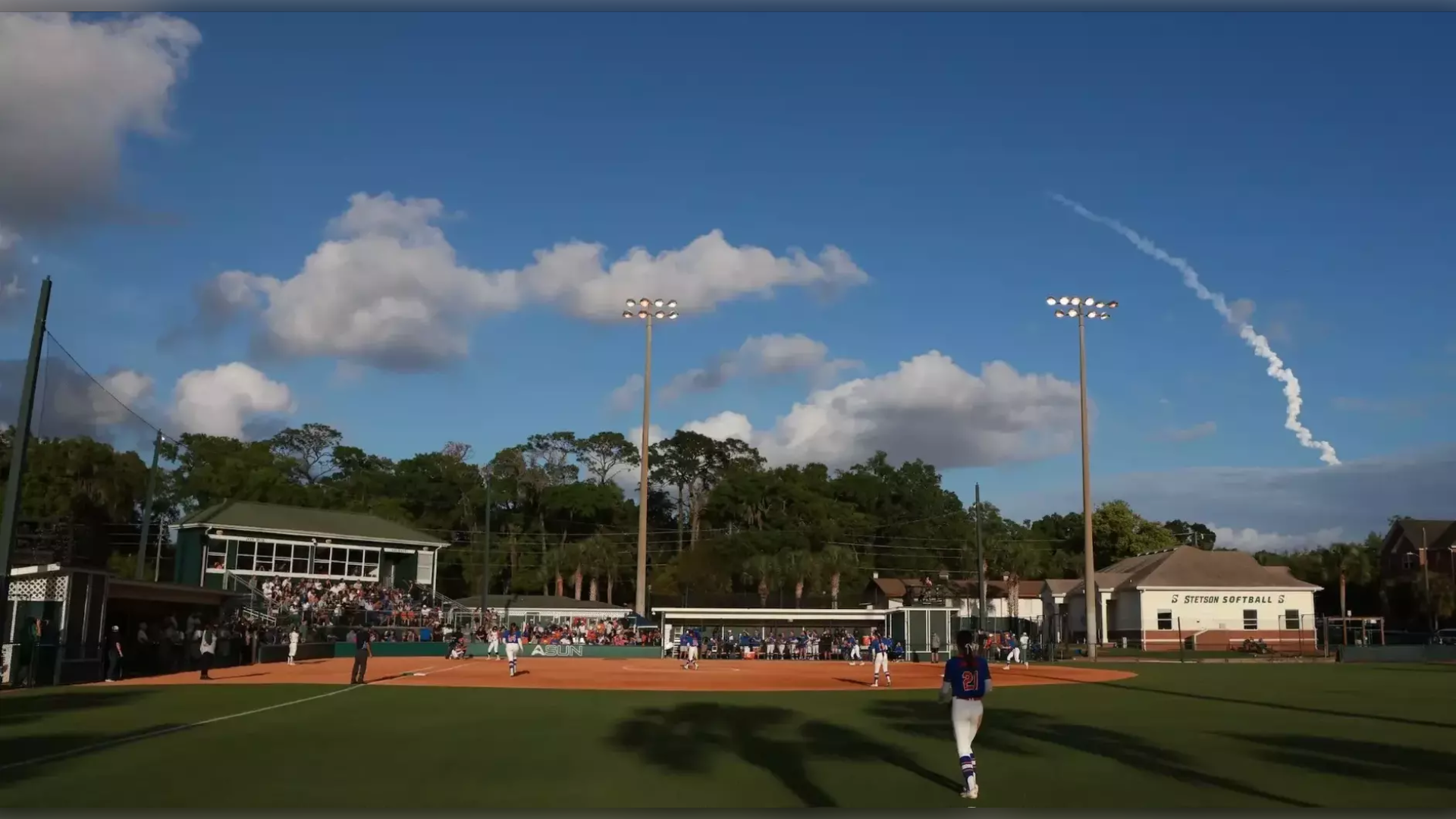
For a few luminous minutes on a balmy Florida evening, the scoreboard stopped mattering. At Patricia Wilson Field in DeLand, a midweek college softball clash dissolved into something far grander, as athletes, coaches and fans alike turned their gaze skyward to witness NASA’s Artemis II rocket blaze its way into history. The matchup between the Stetson Hatters and the Florida Gators paused organically, not by whistle, but by wonder. Players stepped out of dugouts, some pointing, others shielding their eyes, all united in a moment that felt plucked from a screenplay. On X, the Stetson Hatters captured the magic perfectly, writing: “You watched Artemis II launch from Patricia Wilson Field.” The post quickly took off, drawing a playful and proud reply from NASA itself: “Glad you got to see our version of a home run! P.S. Did you know we track pitch(es) too?” Fans piled into the replies with equal parts humour and awe. One user quipped, “So there are rocket launches but not to the moon, in over 50 years, so this one a little bigger deal. Okay, more than a little bigger deal.” while another joked, “at least no one got hit by ball.” And what a launch it was. Blasting off from the nearby Kennedy Space Center, Artemis II marks the first crewed lunar mission in more than half a century, a bold step since the days of Apollo 17 in 1972. This time, four astronauts, including one Canadian in Jeremy Hansen, are circling the moon, travelling roughly 400,000 kilometres and venturing even farther before returning home. It’s a mission steeped in symbolism: a rekindling of humanity’s lunar ambitions and a dress rehearsal for future moon landings under NASA’s Artemis program. Back on the diamond, the game eventually resumed, and Florida powered to an 8–2 win. But the final score felt almost beside the point. Because on this night, under a sky streaked with fire and possibility, two rival teams shared something rare: A reminder that sometimes, the biggest plays happen far beyond the field.