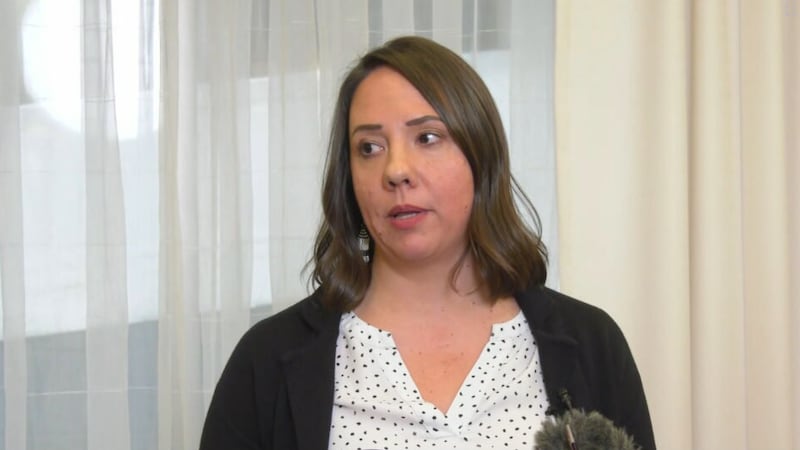
Saskatchewan Teachers’ Federation President Samantha Becotte says seeing the province’s public call Friday morning for binding arbitration, in the middle of active bargaining meetings, may feel like “whiplash” for many. In a news release Friday morning, the province said the Government-Trustee Bargaining Committee (GTBC) “met as scheduled” on Thursday and Friday, but “significant distance remains on key issues.” The province argued binding arbitration, in which the two sides agree to accept the ruling of a third-party arbitrator to resolve terms of a contract negotiation, would provide “stability and predictability for Saskatchewan students, families, teachers and school divisions.” Becotte told reporters Friday afternoon the GTBC requested arbitration as the two sides met earlier in the day. Both the STF and GTBC were set to meet for a second time Friday afternoon. “I assume the media release this morning might feel like a little bit of whiplash for everyone, given that there has been little said publicly about this round of provincial collective bargaining up to date,” she said. The bargaining effort so far has consisted of just six days of talks since May, with much of that time being spent presenting opening proposals, according to Becotte. The STF president argued the government’s ask comes very early in the bargaining process. “I bought a car last year and I spent more time negotiating the price of the car than we’ve spent negotiating the terms of this agreement,” she said. “Despite less than two days of active negotiations, the [government-trustee bargaining committee] have suggested that we are too far apart to continue with those good faith negotiations.” Becotte says teachers are committed to the bargaining process, and ready to meet to start building a bridge over the divide. “The best agreements happen at the table, and we haven’t put in the time that’s necessary to go through the negotiations that are required at the table,” she noted. Many will still remember the heated disputes that emerged during negotiations over the last contract, with negotiations running nearly two years and seeing multiple rounds of job action from teachers, who pushed for stronger supports to manage the growing size and complexity of their classrooms. A deal, which included a nine per cent pay increase over the three-year term, wasn’t settled until last spring. Through arbitration, teachers won a ruling that saw language around classroom complexity included in the terms of the contract. Now, Becotte says teachers hope to enhance those classroom supports, for the good of the approximately 200,000 primary and secondary school students they serve. “We would like to work with the [government-trustee committee] to continue to find ways to enhance Article 17, to ensure that there are more supports within our schools to address the needs that students have in their learning, in their behavior, and within their school classrooms.”