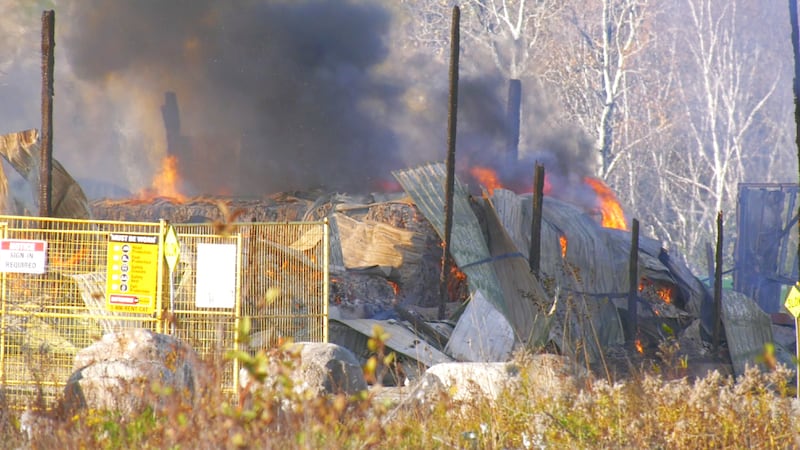
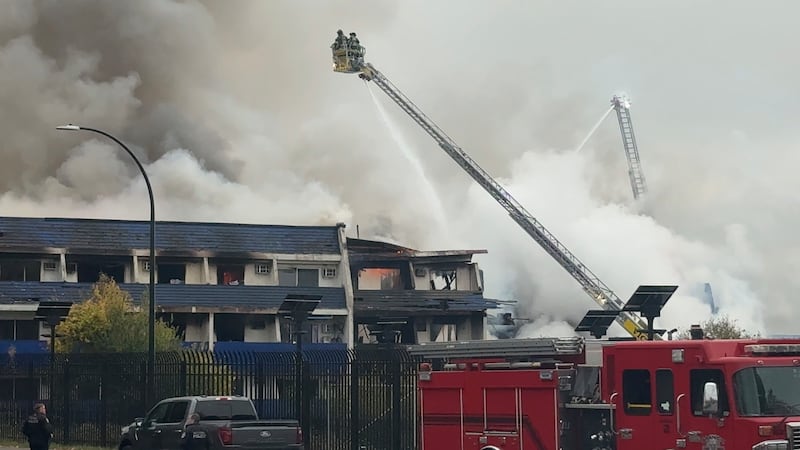
This is the third in a three-part series about the legacy of Floyd Glass, a Prince Albert man who was a pioneer of the Saskatchewan aviation industry. Find Part One here, and Part Two here. Aviation is ‘terribly unforgiving of any mistake’ Glass says while most memories from his career are positive, there have been some painful moments, including when friends or people he’s worked with lost their lives in plane accidents. “I’ve lost friends in aviation accidents across Canada, not just in Saskatchewan,” he said. “But that’s always kind of a tough thing to deal with, seeing somebody you know or somebody you’ve trained with or even just a coworker or an acquaintance lose their life in aviation. It’s, the old saying in aviation, it’s not inherently dangerous. But to an even greater extent than the sea, it’s terribly unforgiving of any mistake or carelessness.” Part 2: How Prince Albert’s Floyd Glass came to run the province’s first commercial airlines While Glass remembers his first solo flight taking off in a Cessna 152 like it was yesterday, it was at an airshow in Prince Albert that he got a rare opportunity that stands out among the rest. “After my dad had passed away, there was an airshow in Prince Albert,” he said. “There was a, B-17 bomber brought in for this airshow, and I bought a ticket on it. I wanted to ride up in the nose, and sure enough, I got to take off in the nose of the aircraft. That was an incredible experience. He says they even agreed to do a fly-over his family farm. “I was chatting with the pilots ... and they’re like, ‘oh, well, anywhere exciting to fly around here?’ And I’m like, ‘well, my farm is west of the city, my family farm.’ So we took off and sure enough, we headed right out west of the city and flew right over the family farm. And I was like, this is surreal. I can’t believe it,” he said. “It was really incredible. It was a great day.” Glass also recalls some of the early days flying with his father. “Lots of great memories riding around with him in airplanes when I was a kid,” said Glass. “Flying over the farm, fairly low. We actually had an airstrip on the farm there at one point, and he and I would fly airplanes in and out of there. We farmed a little piece of land down by Saint Louis, and we would fly from the farm down to there to drop off parts or fly lunch down for the guys working in the field.” And Glass remembers a close call his dad had while on a fishing trip at a remote cabin on Steepbank Lake, west of the Narrow Hills Provincial Park. “He took off out of there and had an engine failure and circled around, and he couldn’t make it back to the lake and had to land the plane in the trees,” said Glass. “He walked away with barely a scratch on him, but he had to spend, I think, a night or two in the bush before somebody figured out exactly where it was, because he was up fishing at his own cabin there.” Staff shortages, costs put pressure on airlines: pilot In his current job as president of Mitchinson Flight Center and as a captain for WestJet, Dan Glass gave his opinions on the challenges he faces in the industry. “Economics professors will say that, in textbooks, aviation is sort of at the leading edge of both a downturn, it’s the first one to suffer because it’s discretionary spending for most people, if they’re traveling for leisure or even for business,” said Glass, a pilot and flying instructor, and the son of Saskatchewan aviation pioneer Floyd Glass. “A lot of businesspeople, if they’re under pressure, they’ll stop spending money on air travel. So, it’s sort of one of the first ones to be affected and one of the last ones to recover. I think in the last decade or two, that’s probably changed a bit,” he said. “People love taking vacations, especially in Canada, we’ve got to escape in the wintertime and get to someplace warm. And then more recently, with the U.S. trade issues, the flying to the U.S. has really fallen off. The reports I’ve seen are as much as 20 to 30 per cent, the traffic to the States has dropped off. And traffic to Europe or to Asia and Mexico has increased as a result.” While it’s been six years since the COVID-19 pandemic, Glass says the ripple effects are still being felt. “The overhead and cost since Covid, a lot of the supply chain issues still exist today,” he said. How Prince Albert’s airport became a wartime flight school for pilots from across the globe “It seems like it’s a never-ending catch-up game. When we ship an engine out to be overhauled for the smaller piston engine airplanes, It takes two months, three months sometimes to get that engine back. So that airplane is potentially down for that period of time, that’s a lot of lost revenue,” he said. Glass says business costs are constantly going up, as well, as global shortages of pilots and aircraft maintenance engineers drive staffing costs. “Companies have to pay a more than respectable wage to keep people around if they’re if they’re going to keep these employees and, keep them invested locally,” he said. “Insurance rates are always a big part of it as well. They get affected if there’s a major accident somewhere in the world, it’s a ripple or trickle-down effect onto all of the operators that, insurance rates are affected.” Government oversight also has a price for airlines, says Glass, as delays in licensing or certification processes can leave equipment grounded when it could be up in the air making money. “We work closely with the government, and they try hard. But it’s on the elected leadership that has to keep supporting their government offices that provide this service to the industry.” Historic building goes up in smoke In 2018, the Glass Field Airport suffered a major fire that completely destroyed the old Second World War hangar. “That was one of the last,” said Glass. “It was the last remaining Second World War hangar. And it had been refurbished. I remember growing up as a kid there, we were constantly doing improvements to that hangar to keep it functional. They were supposed to be temporary, built just for the war to last, maybe five or 10 years. And that hangar lasted more than 50 years,” he said. “There’s not a lot of them left. There’s still a few in the province. I think Yorkton has some, Swift Current maybe. Maybe Moose Jaw. There’s still some of these old hangars around. I know the Prince Albert airport has been looking to reinvest there and, hopefully, build a new facility.”