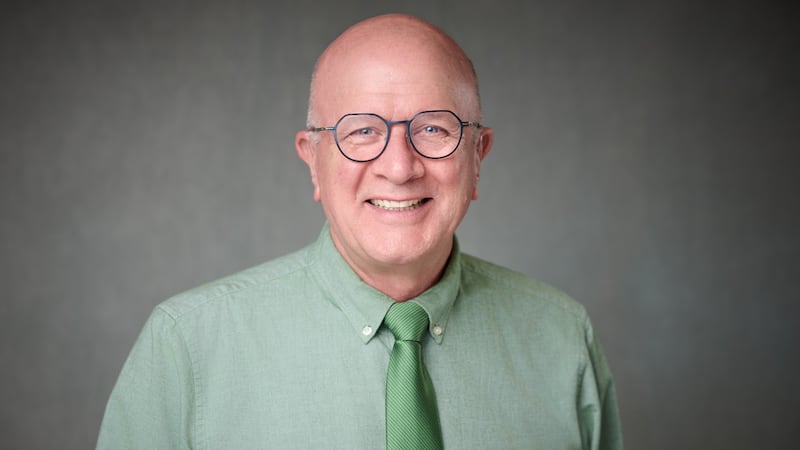
As lawmakers in both Saskatchewan and Ottawa begin to seriously look at the prospect of a social media ban for kids, one expert in Regina says the potential move is simply good policy and should be pursued as soon as possible. Brian McQuinn is an associate professor of politics and international studies at the University of Regina. He also serves as the CEO of CIPHER, an AI startup aimed at detecting and identifying misinformation online. He told CTV News Thursday that regulation is desperately needed in the realm of youth and social media and he is glad to see Saskatchewan moving the debate forward. “I often sort of joke that we will probably look back at the access that we gave young children to social media as those who are old like me talk about walking onto an airplane and watching people smoking,” McQuinn said, with a laugh. “The idea that we would give unfettered access to children to these incredibly powerful and incredibly addictive systems, we will look back as a just sort of a bizarre blip in our understanding of how children should access these systems.” Late last month, Premier Scott Moe announced the province would be asking residents their views on banning social media for children under 16. The announcement came after an Angus Reid poll suggested a majority of Canadians would support a ban. At the recent federal Liberal convention in Montreal, members passed a non-binding resolution, calling on the government to set a minimum age of 16 for accessing social media. Speaking to reporters Thursday, the premier offered more details on the planned provincial outreach. “We’re going to embark on a mail out, essentially, to Saskatchewan families and we’re going to ask their opinions … with some very direct, short number of questions, and we’re going to compile that information,” Moe explained. Moe said the results of the province-wide inquiry will be provided to the federal government, where he hopes the eventual policy decisions will be made. “We feel that if there is going to be any action in this space, it should be nationally,” he said. According to McQuinn, support of a social media ban for Saskatchewan’s youth crosses the political divide. “This is actually a bipartisan agreement,” he explained. “Its very clear that this is a concern for all the MLAs that I’ve spoken to, and I’ve done presentations to the Sask. Party caucus, this is something that is of utmost concern.” McQuinn admitted there will likely be implementation and logistical challenges to any legislation or ban. However, he says that fact shouldn’t diminish the need for action, and what national action would represent in dealing with a growing issue facing children. “This is not trying to catch every kid. The point is that we are changing the way we as society understand the risk of those platforms for our children,” he explained. “It would be the same as saying, ‘Can a child get a cigarette if they wanted to?’ I’m sure they could, or get alcohol, yes. But the fact is, we have these bans in place because we know that it’s not healthy.” Even though he believes a ban will act as a net positive, McQuinn says it is important to look at the other side of the debate, how in certain cases, online communities can act as a real source of support for some children. “I think the real challenge is how we balance all of that,” he said. “Parents and communities need to work with the government and the legislation to ensure that we can find some of those nuances to make sure that it isn’t too blunt of an instrument, and that some of those positive things that being connected to people who are outside of your community, or if it’s very remote, for example, aren’t lost in this sort of push to protect children in general.” Although not legislation yet, the federal government plans to introduce an online harm bill in the future. If that does come to pass, it will represent the first step in a very long journey, according to McQuinn. “Passing the legislation is the easy part,” he noted. “How you actually create the mechanisms to either get kids that are under 16 off or prevent kids who’d want to get on at that same age – that is the real challenge, and to do it in a way that protects privacy and do it in a way that’s effective.” However, it’s a journey Canada will not embark on alone. Australia has already implemented a social media ban for those under 16, while Greece plans to put a similar plan into effect in 2027.