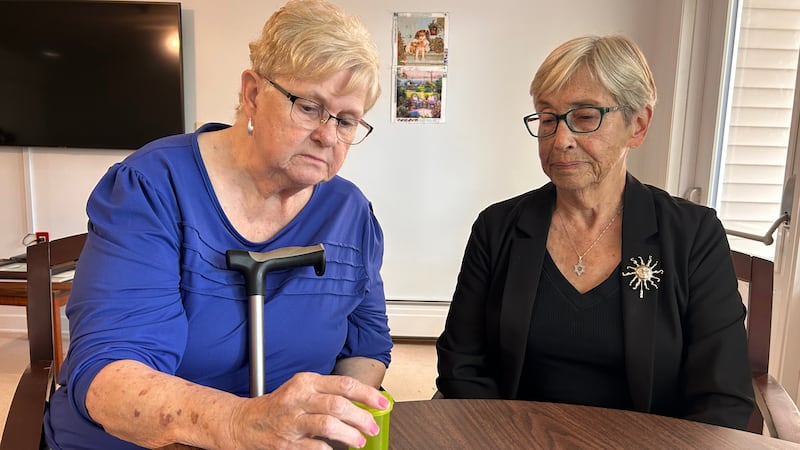
This week, two Psychiatric Nursing graduates from Saskatchewan Polytechnic, Payton Skene and Jae-Lynn Maletta, are gearing up to enter the Saskatchewan healthcare workforce. Both graduates entered the field of psychiatric nursing because mental health hits close to home. “My dad has a lot of health issues, and just seeing him over the years, most of the important people that had helped him were nurses,” Skene said. “So, that kind of inspired me in just meeting so many amazing nurses through his journey of his health and everything, just made me really want to do it.” Maletta said someone close to her struggled with mental health for several years, and after the COVID-19 pandemic, she wasn’t sure the route she wanted to take. “After seeing someone struggle and not really having the resources there, I decided to go into psych nursing to hopefully be that resource for someone, someday,” she said. The demand for healthcare workers in Saskatchewan is high. Last year, Saskatchewan Union of Nurses President Bryce Boynton said he heard from nurses in the Jim Pattison Children’s Hospital, and others, about staff shortages. Despite the demand, finding a job right out of school isn’t a guarantee. “I was very surprised at how difficult it was to get a job, just because there is such a shortage and whatnot. I thought it would not be easy, but I kind of thought it would be. Yeah, it was a challenge, and it was actually pretty hard,” Skene said. Raesoleil Consulting CEO Raelynn Douglas said she thinks the provincial government needs to focus heavily on retention of Saskatchewan nurses. Douglas spent 10 years working for the Ministry of Finance before starting Raesoleil, which focuses on helping leaders to improve the workplace and retain employees. “It’s 70 to $80,000 to replace a nurse. If we use a small conservative estimate of even $15,000, 15,000 times 1,500 staff leaving every year, that is $22.5 million leaking out of the organization,” she said. The Raesoleil CEO also implores leaders in Saskatchewan to explore attracting workers from other sectors like retail and hospitality. “Perhaps attract back people who have left the profession, people that have gone back to school, that have gone on to other opportunities, working for agency nurses. If we can create the conditions of work that are attractive to these people, they might come back to Saskatchewan, they might come back to nursing,” Douglas said. Skene and Maletta told CTV News that they have both secured work as psychiatric nurses in the province and are looking forward to making a small difference in a profession that needs all the workers it can get.