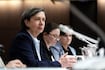
The Saskatchewan NDP reaffirmed their stance on homelessness and child poverty challenges around the province on Thursday. To address Saskatchewan’s homelessness crisis, the NDP is looking to back direct to landlord payments for residents on Saskatchewan Income Support (SIS) and Saskatchewan Assured Income for Disability (SAID), sharing a similar message last week. While in Moose Jaw on Thursday, NDP MLA Joan Pratchler said an NDP government would introduce a private member’s legislation this fall to restore the direct payment to landlords for SIS and SAID clients. If the Saskatchewan Party fails to pass that bill, Pratchler said the NDP is committed to implementing the legislation within the first 100 days of forming government. “We’ve got to be able to address what the root causes of our homelessness situation is and make sure that that happens. That starts with education, health care and proper payments,” she said. In the 2026-27 budget, the Ministry of Social Services said they provided a two per cent increase to SIS and SAID clients. It’s the fifth year in a row SIS benefits have increased, and the fourth year SAID benefits have risen, the province said. Recently, the provincial government has introduced several exemptions from core income assistance programs, including the Canada Groceries and Essentials Benefit, as well as the Canada Disability Benefit. The NDP also stressed support for rent control and building more affordable housing. In a statement, the province says since the Provincial Approach to Homelessness was launched three years ago, they have worked to “create and expand supportive housing, emergency shelters, year-round drop-in services, trusteeship spaces for income assistance clients, and community safety and street outreach services in communities across the province.” The statement went on to outline this year’s Social Services budget, which provides $736,000 for homelessness services in Moose Jaw. That funding includes support for 20 “basic emergency spaces” with John Howard Society and is part of the province’s total investment of up to $38.9 million for homelessness services. “We are increasing the Saskatchewan Housing Benefit to make renting more affordable for more Saskatchewan renters with core monthly benefits increasing by 20 per cent and are investing in the renovation and repairs providing more households access to safe and affordable housing,” the statement read. Child poverty Pratchler said people in the province are struggling, noting a high rate of child poverty. In February, it was revealed that Saskatchewan held a near 27 per cent child poverty rate, according to a report from Campaign 2000. The report found that 78,050 Saskatchewan children were living in poverty in 2023. It was seen as a nearly nine percentage point rate higher than the national average of 18.3 per cent. “As this problem continues to worsen, we see a 20 year old Sask. Party government nowhere to be found helping with this,” she said. “It’s forcing responsibility for housing to fall on municipalities and community-based organizations to pick up that slack.” Campaign 2000 said that child poverty rates were highest in northern Saskatchewan, followed by the Prince Albert and Yorkton regions. The Ministry of Social Services says they have introduced the Saskatchewan Employment Incentive to “help low income working families with essential costs.”