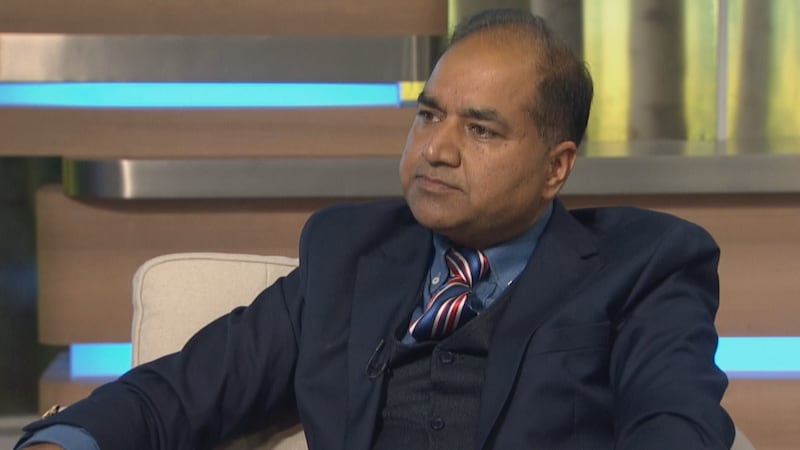
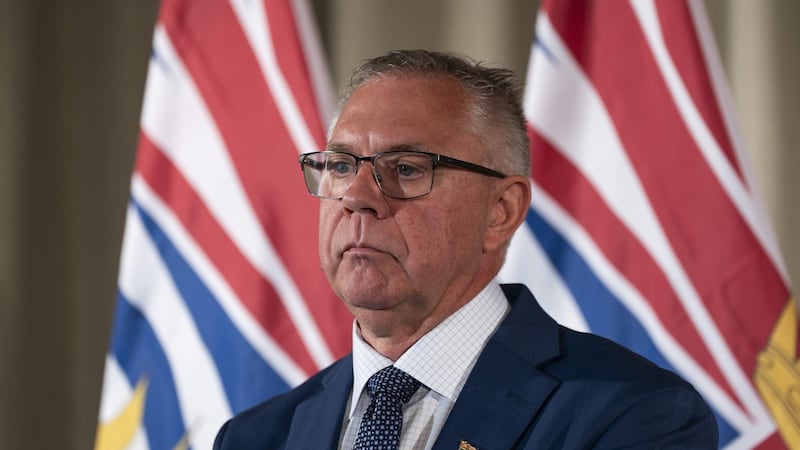
As students across Saskatchewan are approaching one month of being back in classrooms, the provincial education minister says work is ongoing in terms of a childcare access and school capacities. Education Minister Everett Hindley spoke with Your Morning Saskatchewan on Tuesday. He says negotiations with the federal government over the $10-a-day childcare agreement are still ongoing – with no agreement finalized yet. “We remain ready and willing to negotiate the extension of that agreement,” he said. “[It] was about three weeks ago in Regina I was there doing an announcement at Sask. Polytech to announce an additional 540 spaces across Saskatchewan.” According to the Government of Saskatchewan, since the launch of the Early Learning and Childcare Agreement in 2021, Saskatchewan has created over 23,000 childcare spaces. The province aims to reach its goal of 28,000 new spaces by March of 2026. Hindley said the education ministry recognizes that enrollment has been growing rapidly, with the province set to receive updated enrollment statistics at the end of September. “We’re trying to support that with more teachers, more EAs, more support staff in the classroom, but more classrooms as well, focusing on funding for improved K-3 literacy, more specialized support classrooms to provide that additional help for kids that need it,” he said. In terms of school infrastructure, the minister says that 21 new schools are now in some form of development across the province. As the projects require coordination between the government, municipalities and school boards, Hindley says it’s a very long and complicated process of getting schools built. “We’re working very hard with the ministry team, with school divisions, school boards, to try to identify those areas as best we can, and to provide [those] dollars when we’re able to make sure that we’re continuing to build new schools and also add relocatable that those to those schools that are facing some pressures today,” he said. “It takes a lot of work with the school divisions, but also with the municipalities as well, trying to identify and predict as best you can … not just for [what] the current pressures are but as you see them what might be coming down the road for those communities and for us as a province in the years to come.” In April, the province and the Saskatchewan Teachers’ Federation (STF) officially ended an almost two-year-long saga of job action with the signing of a new collective agreement. The agreement included a class complexity fund and provisions to hire additional staff to assist with any related issues. The STF estimated at the time that more than 500 new positions would be created as a result of the new terms.