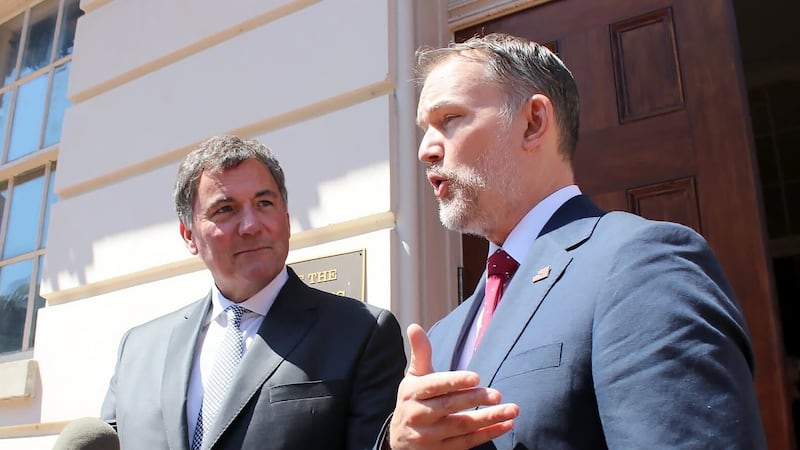
Regina’s city council has moved forward with plans to build a multi-family residential building, along with permitting manufactured homes across the city. At Wednesday’s meeting, council unanimously approved rezoning 2571 Broad Street, the former Canadian Blood Services building, from institutional to residential high-rise to accommodate construction for an apartment building. Requested by West Oak Investments, the current building will be demolished with plans to develop a residential apartment building with over 100 units and underground parking. “I think it’s a good sign that they are supporting development. We have the official community plan that targets residential infill at 30 per cent, and a unanimous vote shows that the council is supporting that. It’s great,” said Dan Torrie, president and CEO of West Oak Investments. Torrie added the business has a preliminary design for the property with plans to start construction in spring 2026. Mayor Chad Bachynski said the proposal is an opportunity to provide housing closer to downtown. “We heard a lot about leveraging these existing commercial spaces around that area. I think it’s a great fit and a great location to bring residents closer to downtown,” he said. Council also approved allowing manufactured homes in all residential zone neighbourhoods within city limits. “It’s a solution that is innovative in Canada. We’re one of the few communities where the planning department said, yes, we should give to everyone the right to be able to buy a land within the City of Regina and to buy a manufactured home and place it on that lot,” expressed Randall Edge, president of the Glen Elm Retirement Community Residents Association. Prior to the motion, manufactured homeowners were only allowed on properties designated as a Residential Manufactured Home Zone (RMH). Under The Regina Zoning Bylaw, there were only two areas permitted, one in Glen Elm and one in Argyle Park. “It was really about looking at different housing options for our community,” Bachynski told media, referring to why council voted in favour of the zoning amendment. “We know we’re looking at ways to find affordable housing for residents and this is giving residents another option for affordable housing throughout our city.” The city pointed out once manufactured homes are placed on the lot, they cannot be moved in comparison to mobile and trailer homes. Encampment strategy As of Wednesday afternoon, council began discussions on the city’s encampment response protocols strategy which falls under the city’s Well-Being and Homeless plan. Several delegates spoke on the matter, advising council the Regina Street Team should continue operating independently and not be moved entirely under the city’s responsibility. “I thought having those folks speak … was important to understand the community need, what groups like the Street Team provide for our community, and ultimately justify why we’re looking at all options of where that team would land as well as, kind of the scope, that would be most appropriate to helping people living in that situation,” Bachynski said. Since 2024, the RST has operated through the Regina Downtown Business Improvement District (RDBID). The outreach group supports Regina’s homelessness population by connecting them with social services and other supports. Council decided to have administration dive deeper into how the Street Team fits under the city’s long-term goals of addressing people unhoused. Council voted in favour 9 to 2 of reallocating $1.6 million from its Community and Social Impact Regina Inc. (CSIR) to the city 2026 budget - pending budget approval come mid-December. The shift in funding would allow the city, to potentially hire an external organization to lead the operations of a street and encampment outreach initiative, prioritize a person-first approach, among other things. “[There are] a lot of things going on in the work that administration has done around that response, and I think it’s some tangible steps that will happen today moving forward in terms of our encampment response and then some items that will be considered at, at budget time in December. The city also received $1.1 million of new funding from the Government of Saskatchewan which will go directly to warming centre initiatives. “The warming space funding is imperative to keeping people safe through our winter, but it’s not the solution,” Bachynski said. “At the end of the day, housing is what we need. We need supportive housing. We need housing that fits within the housing continuum, supportive transitional housing all the way up through that housing continuum. It’s not the solution at all. This is just an immediate need that we have as we go into the cold winter months in our city.” Boards and Committees At Wednesday’s meeting, council also appointed people to its 2026 Boards and Committees, which include the Board of Police Commissioners, Audit and Finance Committee, Regina Downtown Business Improvement District, and more. Each board and committee has to have representatives from the public and city council. The groups make recommendations to city council.