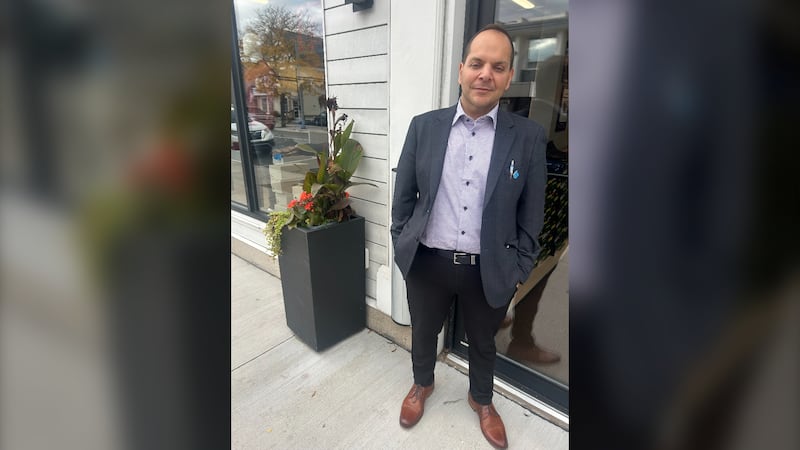
On Friday, Cote First Nation opened its new museum, located inside the Chief Gabriel Cote Education Complex. “That’s why this is in here, because this is history,” Cote First Nation’s cultural coordinator Cory Cadotte pointed at a giant buffalo pelt on the wall. “This is the first ever buffalo that Cote did in the traditional way.” The pelt is just one of many artifacts in the classroom, repurposed as a museum. “A lady that used to live around here back in the early 1900s … she’s 86 now … but she called me and she had some old artifacts,” Cadotte told CTV News, regarding the museum’s origins. He said he got really excited and wrote a few articles to the local newspaper, the Kamsack Times. “Just once one thing happened, and all the other things started happening - and as you look around you today, it just all came together just like that,” he said. More and more donors reached out to his office, including the Western Development Museum. “It’s very humbling. Knowing that a lot of our artifacts, that represent our culture, have returned home,” Chief George Cote told CTV News. On a trip to Saskatoon, he recognized his grandfather’s beadwork on a cradle in a museum. The cradle is now part of the Cote collection. In addition to the pelt and the cradle, the museum boasts a variety of items from tools to garments, as well as a woman’s hair that was sent to a loved one fighting in the Great War. Cadotte said that since the artifact found its way back to Cote, they are certain the soldier survived. Though their identity remains unknown. Cadotte’s favorite piece from the collection is a hammer called “Ahsini-pahkitēhikan” in Saulteaux. “I have a special connection to it, because it was made over 500 years ago, and one of my ancestors made it, and used it, and lived and survived with it,” he explained. Chief Cote hopes that the museum will serve not only as a place to educate the younger generations but to bring people together. “This kind of gives us an opportunity to build partnerships with not only our nation, but other nations, even the towns and cities,” the chief said. “In ways that we can share our history and knowledge with one another, so that we can understand one another.” This is just the beginning, Cadotte already has plans for expansion. “Everything’s going to be interactive and comprehensive, where you’re just going to be able to push a button and one of our language speakers and our elders are going to be telling the stories in our language about what you’re looking at and what you’re seeing,” he added. The establishment of the museum marks yet another step for Cote First Nation in reclaiming its culture and language. The rest, as they say, is history.