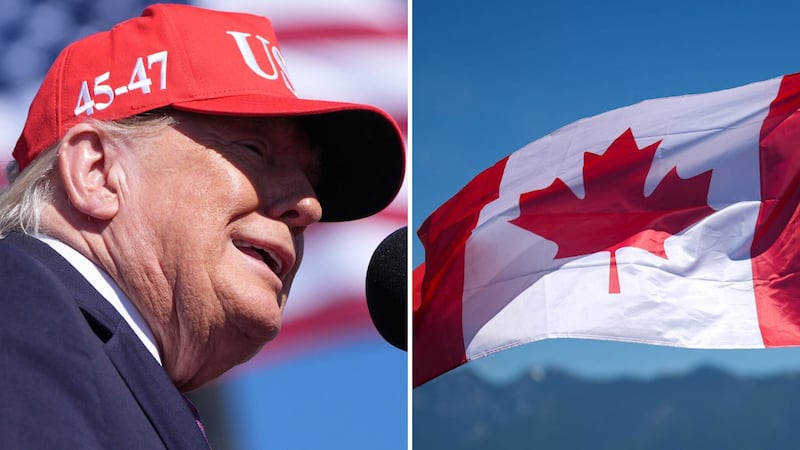
Canadians’ concerns about U.S. President Donald Trump and the state of relations with our southern neighbour are once again on the rise, according to new data from Nanos Research. Nearly 18 per cent of respondents in Nanos Research’s weekly issues tracking said Trump and Canada-U.S. relations are their greatest concern, doubling from 8.8 per cent last month. The next issue of concern with the highest number of respondents is jobs and the economy, nearly statistically tied with Trump at 17.1 per cent. “The thing is those issues are all interrelated,” said Nanos Research founder and chief data scientist Nik Nanos in an interview with CTV News. “When people are thinking about Trump and the U.S., they’re thinking about: ‘What does this mean for jobs and the economy?’” “It speaks to the uncertainty and worry that many Canadians have about the binational relationship and what it might mean for the economy in Canada,” he added. Nanos pointed to two significant events in recent weeks that are likely driving the rise in Canadians’ concerns on those issues: Ontario’s anti-tariff ad, and the federal budget. The ad, paid for by the government of Ontario, features a clip of former Republican U.S. president Ronald Reagan in a speech saying tariffs “hurt every American.” In response to the ad — which played during two World Series games between the Toronto Blue Jays and Los Angeles Dodgers — Trump announced he was terminating trade talks with Canada and imposing an additional 10 per cent tariff on Canadian goods. It remains unclear when those levies will come into effect. The federal budget, meanwhile, largely hinges on increasing the Canadian economy’s resilience and reducing its dependence on the U.S. amid the ongoing trade war. “Think of those two events as driving focus for Canadians on the Canada-U.S. relationship and what it means for the Canadian economy,” Nanos said. Trump as the central issue of concern for Canadians — according to Nanos Research figures — peaked at more than 40 per cent last January, when the U.S. president moved back into the White House and threatened to impose sweeping tariffs on Canadian goods. The two countries have been in a protracted trade war ever since. “Since then, it’s less intense. But it’s basically a rollercoaster ride,” Nanos said, describing Canadians’ concerns around Trump as up and down several times over the last 11 months. “For all intents and purposes, when we’re thinking about Trump and U.S. relations, it’s like an emotional and a political and an economic rollercoaster ride, that Canadians think perhaps we’ll be able to make some headway, and then there’s a twist in the story, like the ad by the Ontario government, that is a setback,” Nanos added. Nanos also does weekly political tracking, which shows the Liberals are out of their post-election “honeymoon” phase, and now within just a few points of the Conservatives. Prime Minister Mark Carney, however, remains more than 20 points ahead of Conservative Leader Pierre Poilievre on the question of preferred prime minister.